

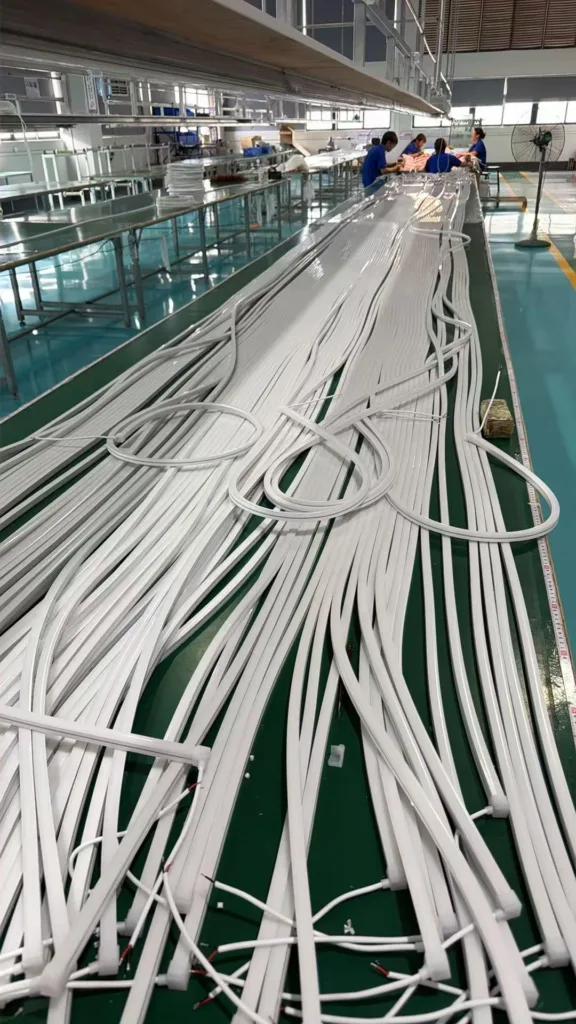
Most people think waterproof failure happens because water gets in. But I've learned the hard way that's not true. The real killer is shear stress that builds up silently through thousands of thermal cycles. By the time you see water inside, the system has already been failing for months—or even years.
Waterproof bendable silicone tube for LED strips fails not because of water ingress, but because of coefficient of thermal expansion (CTE) mismatch between silicone, FPC, end caps, potting compounds, and aluminum channels. After thousands of hot-cold cycles, microscopic cracks form at material interfaces, leading to progressive failure long before visible water appears.
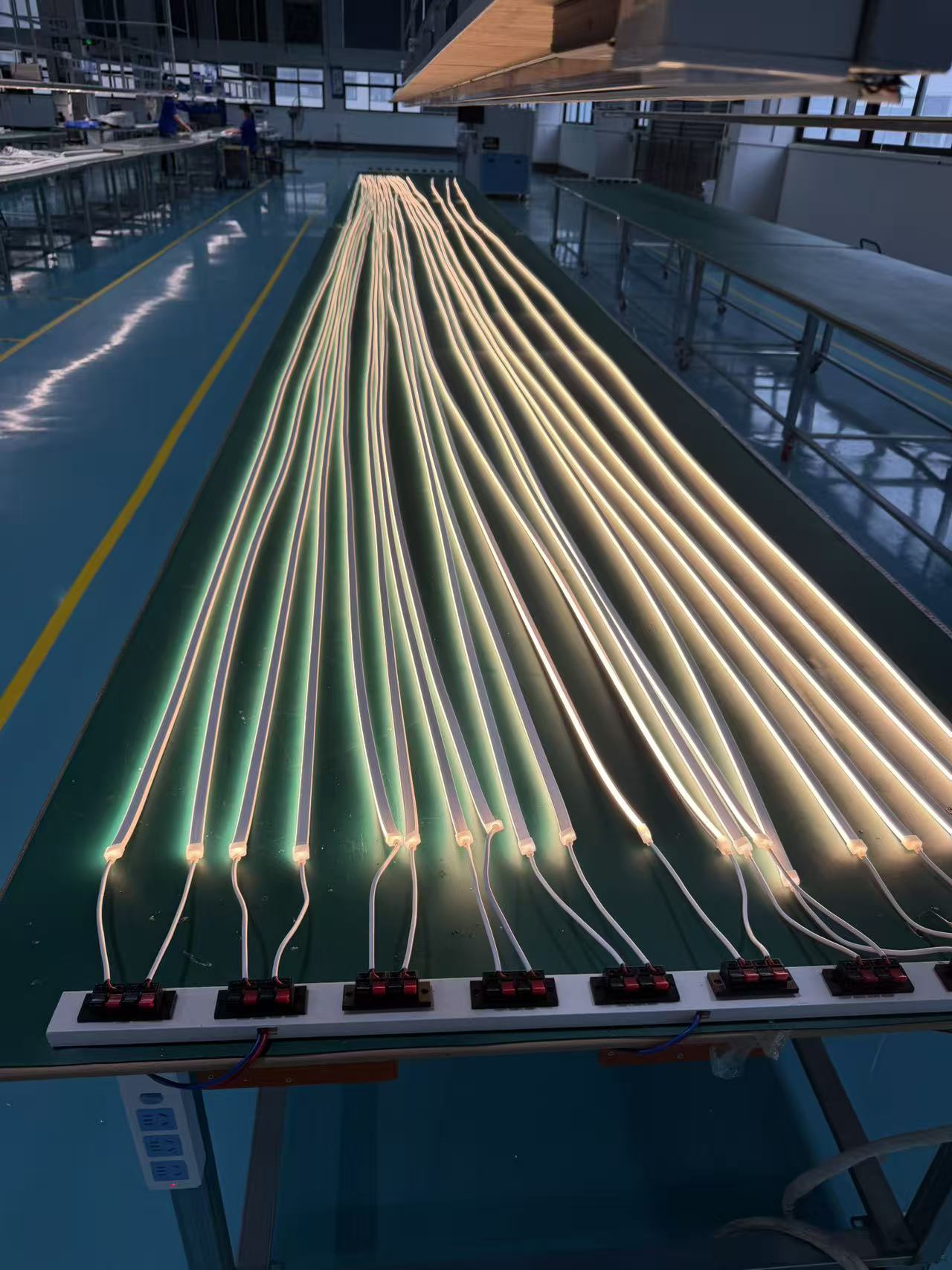
I'm sharing this because I've seen too many projects pass IP68 lab tests perfectly, only to fail catastrophically within 18-36 months in the field. If you're specifying silicone tube systems for outdoor architectural lighting, this story might save you from a very expensive callback.
Why Did a Perfect IP68 Project Collapse After Two Winter Seasons?
I remember this project in Northern Europe—a coastal commercial pedestrian street with continuous architectural outline lighting. The specs looked bulletproof on paper.
The installation used waterproof bendable silicone tube mounted on aluminum channels. Each continuous run exceeded 25 meters. We completed all acceptance testing: IP68 passed, 72-hour immersion test passed, 1000-hour double-85 test passed. Light output was uniform. Voltage drop was within spec. From a lab perspective, everything looked flawless.

Then winter came and went. Around month 8, we got the first call. Some sections showed internal fogging—barely visible during daytime, but at night, those areas dropped about 10% in brightness. We pulled samples and found something unexpected: no liquid water, just water vapor penetration. The issue originated at the junction between end cap sealant and silicone tube, where micro-cracks less than 20μm wide had formed. Standard IP testing can't detect these hairline failures at all.
By month 15, color temperature started drifting. Areas that were originally 3000K had shifted above 3400K. Delta E reached 7.8—completely unacceptable for commercial applications. The LEDs themselves were fine. The problem was moisture infiltration degrading the phosphor system, causing the encapsulation silicone to absorb humidity and changing its refractive index. Visible color banding appeared across entire sections.
Month 27 brought the final collapse: large-scale dark sections, some over 6 meters long. When we dissected the failed units, we found copper foil fatigue fractures in the FPC, concentrated at wire exit points, minimum bend radius locations, and between mounting clips. The silicone tube had been expanding and contracting continuously, forcing the internal FPC to undergo cyclic stretching. After more than 15,000 thermal cycles over two years, the copper simply gave up. The entire system entered irreversible cascade failure.
What Makes Bendable Silicone Tube Hide Risks So Effectively?
The dangerous thing about bendable silicone tube is that it serves three roles simultaneously.
First, it's an optical component—it diffuses light uniformly along its length. Second, it's a protective component—it provides the IP rating everyone obsesses over. Third, it's a structural component—it supports the FPC and accommodates bending.
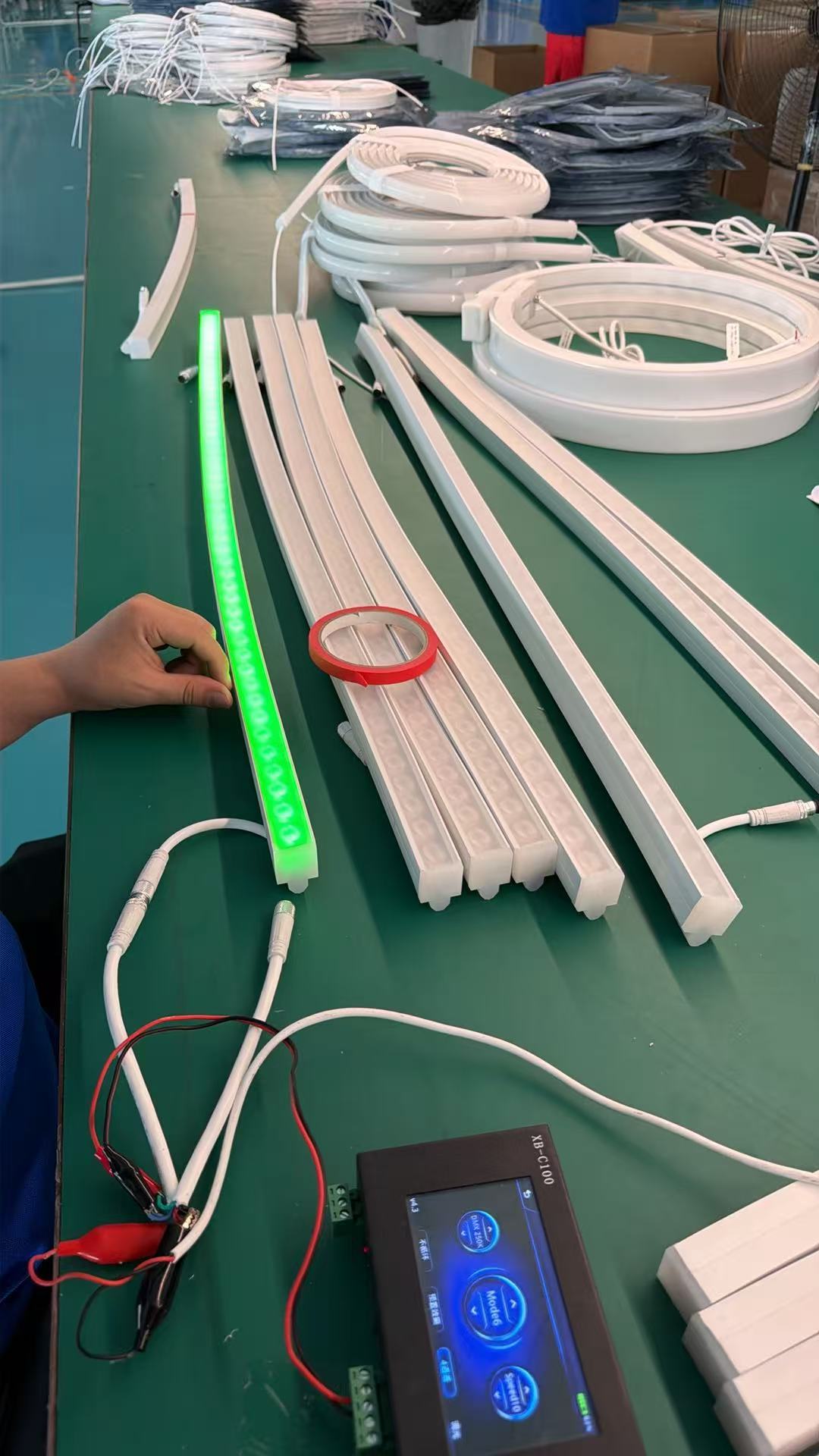
The problem is that field failures almost always originate in the third role. Structural problems eventually manifest as waterproofing problems. Waterproofing problems eventually manifest as optical problems. You get classic cascading failure, where the root cause is completely hidden by the time symptoms become visible.
Here's what I mean by structural failure: when you install a 25-meter continuous run of silicone tube with embedded LED strip, you're essentially creating a system where materials with wildly different thermal expansion coefficients are bonded together and forced to move as one unit.
Why Does CTE Mismatch Destroy Large-Scale LED Projects?
Everyone focuses on LED specifications—lumens per watt, color rendering, binning tolerances. But in large outdoor projects, the truly dangerous factor is coefficient of thermal expansion mismatch between materials.
Let me give you the actual numbers. Silicone tube typically has a CTE of 250-350 ppm/°C. The polyimide substrate in flexible PCB has a CTE of only 20-40 ppm/°C. Copper foil sits at 16-18 ppm/°C. Aluminum extrusion channels are around 22-24 ppm/°C.
When ambient temperature swings from -30°C to +70°C—which is completely normal for exposed architectural installations in continental climates—that's a ΔT of 100°C. Over one meter of length, this temperature change can create differential displacement of several millimeters between materials.
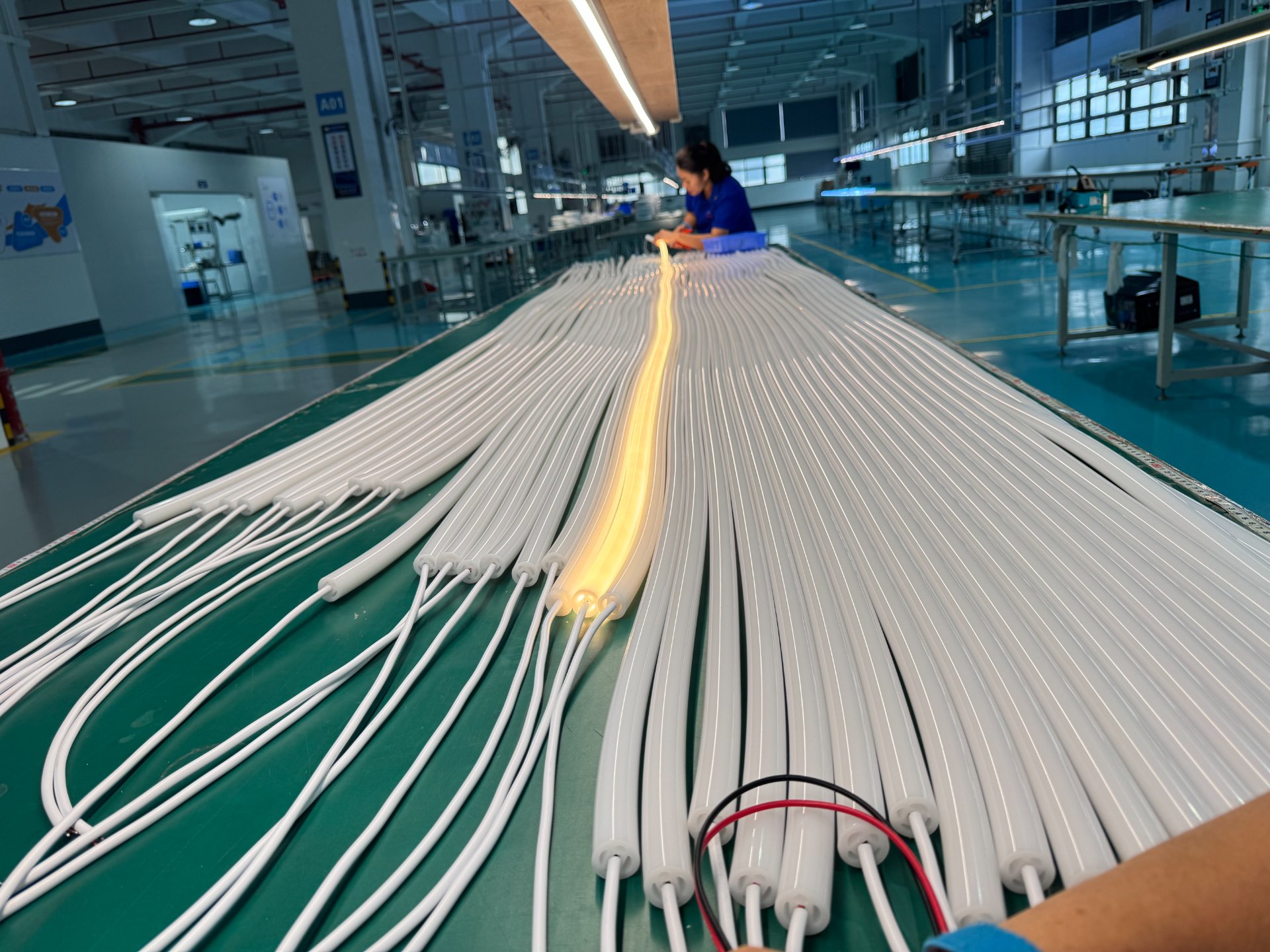
These displacements don't release all at once. They accumulate during every single day-night cycle. After thousands of cycles, you get progressive interface delamination, copper foil fatigue, end cap cracking, and shear stress concentration. The system is dying slowly, invisibly, long before you see water or dark sections.
| Material | CTE (ppm/°C) | Displacement per meter at ΔT=100°C |
|---|---|---|
| Silicone Tube | 250-350 | 25-35 mm |
| FPC Polyimide | 20-40 | 2-4 mm |
| Copper Foil | 16-18 | 1.6-1.8 mm |
| Aluminum Channel | 22-24 | 2.2-2.4 mm |
The silicone moves more than 10 times as much as the copper. Imagine what happens to the bond interface after 15,000 repetitions of this differential movement. That's the real engineering challenge—not whether the tube can survive a 1-meter underwater tank test for 24 hours.
How Should You Design Truly Reliable Waterproof Bendable Silicone Tube?
I've learned that preventing long-term failure requires addressing every layer of the material stack, not just achieving an IP rating.
Start with the silicone formulation itself. For outdoor projects, you absolutely must use high-molecular-weight platinum-cure silicone. I know it costs more than condensation-cure or standard industrial grades, but molecular chain degradation is what kills systems after 3-5 years. Platinum-cure silicone maintains stable cross-linking and resists UV-induced chain scission far better than cheaper alternatives.

You want VOC content below 0.3%, yellowing index change (ΔE) below 3 after accelerated aging, light transmission retention above 90%, and tear resistance above 25 kN/m. These aren't arbitrary numbers—they represent the minimum performance needed to survive 5+ years of UV exposure, thermal cycling, and mechanical stress.
Shore A hardness matters more than most people realize. Many projects specify very soft silicone—Shore A 40 or below—because it feels premium and bends easily during installation. But long-term outdoor installations tell a different story. Below Shore A 50, compression set increases dramatically, meaning the material doesn't recover its shape after being compressed. It creeps, deforms, and loses dimensional stability.
Above Shore A 75, you get excellent shape retention but increased bending fatigue and stress concentration at flex points. I've found Shore A 60-70 represents the optimal balance for architectural outdoor projects. It's firm enough to maintain geometry through thousands of thermal cycles, yet flexible enough to accommodate installation bending without generating excessive stress.
What Construction Methods Actually Prevent Field Failures?
Single-layer extrusion is simpler and cheaper, but for projects where failure means scaffolding costs and reputation damage, co-extrusion is worth every penny. A proper three-layer structure assigns specific functions to each layer.
The inner optical diffusion layer handles light distribution. The middle high-strength backbone layer provides structural integrity and tear resistance. The outer flexible buffer layer absorbs differential thermal expansion and protects the inner layers from mechanical damage during installation and operation.
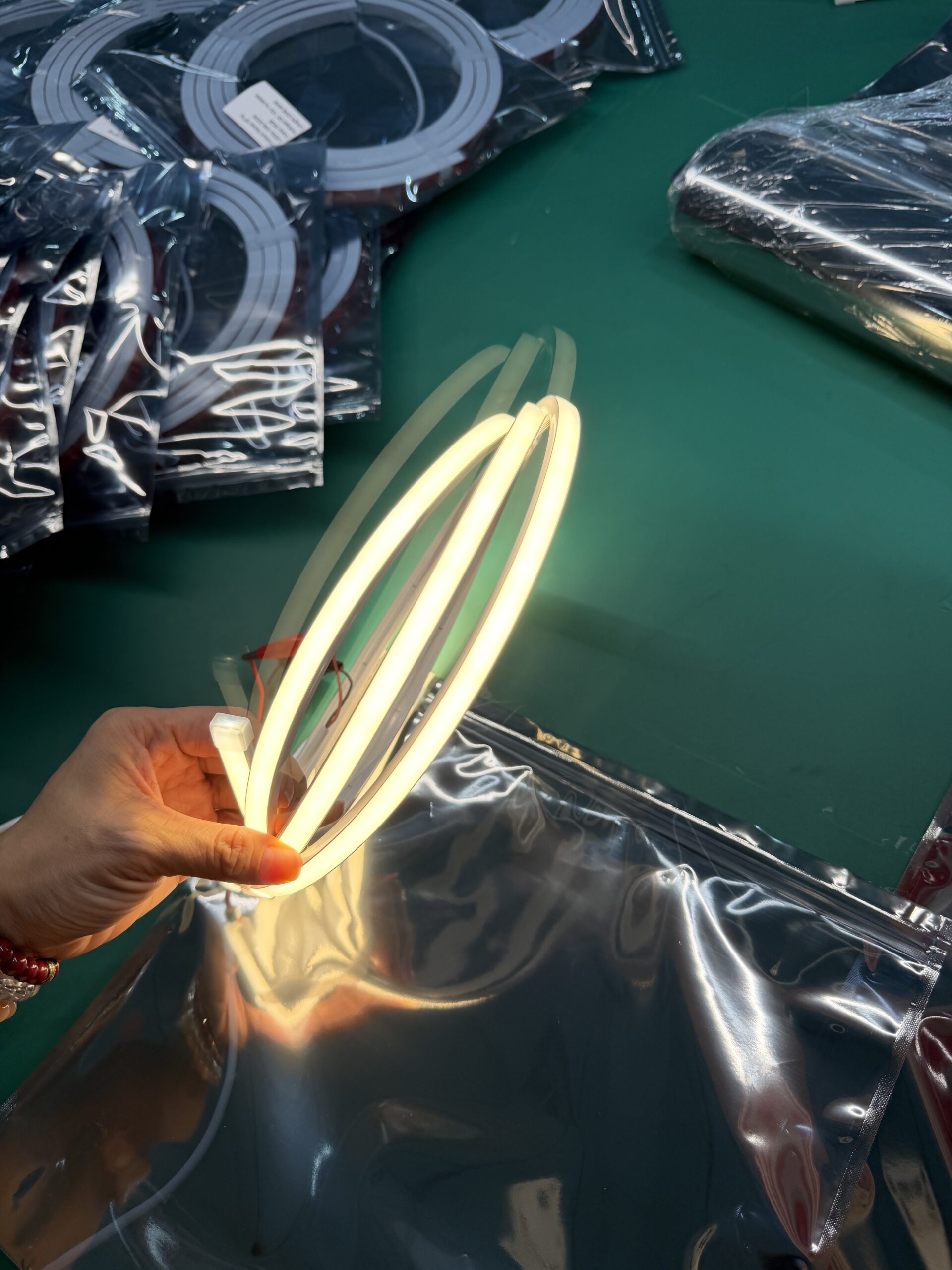
By combining materials with different modulus values, you can dramatically reduce interface shear forces and thermal fatigue at critical junctions. The outer layer essentially acts as a stress relief buffer, preventing cyclic loading from reaching the optical core and the embedded FPC.
Speaking of FPC, copper foil selection is critical. Most LED strips use ED (electrodeposited) copper because it's cheaper and provides good current-carrying capacity. But for applications inside silicone tube where thermal cycling is constant, RA (rolled annealed) copper delivers fatigue life several times longer than ED copper. The annealing process relieves internal grain structure stress, making the foil far more resistant to flex fatigue.
You should also design deliberate strain relief zones into the FPC layout. These are small slots or flexible regions placed at solder pads, wire exit points, bend locations, and potting compound boundaries. They allow localized material movement without concentrating stress in the copper traces. It sounds like a small detail, but I've seen it prevent complete system failures in long continuous runs.
Why Does Your Optical System Degrade Even When LEDs Are Still Working?
Here's something that surprised me early in my career: I've pulled samples from failed installations where every single LED still functioned perfectly when tested on a bench supply, yet the installed appearance was completely unacceptable—hot spots, dark zones, color inconsistency.
The issue was refractive index drift in the silicone. When silicone absorbs UV radiation, moisture, and atmospheric pollutants over months and years, its molecular structure changes slightly. Even small changes in refractive index—as little as 0.005—are enough to alter how light scatters and travels through the material.
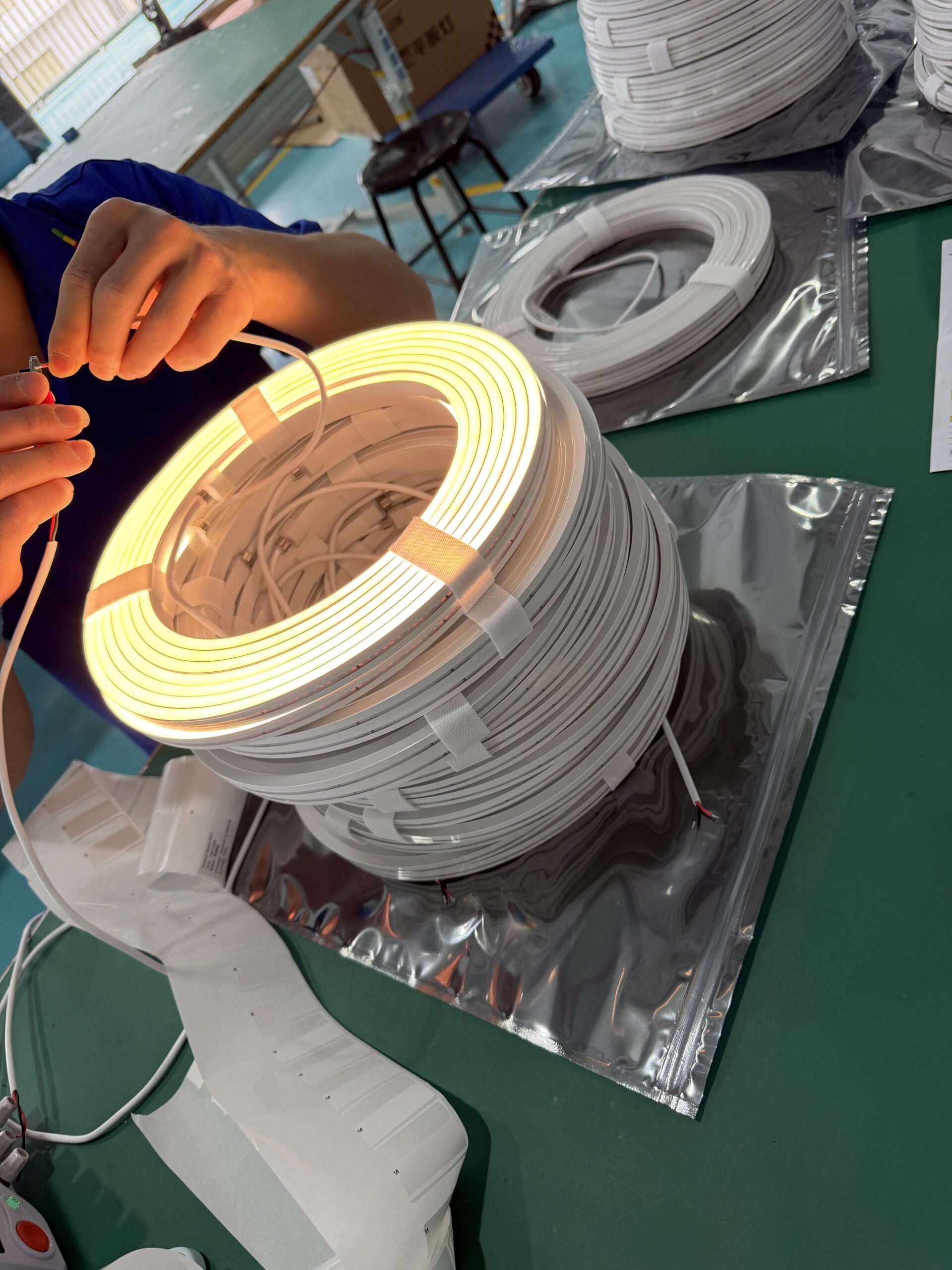
Initial silicone refractive index should be between 1.40 and 1.43 for LED applications. After exposure to ASTM G154 UV-fluorescent aging, double-85 humidity testing, and thermal cycling, the change in refractive index should remain below 0.005. If it drifts beyond that threshold, you start seeing hot spots, halo changes, and progressive non-uniformity even though the light source itself is unchanged.
This is why we work exclusively with suppliers who can provide long-term optical stability data, not just initial transmission measurements. A tube that shows 92% transmission on day one but drops to 78% after 2000 hours of UV exposure is going to create visible degradation in the field, guaranteed.
What Testing Actually Predicts Real-World Performance?
If a supplier only provides IP67/IP68 certification and salt spray test results, you don't have enough information to specify their product for a serious outdoor project.
IP ratings tell you whether water enters during a short-term immersion test under controlled conditions. They tell you nothing about long-term interface adhesion, thermal cycling performance, UV stability, or material compatibility. Those are the factors that determine whether your installation is still working in year three.
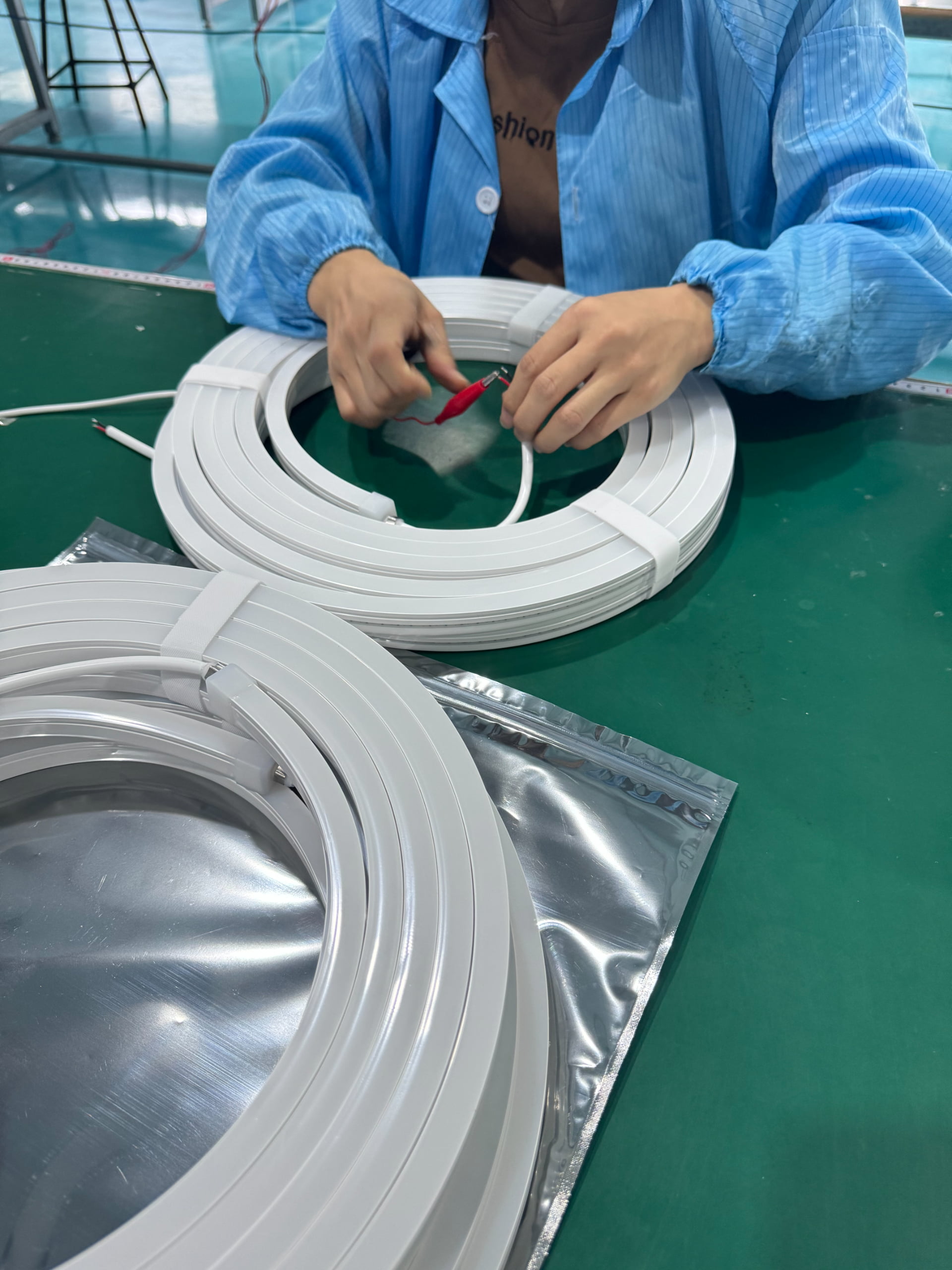
We require ASTM G154 UV-fluorescent aging to verify yellowing, chalking, and transmission loss. This test subjects samples to concentrated UV-B radiation alternating with condensation cycles, simulating months or years of outdoor exposure in a matter of weeks. If the sample shows significant yellowing (ΔE > 3) or surface degradation, it will fail in the field—period.
ISO 9227 salt spray testing is essential for coastal installations and industrial environments where airborne contaminants accelerate corrosion and material breakdown. But you need extended duration testing—1000+ hours—to meaningfully predict long-term stability.
VOC compatibility testing is something almost nobody does, and it's killed more projects than I can count. Adhesive backing, end cap sealants, potting compounds, and even cleaning solvents used during installation can migrate into silicone and trigger yellowing, softening, or cracking. You need to verify that every material touching your silicone tube is chemically compatible over the full operating temperature range.
Finally—and this is the big one—thermal cycling testing. I specify -40°C to +85°C for 500-1000 cycles minimum. The focus isn't whether the LED still lights up at the end. The focus is on interface delamination, end cap cracking, FPC fatigue, and dimensional stability. Pull samples at 250, 500, and 1000 cycles and do destructive cross-sectional analysis. That's where you see whether the material interfaces are surviving or silently failing.
| Test Standard | Purpose | Key Observation |
|---|---|---|
| ASTM G154 | UV-fluorescent aging | Yellowing, chalking, transmission loss |
| ISO 9227 | Salt spray (1000+ hours) | Corrosion resistance, surface integrity |
| VOC Compatibility | Chemical interaction testing | Migration-induced yellowing, softening |
| Thermal Cycling | -40°C ↔ +85°C, 500-1000 cycles | Interface delamination, fatigue, dimensional stability |
What Question Should You Actually Ask Your Supplier?
When you're evaluating waterproof bendable silicone tube for a large-scale installation, don't start by asking about IP rating, minimum bend radius, or initial light transmission. Those specs are easy to meet and tell you almost nothing about long-term reliability.
The question that actually matters is this: "After 5 years of UV exposure, thermal cycling, humidity infiltration, and structural vibration, how much interface bond strength will remain between your silicone tube, the FPC, the end cap sealant, and the aluminum mounting channel?"

Because here's what I've learned from too many expensive failures: engineering projects rarely collapse because of one dramatic event—a single rainstorm, a lightning strike, a manufacturing defect. They fail because tens of thousands of thermal cycles gradually accumulate shear stress at material interfaces, until one day the bond strength crosses a critical threshold and the system suddenly enters cascade failure mode.
When you see water ingress, yellowing, and dark sections, you're not witnessing the beginning of failure. You're witnessing the final stage of a process that started years earlier, hidden inside the material stack, invisible to inspection, accumulating damage cycle by cycle.
That's why material selection, interface engineering, and comprehensive long-term testing aren't luxuries for premium projects—they're the minimum requirements for any waterproof bendable silicone tube installation that you expect to still be working five years from now.
Conclusion
Waterproof failure isn't about water—it's about thermal cycling destroying material interfaces long before you ever see moisture. Choose materials and testing protocols that address the real failure mechanisms, not just the obvious ones.