

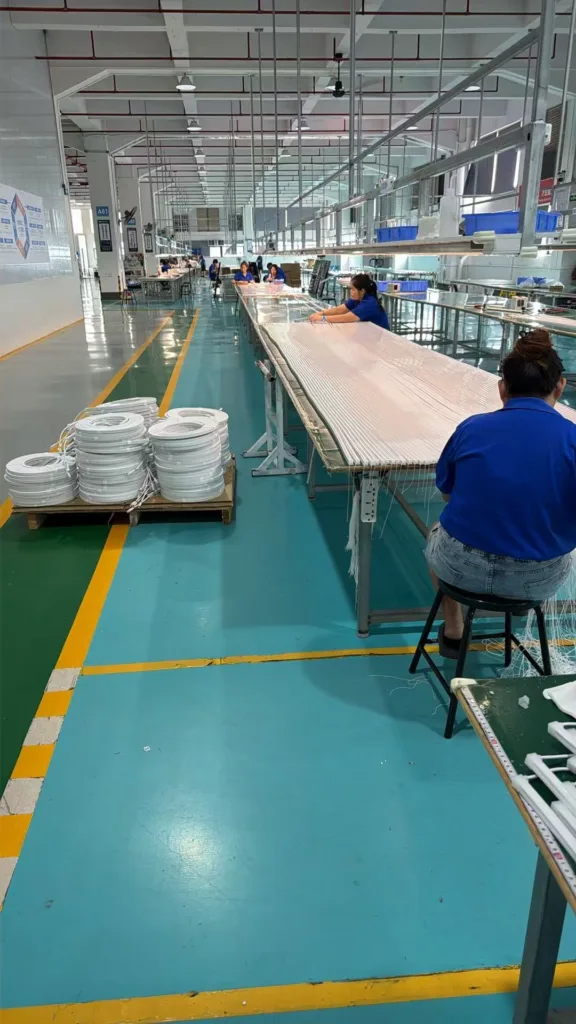
Most engineers focus on initial light uniformity when selecting a Silicone Neon Flex Diffuser. But in my experience working with large-scale architectural lighting projects, what destroys installations is not the diffusion performance on day one. It is the material instability of the diffuser layer under prolonged exposure to heat, UV radiation, and moisture-coupled environments.
A reliable Silicone Neon Flex Diffuser must maintain optical stability through thousands of thermal cycles, UV exposure, and chemical interactions with sealants and adhesives. The key is not just transparency, but refractive index stability (ΔRI ≤ 0.005 after 2000 hours UV aging), CTE compatibility with aluminum profiles (avoiding delamination), and VOC resistance to prevent yellowing. Focus on platinum-cure high-molecular-weight silicone with dual-diffusion systems and tri-extrusion structural design for projects exceeding 3 years lifespan.

I have witnessed too many projects that passed initial acceptance tests but started showing failures between year 2 and year 5. The problem is that laboratory tests measure static performance. Real construction sites expose diffusers to dynamic coupled environments. These are two completely different worlds.
What Actually Fails in Outdoor Silicone Neon Flex Diffuser Applications?
I remember a project in the Middle East commercial complex. The design required continuous illuminated contours with no visible LED dots, daytime visibility, IP68 protection, and over 10 years lifespan. The supplier chose a high-transparency diffusion silicone with impressive lab data: 91% light transmittance, 82% haze, 1000 hours double-85 test pass, and initial Delta E less than 1.5.
Diffuser failures in real projects follow a three-stage pattern: Stage 1 (month 7) shows abnormal brightness decay due to molecular chain breakage under high-temperature UV exposure. Stage 2 (month 14) presents uncontrolled yellowing where Delta E reaches 9.4, caused by UV-induced oxidation, volatile absorption, and optical filler agglomeration. Stage 3 (month 22) leads to structural failure through delamination between the diffuser layer (CTE 250-320 ppm/℃) and aluminum profile (CTE 23 ppm/℃) after tens of thousands of thermal stress cycles.
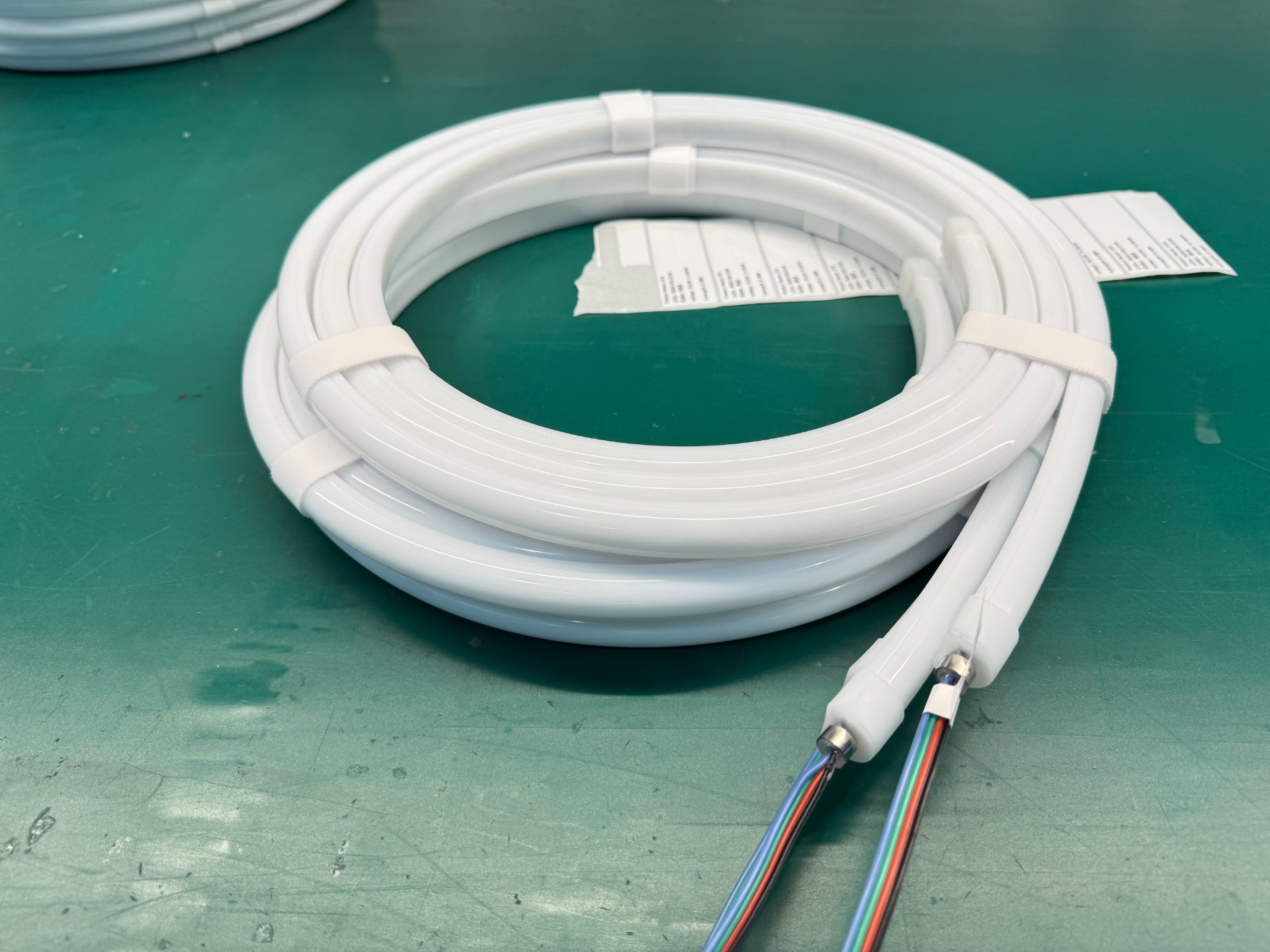
The project passed acceptance smoothly. But problems emerged after the 7th month. During nighttime operation, localized dark zones appeared. Under identical driving conditions, some areas showed 12% light output reduction. The LED modules were fine. The issue was in the diffuser layer.
Under high-temperature environments, the silicone surface reached over 78℃ during daytime. Combined with prolonged UV radiation accumulation and continuous sand particle erosion, molecular chains inside the diffusion silicone broke down. Low-molecular-weight components migrated to the surface. This caused light transmittance to drop.
By the 14th month, the building's night scene showed obvious color banding. Laboratory re-testing revealed Delta E had reached 9.4, far exceeding acceptable ranges for architectural lighting. The root cause was not LED failure. Inside the diffuser layer, UV-induced oxidation, volatile absorption, and optical filler agglomeration worked together. The refractive index (RI) of the diffusion layer changed. The originally uniform diffusion light field became unbalanced.
At the 22nd month, some corner areas showed intermittent lighting. Disassembly revealed local delamination between the diffusion silicone and internal structural layers. The cause was typical. The diffuser layer CTE was approximately 250-320 ppm/℃, while the aluminum profile CTE was about 23 ppm/℃. After two years of thermal cycling with ΔT exceeding 50℃, the system accumulated tens of thousands of thermal stress cycles. This ultimately formed interface peeling, microcrack propagation, and stress concentration. The stress further pulled the internal FPC, causing copper foil fatigue cracks. The entire lighting system entered chain failure.
Why Do "Perfect" Lab Samples Fail Quickly in Field Installations?
Laboratory testing typically focuses on initial light transmittance, initial haze, IP rating, and short-term aging. Engineering environments simultaneously present UV radiation, thermal cycling, salt spray, VOC pollution, wind load vibration, and installation stress. These factors amplify each other, forming a failure chain.
Laboratory environments test static performance under controlled conditions (single stress factor, constant temperature, clean environment). Field installations face dynamic coupled stresses where thermal cycling (ΔT 50℃+), UV radiation (1200+ hours/year), chemical interactions with sealants/adhesives, and mechanical vibration create synergistic degradation. This explains why diffusers passing 1000-hour double-85 tests fail within 18 months outdoors. The test-to-reality performance gap requires validation through ASTM G154 UV aging, ISO 9227 salt spray, VOC compatibility testing, and 500+ cycle thermal shock tests (-40℃ ↔ +85℃).
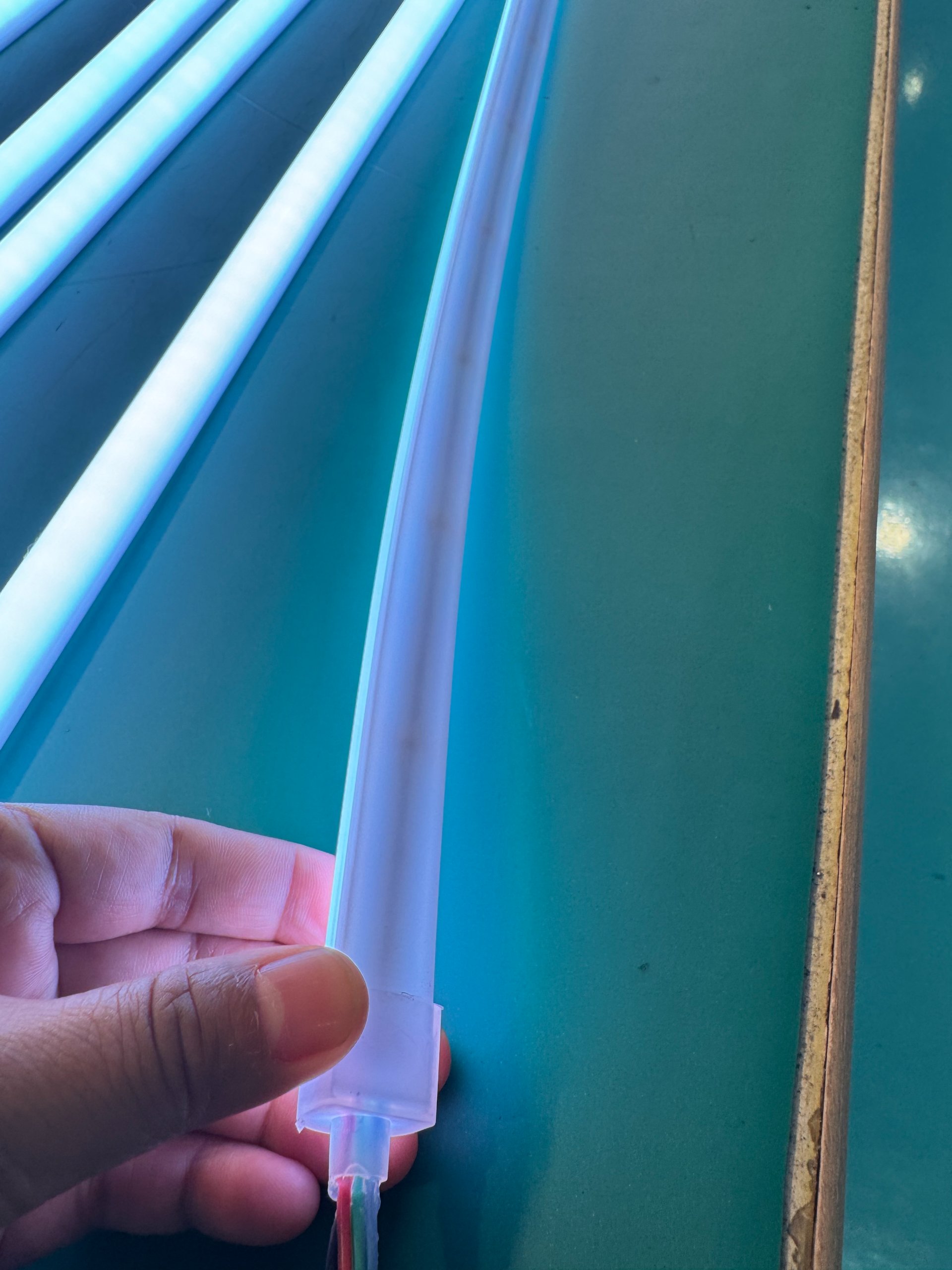
I have learned that many suppliers only perform IP67, IP68, and standard double-85 tests. This is far from sufficient. Real validation systems should include ASTM G154 UV fluorescent accelerated aging to observe yellowing, chalking, and light transmittance decline. ISO 9227 salt spray corrosion testing is essential for coastal buildings, bridge lighting, and port landscapes.
VOC compatibility testing verifies whether adhesive tape, sealant, potting compound, and cleaning agents cause chemical contamination with diffuser materials. Thermal cycling tests should run 500-1000 cycles from -40℃ to +85℃, focusing on CTE mismatch, interface peeling, microcrack propagation, and diffuser layer delamination.
I recommend always asking suppliers: "After 5 years of UV exposure, thermal cycling, VOC pollution, and cumulative mechanical stress, what percentage of the original refractive index, light transmittance, yellowing index (Delta E), and interfacial bond strength remains?" This question separates reliable manufacturers from those offering only attractive day-one performance.
How Should High-Performance Diffuser Materials Be Engineered?
For outdoor projects, the diffuser layer should never prioritize maximum transparency alone. The real priority is long-term stability. I always recommend platinum-cure silicone systems with high molecular weight and low VOC formulas.
Reliable diffuser material engineering requires: (1) Material selection—platinum-cure high-molecular-weight silicone with VOC content <0.3%, Delta E <3 post-ASTM G154, and Shore A hardness 60-70 to balance compression set and stress concentration. (2) Optical design—dual-diffusion systems combining nanoscale silica and optical-grade diffusion particles, targeting 85-88% transmittance and 85-92% haze for stable uniformity. (3) Structural design—tri-extrusion architecture with high-transparency diffusion layer, high-strength structural layer, and stress-buffering installation layer to minimize thermal stress through modulus gradients.

Materials that are too soft exhibit high compression set. Under long-term pressure, they deform permanently. Materials that are too hard create stress concentration in bending areas. In my projects, 60-70 Shore A typically represents the balance zone for large-scale installations.
Many suppliers use single diffusion powder. Short-term results look good, but long-term agglomeration is common. A more stable approach is the dual-diffusion system combining nanoscale silicon micropowder and optical-grade diffusion particles. I control for 85-88% light transmittance and 85-92% haze, rather than blindly pursuing over 90% transmittance. This achieves more stable lighting uniformity over time.
Does Tri-Extrusion Architecture Really Prevent Delamination?
In large-scale projects, the diffuser cannot be just a silicone cover. A more rational solution uses three co-extruded layers. The first layer is the high-transparency diffusion layer responsible for optical uniformity. The second layer is the high-strength structural layer handling tear and tensile resistance. The third layer is the installation positioning layer managing stress buffering.
| Layer | Function | Material Characteristics | Performance Target |
|---|---|---|---|
| Layer 1 (Optical) | Light diffusion uniformity | High transparency, dual-diffusion system | Transmittance 85-88%, Haze 85-92% |
| Layer 2 (Structural) | Tear/tensile resistance | High-strength silicone compound | Tensile strength >8 MPa, Elongation >400% |
| Layer 3 (Installation) | Stress buffering | Intermediate modulus material | CTE gradient management, Shore A 55-65 |
By combining different modulus materials, shear stress generated by thermal cycling can be reduced. This directly addresses the CTE mismatch between 250-320 ppm/℃ diffuser silicone and 23 ppm/℃ aluminum profiles.
I have seen installations where single-layer diffusers failed at corner joints after 18 months due to concentrated thermal stress. The tri-extrusion design distributes stress across gradient modulus interfaces, preventing localized failure initiation points.
What Controls Long-Term Optical Uniformity Better Than Initial Brightness?
Many engineers only care about light transmittance. But what truly determines long-term lighting uniformity is refractive index stability. I have learned this through repeated field failures where initial performance was excellent but degradation appeared after two years.
Refractive index stability (not initial transmittance) determines long-term optical uniformity. Specify initial RI of 1.40-1.43 with maximum drift ΔRI ≤ 0.005 after 2000 hours UV aging plus 1000 hours double-85 testing. Beyond this range, hot spots, halo changes, and visible brightness banding emerge. This happens because RI changes alter light path geometry, causing previously uniform diffusion to become directionally biased. Projects must validate RI stability through accelerated aging protocols combining UV, thermal, and humidity stresses simultaneously.

Exceeding the ΔRI threshold of 0.005 typically produces hot spots, halo changes, and declining luminous uniformity. The result is visible bright-dark striping to the naked eye. This is because RI changes modify the optical path. Even minor changes in material density or molecular structure redirect light rays unpredictably.
I remember one project where the diffuser maintained 87% transmittance after aging tests, and the supplier considered this a success. But we measured RI change of 0.012. Under nighttime operation, the facade showed clear banding every 2 meters where diffuser sections joined. The naked eye immediately spotted the non-uniformity despite acceptable transmittance numbers.
Can Diffusers Amplify Small LED Color Variations Into Visible Bands?
Many projects experience color banding not from LED failure, but from diffusers amplifying originally minor color differences. For large-scale projects, I always require 3-Step MacAdam Ellipse binning, project-wide bin locking, and same-batch diffusion materials.
Diffuser optical properties amplify LED color temperature variations through light path modification. Require: (1) 3-Step MacAdam Ellipse tolerance across all LED batches. (2) Project-wide bin locking with no mixing of CCT bins. (3) Same production batch for all diffuser materials to ensure consistent scattering properties. Without these controls, even 5% LED CCT variation becomes 15-20% visible color shift after diffusion. This effect intensifies at 2700K, 3000K, and in RGBW dynamic systems where multiple wavelengths interact with scattering particles differently.
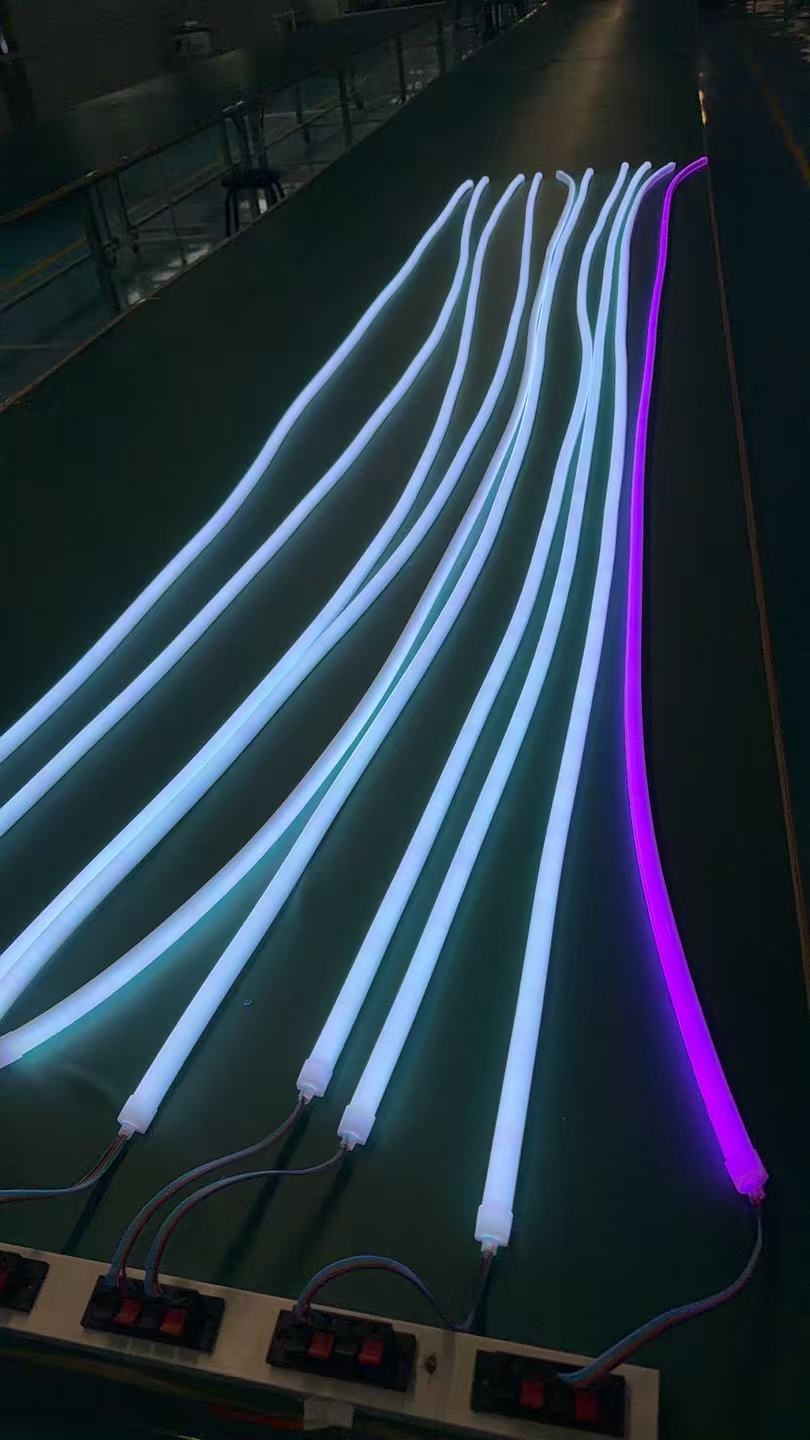
The diffuser changes the light path. Any LED color temperature deviation gets further magnified. This becomes especially obvious at 2700K, 3000K, and in RGBW dynamic systems. I once witnessed a project where LEDs were binned within 3-step MacAdam, but diffuser materials came from three different production batches. The scattering particle distributions varied slightly. This created visible color inconsistency across the facade despite perfect LED matching.
In dynamic RGBW systems, the problem compounds. Different wavelengths scatter at different angles through the same diffuser material. If the diffuser's particle size distribution varies between batches, red might scatter 8° while blue scatters 12° in one section, but red scatters 10° and blue scatters 10° in another section. The result is color gradient shifts that change with viewing angle.
What Should Be Included in Comprehensive Diffuser Validation Protocols?
If a diffuser only passes IP67, IP68, and standard double-85 testing, the validation is completely inadequate. Real validation protocols must include multiple stress factors applied simultaneously and sequentially.
Comprehensive validation requires four critical test protocols: (1) ASTM G154 UV fluorescent accelerated aging (2000+ hours) to verify yellowing, chalking, and transmittance stability. (2) ISO 9227 salt spray testing (1000+ hours) for coastal, bridge, and port applications to assess corrosion resistance and seal integrity. (3) VOC compatibility testing exposing diffuser samples to adhesive tapes, sealants, potting compounds, and cleaning agents to verify no chemical migration or surface contamination. (4) Thermal cycling testing through 500-1000 cycles (-40℃ ↔ +85℃) to validate CTE compatibility, interface adhesion, and microcrack resistance.
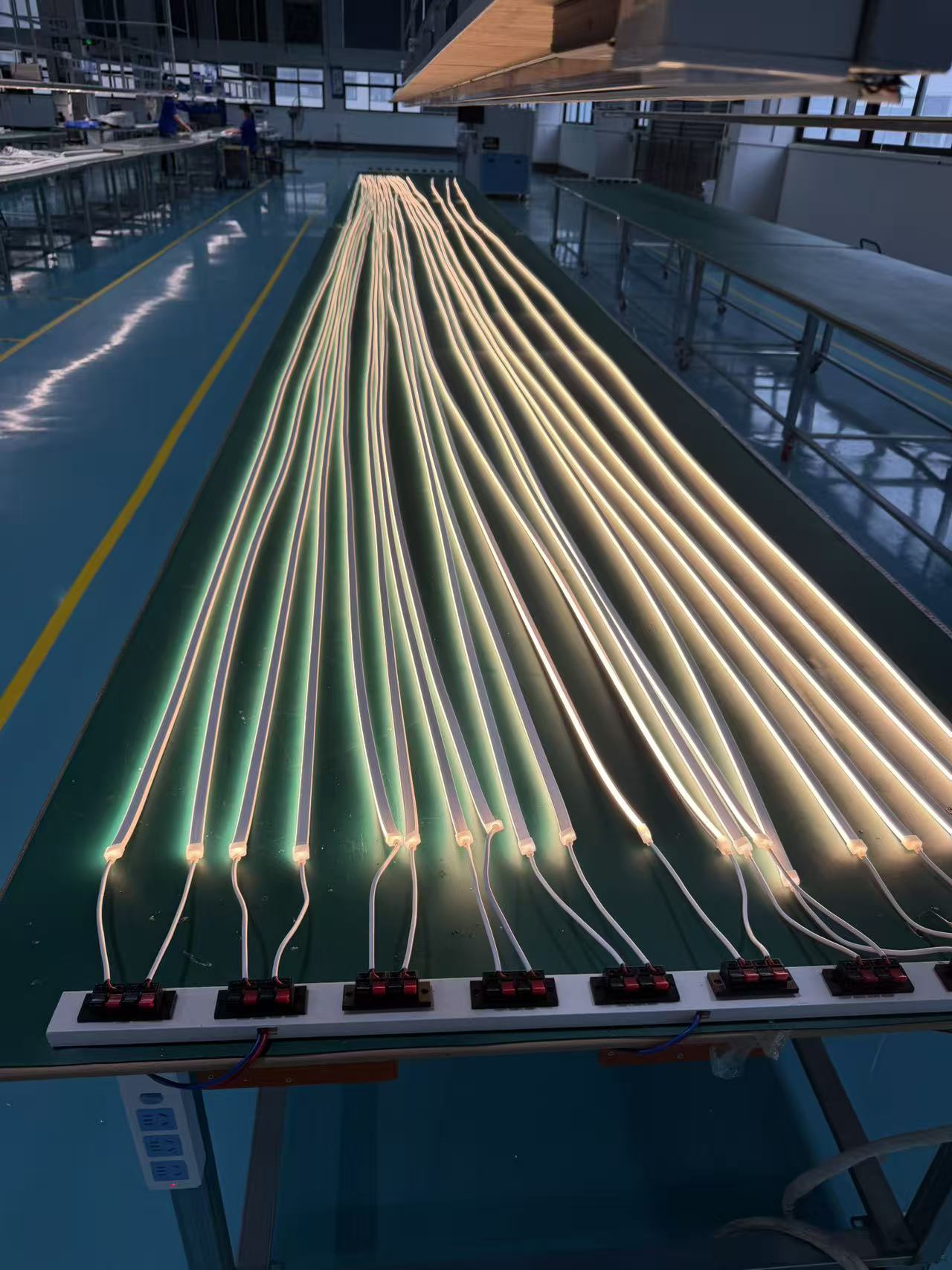
ASTM G154 UV fluorescent accelerated aging should run for 2000+ hours. I focus on observing yellowing through Delta E measurements, surface chalking through gloss retention, and light transmittance decline measured at multiple wavelengths. A passing result maintains Delta E below 3 and transmittance loss under 5%.
ISO 9227 salt spray testing should extend to 1000+ hours for projects near seawater, bridges over rivers, and port landscapes. This validates both corrosion resistance and seal integrity. I look for no visible pitting, no delamination at interfaces, and maintained IP rating after exposure.
VOC compatibility testing is often overlooked but critical. I expose diffuser samples to common installation materials: acrylic adhesive tapes, silicone sealants, polyurethane potting compounds, and isopropyl alcohol cleaning solutions. After 500 hours contact at 60℃, samples should show no surface discoloration, no RI change, and no loss of mechanical properties. Many diffusers fail this test when VOCs from adhesives migrate into the silicone matrix, causing localized yellowing and transmittance loss.
Thermal cycling testing should run 500-1000 cycles from -40℃ to +85℃ with 30-minute dwell times and 15-minute transitions. I prioritize observing CTE mismatch effects, interface peeling between diffuser and substrate, microcrack initiation and propagation, and any diffuser layer delamination from the base extrusion. Failures typically appear after 300-500 cycles as small visible separations at corner bends.
When Should Different Test Protocols Be Applied Based on Installation Environment?
Different installation environments demand different validation emphasis. I have developed a test protocol matrix based on dominant stress factors.
| Environment Type | Primary Stress Factors | Critical Validation Tests | Pass Criteria |
|---|---|---|---|
| Coastal/Marine | Salt spray, UV, humidity | ISO 9227 (1000h), ASTM G154 (2000h), IP68 | No pitting, ΔE <3, maintained IP rating |
| Desert/High-altitude | UV intensity, thermal cycling, sand erosion | ASTM G154 (3000h), Thermal shock (-40/+85℃, 1000 cycles) | Transmittance loss <5%, no surface damage |
| Urban/Industrial | VOC pollution, thermal cycling, mechanical vibration | VOC compatibility, Thermal cycling (500 cycles), Vibration testing | No discoloration, no delamination, no cracking |
| Indoor/Commercial | VOC exposure, constant temperature, installation stress | VOC compatibility, Compression set testing, Adhesion strength | No yellowing, <15% compression set, >20N/cm peel strength |
For a coastal building facade in Singapore, I specified extended salt spray testing combined with UV aging because both stresses occur simultaneously. For a desert installation in Dubai,