
I've seen too many projects fail not because the lights stopped working, but because nobody asked the right questions before signing the contract.
If you're looking for an online custom LED company, the real question isn't "who makes the prettiest lights?" The question is: who can help you avoid systematic failure five years from now. Most suppliers focus on samples, pricing, and delivery times. But the projects that cost the most to fix later aren't the ones with dim lights—they're the ones where material compatibility breaks down silently over hundreds of thermal cycles.
I'm going to walk you through what actually matters when you're choosing a custom LED partner. This isn't about finding the cheapest supplier. It's about understanding what separates a product vendor from an engineering partner.
Why Do Most Sample Tests Pass But Real Installations Fail?
Most procurement teams make the same mistake. They trust the sample.
Sample testing can verify short-term performance, but it rarely exposes the long-term material system failures that emerge only after 2-3 seasonal cycles. The real risk isn't what you see in the lab—it's what happens when different materials with mismatched thermal expansion coefficients undergo hundreds of heating and cooling cycles in actual installation conditions.
I worked on a coastal commercial complex project where everything looked perfect at first. The custom side-view LED silicone neon flex passed every initial test. LM-80 data was solid. IP68 waterproof rating checked out. The 1000-hour double-85 test (85°C temperature, 85% relative humidity) showed no issues. Light output maintained above 95%.
But eight months after installation, things started going wrong. The building facade was exposed to summer surface temperatures peaking at 72°C, winter lows dropping to -12°C, and daily temperature swings exceeding 35°C. Add constant UV exposure and salt spray from being 1.5 kilometers from the coast, and you have a recipe for failure that no short-term lab test will catch.
The first sign was subtle color shifts at the strip endpoints. Then it spread. When we pulled samples for analysis, we found three layers of failure:
Layer One: Interface Delamination
The silicone jacket and end-cap sealant began micro-delamination. This wasn't an installation error. It was a material science problem. Two materials with different modulus values, different coefficients of thermal expansion (CTE), and different crosslink densities were subjected to hundreds of thermal cycles. The continuous shear stress created micro-cracks in the adhesive layer.
Layer Two: Moisture Intrusion
Once cracks formed, atmospheric moisture started migrating along the interface. Not flooding—just slow vapor diffusion. Standard IP68 tests don't catch this because they test short-term water immersion, not long-term humid-heat cycling combined with breathing effects.
Layer Three: Optical Degradation
Moisture triggered hydrolysis in the LED encapsulation silicone. The phosphor system degraded. Local color temperature drifted. Delta E values jumped from 1.8 to 8.6. At night, the entire building displayed visible color banding—sections of yellow, white, and blue creating a broken visual line.
The entire installation had to be replaced. The real cost wasn't just new LED strips. It was high-altitude platform rental, night construction premiums, operational downtime, and brand image damage. Total cost: ten times the original procurement budget.
| Failure Stage | Root Cause | Detection Method | Prevention Strategy |
|---|---|---|---|
| Interface Delamination | CTE mismatch between silicone jacket and sealant | Extended thermal cycling (500+ cycles) | Material system compatibility validation |
| Moisture Intrusion | Micro-crack formation under thermal stress | Long-term humidity exposure testing | Low-VOC platinum-cure silicone systems |
| Optical Degradation | Phosphor hydrolysis from vapor diffusion | Color stability under humid-heat cycling | Hermetic sealing + compatible material selection |
What Technical Specifications Actually Matter For Long-Term Reliability?
Most online custom LED companies will send you a spec sheet. It will list brightness, color temperature, IP rating, and maybe some certification logos. But these specs tell you almost nothing about whether your installation will survive five years in the field.
The specifications that predict long-term success aren't about the LED itself—they're about the material system integration. A custom LED strip is not a single product. It's a composite system containing LED encapsulation silicone, extruded silicone jacket, FPC substrate, copper traces, thermal interface materials, adhesive backing, end-cap sealant, potting compound, aluminum channel, and mounting hardware. Any single interface failure cascades into total system failure.
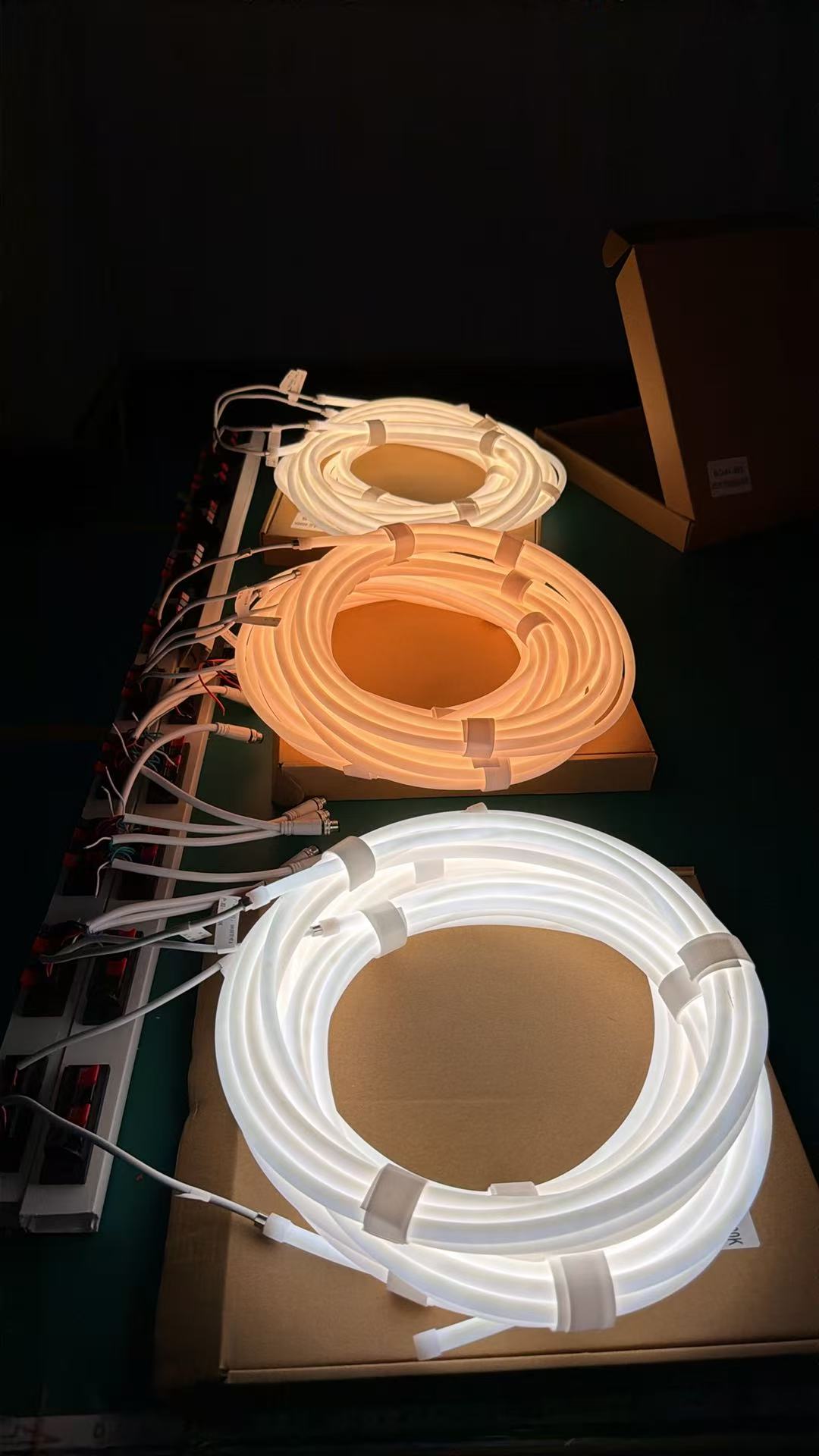
I've identified four critical technical areas that most suppliers either ignore or don't understand deeply enough:
Silicone Chemistry Must Be Platinum-Cure Low-VOC
Many projects experience yellowing that has nothing to do with UV exposure. The real culprit is VOC contamination from acrylic adhesives, polyurethane compounds, inferior RTV silicone, or solvent residues. These volatile organic compounds accumulate inside sealed aluminum channels and gradually contaminate the LED surface silicone, causing irreversible yellowing.
For architectural projects, we recommend platinum-cure silicone with low-VOC formulation and high-molecular-weight polysiloxane systems. The critical thresholds are TVOC ≤ 50 μg/g and fogging values compliant with DIN 75201 standards.
Silicone Hardness Needs Balance, Not Just Flexibility
Many buyers prefer Shore A hardness below 40 because samples feel softer and more flexible. But for large-scale installations, excessively soft materials mean higher compression set, greater thermal creep, and lower tear resistance. For building facade applications, we typically recommend Shore A 55-70 to balance flexibility with structural stability over extended periods.
FPC Design Must Include Stress Relief Engineering
Most LED strip failures aren't dead LEDs—they're copper trace fatigue fractures. This happens at wire termination points, solder pads, corner bends, and potting boundaries where long-term thermal expansion creates cyclic loading. Solutions include strain relief design with stress concentration reduction features, flexible transition zones, and discontinuous copper trace architectures. We also specify RA copper (rolled annealed copper) rather than standard ED copper because bend cycle life typically increases by several orders of magnitude.
Color Consistency Must Lock Within 3-Step MacAdam
Many suppliers offer 5-step, 7-step, or even wider MacAdam ellipse binning. Sample stage looks fine. But when installation length reaches 50, 100, or 200 meters, color variation becomes dramatically visible. Large projects should specify ≤3-step MacAdam ellipse with project-level bin locking, not just batch-level locking.
| Specification Category | Standard Practice | Engineering Best Practice | Why It Matters |
|---|---|---|---|
| Silicone Chemistry | Unspecified cure system | Platinum-cure, Low-VOC, TVOC ≤50 μg/g | Prevents VOC-induced yellowing |
| Hardness | Shore A <40 (flexibility focus) | Shore A 55-70 (balanced) | Reduces compression set and thermal creep |
| FPC Copper | Standard ED copper | RA copper + stress relief design | Prevents fatigue fracture under thermal cycling |
| Color Binning | 5-7 step MacAdam | ≤3-step, project-locked bins | Eliminates visible color banding in long runs |
Which Validation Tests Should You Actually Require?
If a custom LED supplier only provides LM-80, IP67/IP68, and salt spray test reports, they're not ready for serious architectural or commercial signage projects. Real engineering validation requires testing the material system, not just the product.
The validation tests that matter aren't about proving the LED works—they're about predicting how material interfaces will behave after thousands of thermal cycles, UV exposure hours, and environmental stress combinations that no single standard test can replicate. Projects fail when we trust tests that weren't designed to reveal the actual failure modes.
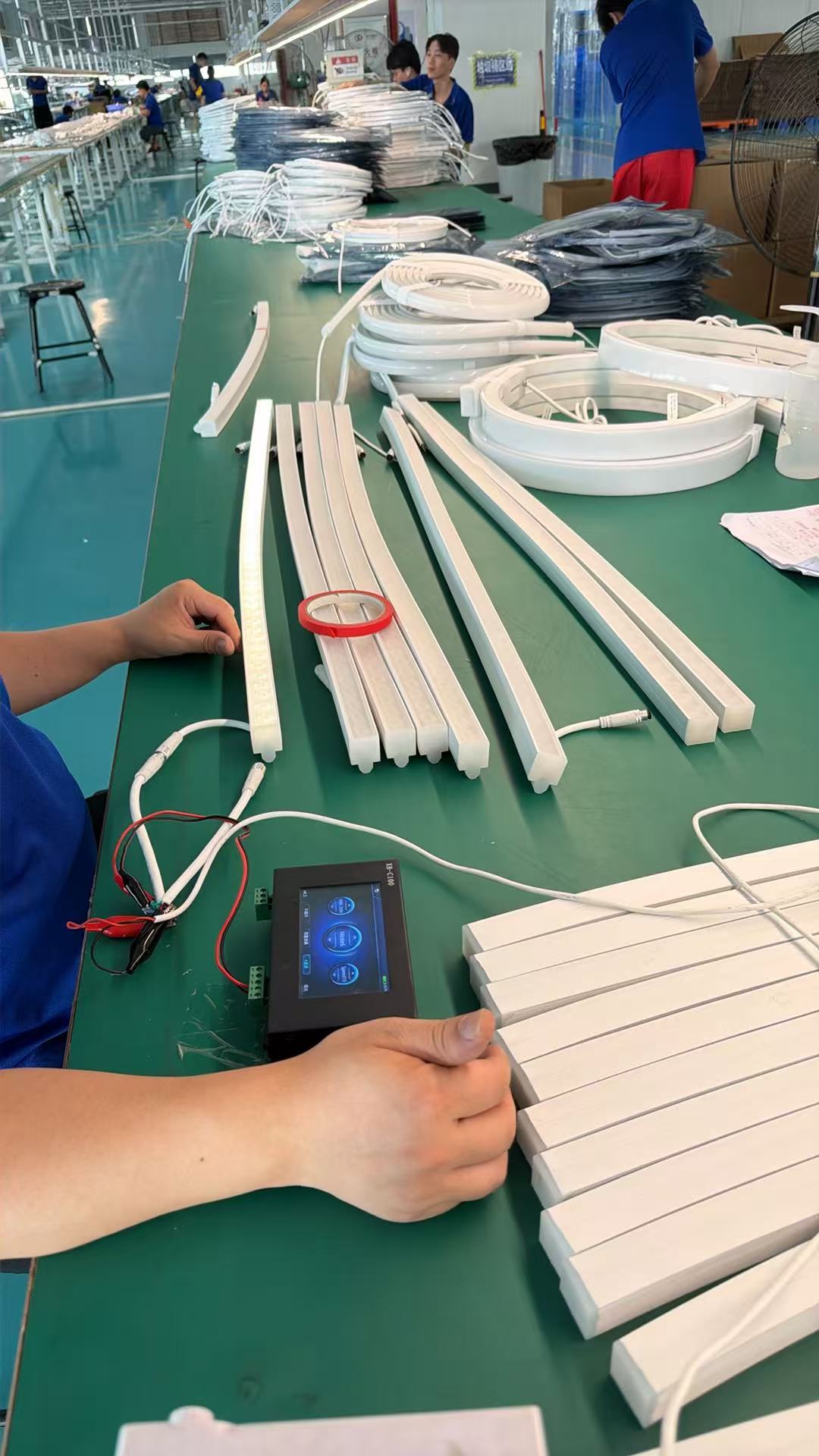
I require four additional validation protocols that most online custom LED companies have never performed:
ASTM G154 UV Fluorescent Accelerated Weathering
This test reveals yellowing trends, surface chalking, and optical transmittance degradation that won't appear in short-term UV exposure tests. We run extended cycles to project 5-year outdoor performance.
ISO 9227 Enhanced Salt Fog Testing
Critical for coastal buildings, port facilities, and bridge landscape projects. Standard salt spray testing often uses unrealistic concentrations and durations. We extend test periods and verify not just corrosion resistance but also adhesive bond integrity after salt exposure.
VOC Compatibility Testing
This is the test almost no one runs, yet it's where I've seen the most failures. We test the long-term compatibility between backing adhesive, potting compound, sealants, and cleaning solvents with the silicone system. VOC outgassing from incompatible materials is a silent killer of LED optical systems.
Thermal Cycling Testing: -40°C to +85°C for 500-1000 Cycles
This is where we observe interface delamination, end-cap cracking, solder joint fatigue, and structural damage from CTE mismatch. Standard qualification might run 100 cycles. Real architectural applications need 500-1000 cycles to expose cumulative damage mechanisms.
When I evaluate a potential custom LED partner, I don't ask about minimum order quantities or unit prices first. I ask: "How do you validate interface stability between silicone, backing adhesive, end-cap sealant, FPC substrate, and aluminum channel after five years of thermal cycling?"
| Test Protocol | Standard Duration | Engineering Duration | What It Reveals |
|---|---|---|---|
| ASTM G154 UV | 500-1000 hours | 2000+ hours | Long-term yellowing, surface degradation |
| ISO 9227 Salt Fog | 96-240 hours | 500-1000 hours | Adhesive failure, corrosion propagation |
| VOC Compatibility | Not typically tested | 30-90 days elevated temperature | Material interaction, contamination risk |
| Thermal Cycling | 100 cycles | 500-1000 cycles | Interface delamination, CTE mismatch damage |
How Do You Identify A True Engineering Partner Versus A Product Vendor?
The difference becomes obvious in the first conversation. Product vendors will immediately send you a catalog with LED strip photos, technical specifications, and pricing tables. Engineering partners will ask you questions.
A true custom LED engineering partner doesn't start by showing you what they make—they start by understanding what happens after installation. They ask about installation environment, temperature extremes, UV exposure, moisture conditions, thermal cycling frequency, expected service life, maintenance access limitations, and aesthetic consistency requirements across the entire project.
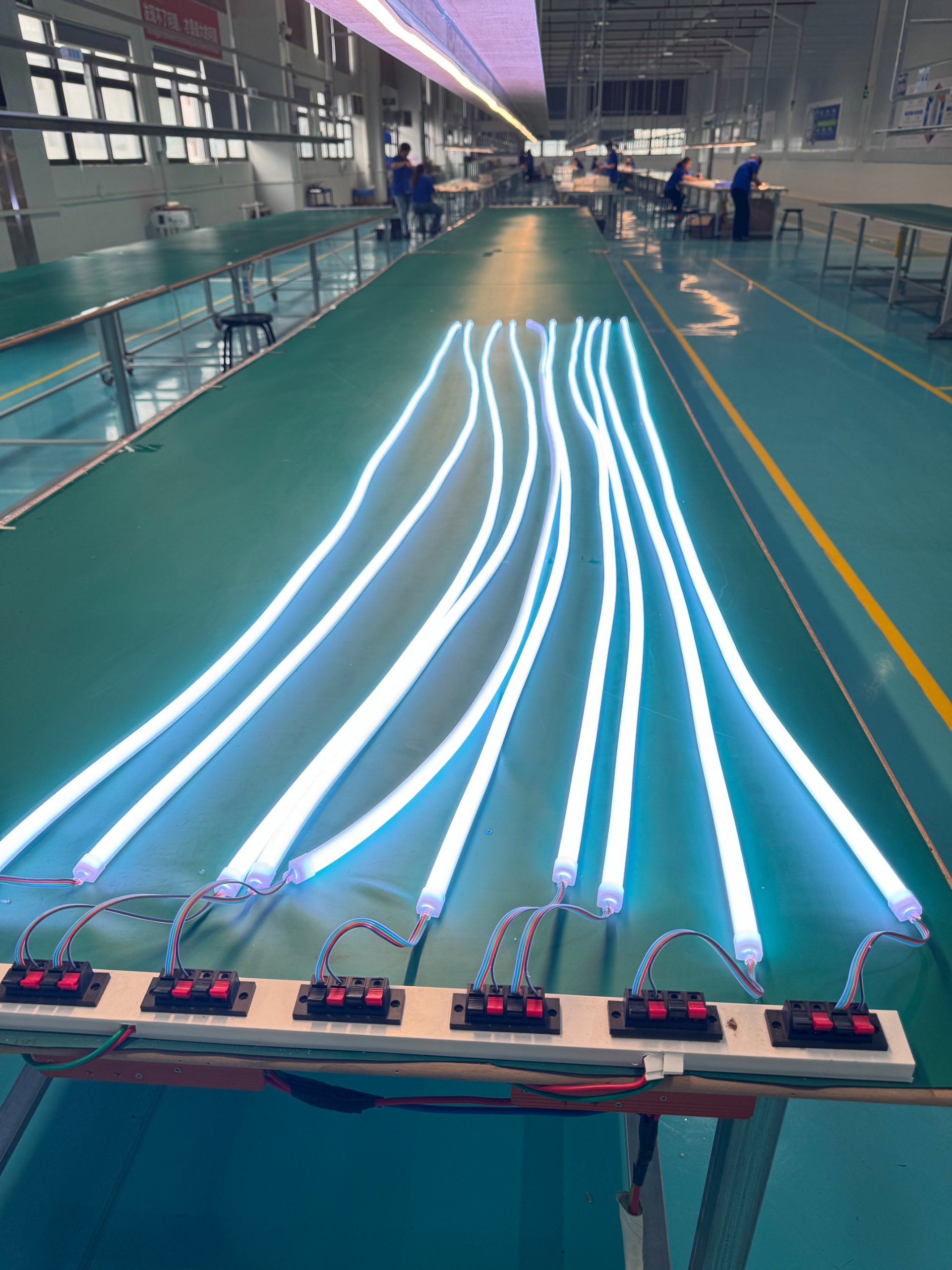
When you contact an online custom LED company, pay attention to what they ask before they quote. Do they want to know:
- What is your installation environment? (Indoor controlled, outdoor exposed, underwater, high-altitude, coastal, desert, tropical?)
- What are the temperature extremes? (Daily range, seasonal range, surface temperature vs. ambient temperature?)
- What is your expected service life? (2 years, 5 years, 10 years?)
- What are your maintenance limitations? (Easy access, high-altitude difficulty, underwater access, zero-maintenance requirement?)
- What is your aesthetic consistency requirement? (Single sign, building facade, long linear run, multi-building campus?)
If they skip these questions and jump straight to "Here's our catalog, what do you want to order?" they're not equipped to support engineering projects. They're selling commodity products with no understanding of application-specific failure modes.
At our company, we operate differently. When someone contacts us about custom LED solutions, our first response isn't a price list. It's a technical questionnaire. We need to understand the complete material system you're working with because we know that the LED strip is just one component in a larger assembly.
We ask about:
- Aluminum channel specifications (extrusion alloy, anodizing type, thermal conductivity)
- Mounting substrate materials (concrete, metal panel, acrylic, glass)
- Adhesive types already specified in your project
- Environmental sealing requirements
- Control system integration (DALI, DMX512, SPI, analog)
- Electrical distribution design
Then we perform compatibility analysis before we even discuss pricing. Because we understand that a technically perfect LED strip can still fail catastrophically if it's integrated into an incompatible material system.
What Questions Should You Ask Before Signing A Contract?
Most procurement processes focus on the wrong metrics. Price per meter. Minimum order quantity. Delivery time. Warranty period. These matter, but they're secondary to technical capability.
The questions that predict project success aren't about commercial terms—they're about technical depth. Can this supplier explain material science? Do they understand failure modes? Have they supported projects similar to yours? Can they provide post-installation support when problems emerge years later?
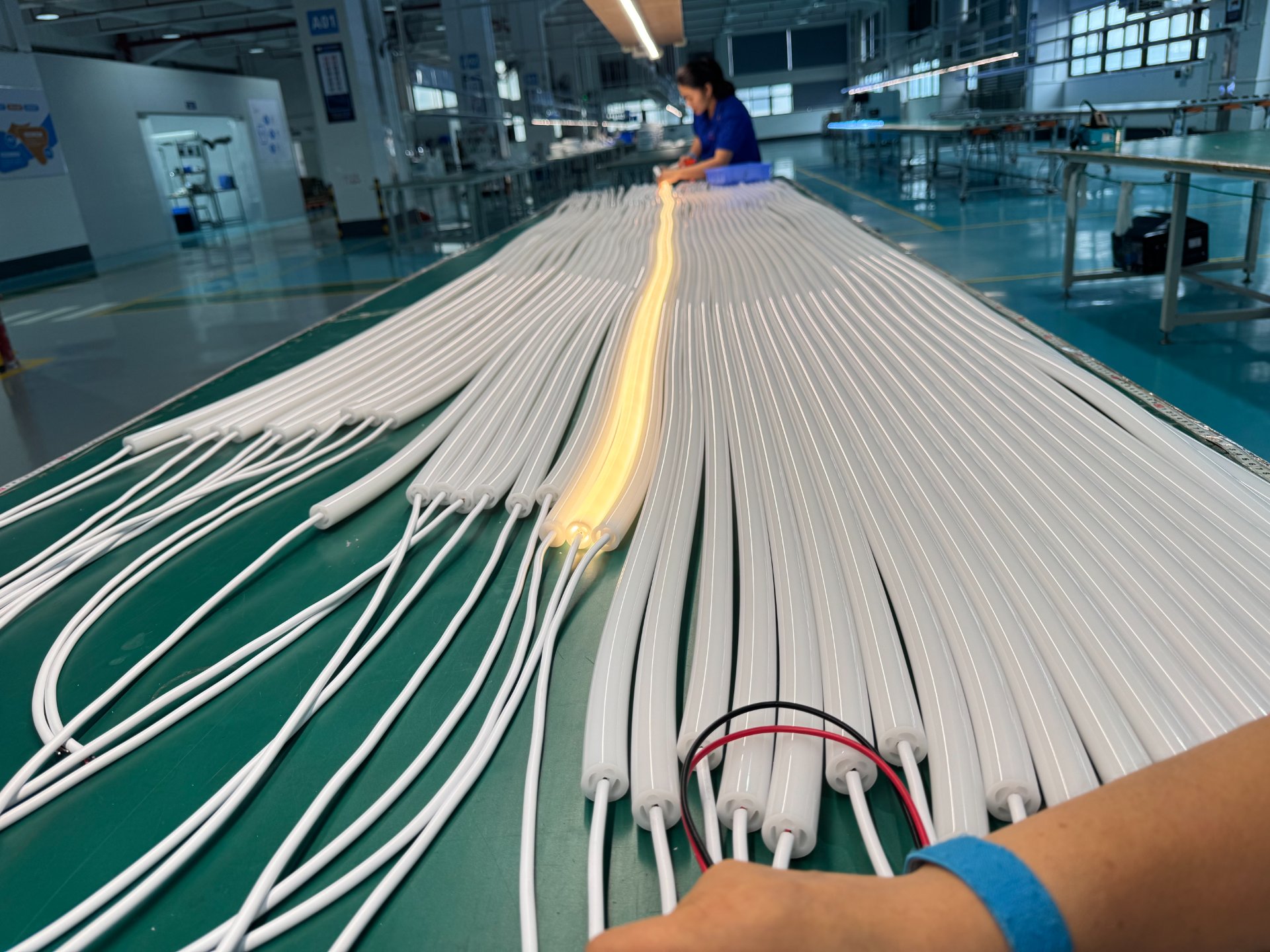
I recommend asking these specific questions:
"What is your silicone material specification and why did you choose that formulation?"
A product vendor will say "food-grade silicone" or "high-quality silicone" without specifics. An engineering partner will discuss platinum-cure systems, molecular weight distribution, VOC control, and how their material selection relates to your specific application environment.
"How do you control CTE mismatch between different materials in the assembly?"
This question immediately separates technical depth from sales talk. CTE (Coefficient of Thermal Expansion) mismatch is the root cause of many long-term failures, but most suppliers have never analyzed it systematically.
"What is your bin sorting strategy for multi-batch projects?"
Color consistency across large installations requires project-level bin locking. If they don't understand what this means or why it matters, they're not ready for architectural-scale projects.
"Can you provide thermal cycling test data showing interface integrity after 500+ cycles?"
Standard qualification might include 100 thermal cycles. Real engineering validation requires much more extensive testing to expose cumulative damage mechanisms.
"What post-installation technical support do you provide?"
Products fail. Systems fail. The question is whether your supplier will help you diagnose and resolve issues, or disappear after shipping. We provide ongoing technical consultation because we know that real-world installations always present unexpected challenges.
| Question Type | Product Vendor Response | Engineering Partner Response |
|---|---|---|
| Silicone specification | "Food-grade silicone" | Platinum-cure system, VOC <50 μg/g, DIN 75201 compliant |
| CTE management | "Never had problems" | Material compatibility analysis, stress relief design |
| Color consistency | "We sort by color" | 3-step MacAdam, project-level bin locking |
| Thermal cycling validation | "We do standard testing" | 500-1000 cycle data, interface analysis |
| Post-installation support | "One year warranty" | Ongoing technical consultation, failure analysis |
Conclusion
Finding the right online custom LED company isn't about finding the lowest price or fastest delivery. It's about finding a partner who understands that your project will face five years of thermal stress, UV exposure, and environmental cycling that no short-term test can predict. Ask the right technical questions before you commit.