
Most people think waterproofing is the only thing that matters. I learned the hard way that it's actually the least of your problems. The real failure happens long before water gets in—it starts when the silicone itself begins breaking down in ways you can't see.
Transparent waterproof silicone tubing for LED strips must maintain three separate systems simultaneously: optical clarity, structural integrity, and seal stability. Most projects only test the third one, which is why they fail two years later—not because water got in, but because the material degraded first.
I used to believe IP68 ratings told the whole story. Then I watched a $300K project slowly fall apart, and every assumption I had about "waterproof" materials completely changed.
What Actually Causes Transparent Silicone LED Tubing to Fail?
We always blame water intrusion. The data sheets all highlight IP67, IP68, immersion tests, dust tests. But when I pulled apart failed installations, water damage was just the final symptom—never the root cause.
Transparent silicone tubing fails because of three interconnected degradation processes: UV-induced molecular breakdown, thermal stress accumulation, and progressive seal system deterioration. Water intrusion is merely the visible endpoint of a much longer failure chain.
Several years ago, I worked on a commercial complex facade project. The building used transparent silicone tubing to encapsulate LED strips across the entire exterior. Sample testing went perfectly. Transparency was excellent. Light distribution was uniform. IP68 tests passed without issue. Installation inspection cleared every checkpoint.
The project was located in a coastal region. Summer temperatures exceeded 40°C. The installation faced constant UV exposure, salt spray, and high humidity. After about 8 months, localized brightness variations started appearing. At one year, the sun-facing sections showed a noticeable warm shift. Some areas began showing slight yellowing. Within two years, intermittent water intrusion failures started occurring.
The initial site diagnosis pointed to end cap seal failure. When we disassembled the units, the real problem had nothing to do with end caps. The issue was in the transparent silicone itself. Long-term UV exposure had gradually degraded the silicone molecular chains. Material hardness had changed. Thermal expansion coefficients kept fluctuating. The transparent layer developed microscopic contraction. The tubing created constant friction against the internal LED strip. Junction zones formed micro-cracks invisible to the naked eye.
These cracks wouldn't show up in laboratory immersion testing. But under real-world thermal cycling, they continuously expanded. Eventually, they created water infiltration channels. The project ultimately didn't just replace a few LED strips. We replaced the entire system.
The real loss wasn't material costs. It was:
| Cost Category | Impact |
|---|---|
| High-altitude rigging fees | 3x normal installation cost |
| Night construction premiums | 2.5x day rate |
| Business closure coordination | Revenue loss + liability |
| Brand image damage | Immeasurable long-term impact |
| Long-term maintenance team presence | Ongoing operational drain |
Many purchasers calculate per-meter acquisition costs. But engineering projects are truly destroyed by post-installation maintenance expenses.
Does Transparency Matter as Much as Waterproofing?
Transparency creates a hidden risk that almost everyone overlooks. Most people focus on initial light transmission rates. They ignore long-term transmission retention rates. These are completely different concepts.
Initial transparency of 92% doesn't mean you'll still have 92% after two years. For architectural facades, hotel contours, and commercial brand signage, even a 5% transmission loss creates visibly different nighttime effects—especially across installations exceeding several hundred meters.
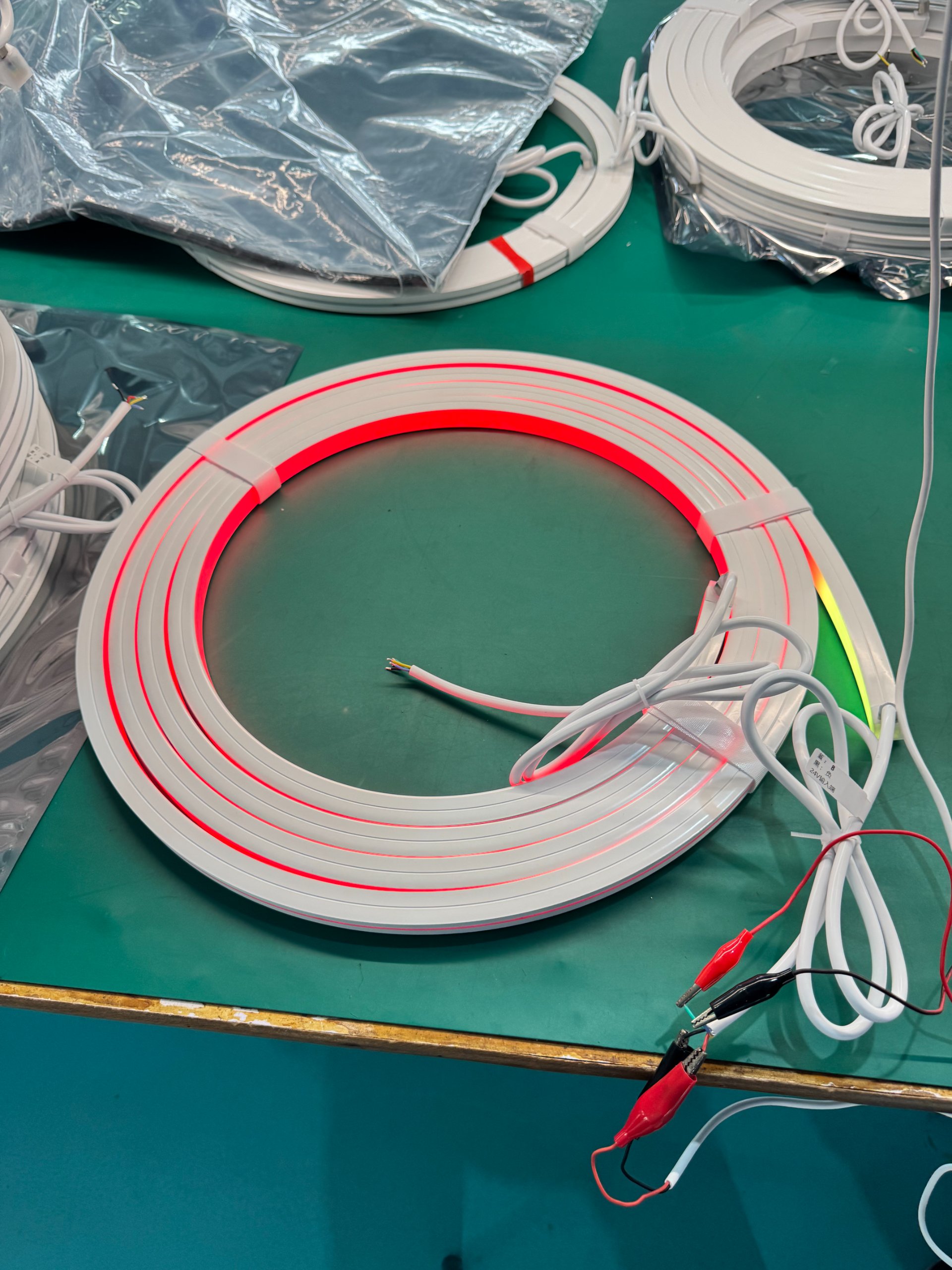
When different sections age at different rates, you end up with color temperature drift, brightness discontinuities, and light band color variations. Many engineers assume it's LED bin inconsistency. The actual problem is inconsistent transparent tubing aging rates. The material system is what truly affects final color consistency.
I've seen projects where the LED specifications were perfect, but after 18 months, one side of the building glowed warm white while the other stayed cool white. The LEDs hadn't changed—the silicone had. UV degradation on the east-facing sections was completely different from the west-facing sections. Nobody had calculated for differential aging patterns.
The mistake happens during specification. Teams specify "high transparency silicone" without defining retention metrics. They should be asking: what's the maximum allowable transmission loss after 3 years? What's the acceptable color shift threshold? How do we ensure uniform aging across the entire installation? These questions reveal whether a supplier understands optical stability or just sells "clear tubing."
Testing protocols matter enormously. A manufacturer showing you 500-hour UV aging data isn't showing you anything useful. Real environments combine UV radiation, thermal aging, humid-heat cycling, ozone corrosion, and salt spray simultaneously. Under combined stressors, material aging accelerates far beyond laboratory results. Meaningful data must come from compound environmental aging tests, not isolated UV chambers.
Can Installation Structure Cause Transparent Silicone Failures?
Installation design creates another typical failure point. Many projects treat transparent silicone tubing as a purely flexible material. In reality, transparent silicone undergoes creep under sustained loading—especially during vertical installation, long-span installation, or high-temperature environments.
Silicone tubing that's perfectly flat on installation day will begin sagging after six months, develop localized deformation within a year, and create wave-pattern illumination surfaces that make the entire project look unprofessional.
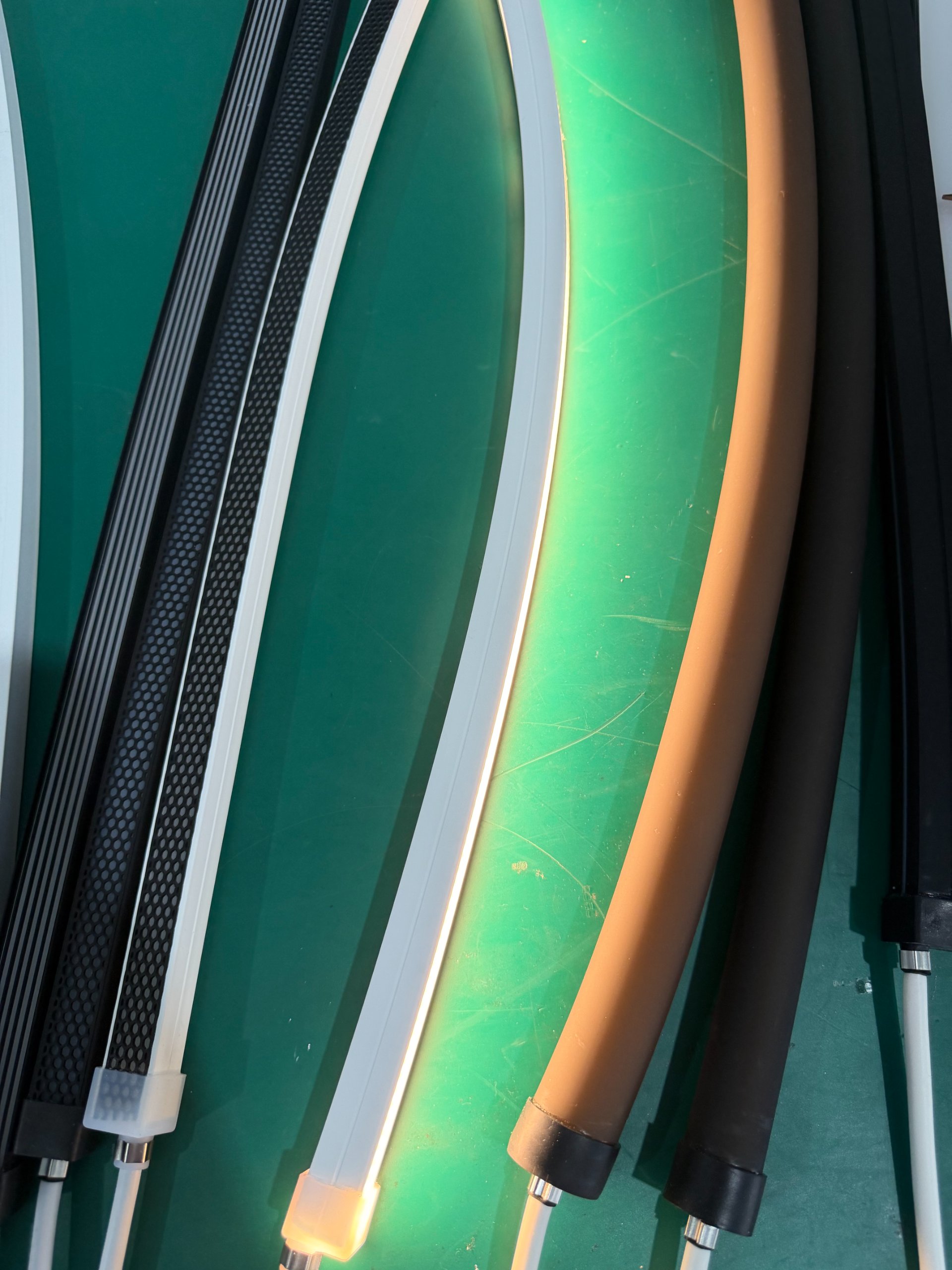
Many people assume this is an installation workmanship problem. It's actually a structural design phase failure where long-term material deformation wasn't calculated. These are two completely different issues requiring different solutions.
Mature engineering solutions prioritize material system problems over simply chasing higher IP ratings. First, outdoor projects must control silicone hardness ranges. Excessive hardness means thermal cycling can't release stress, leading to micro-crack formation. Insufficient hardness means gravity causes creep deformation over time. Transparent tubing is especially sensitive because any subtle deformation directly impacts optical performance.
Hardness selection must integrate multiple factors:
| Factor | Engineering Consideration |
|---|---|
| Installation orientation | Vertical loads vs. horizontal spans |
| LED strip weight | Total mass per meter including connections |
| Environmental temperature | Annual high/low extremes |
| Fixing interval | Support spacing and attachment method |
You can't apply a universal material formula. Each project demands custom hardness calculations based on its specific structural loading conditions. I've worked with installations where we used three different hardness grades across a single building because loading conditions varied between the vertical columns, horizontal beams, and curved sections.
Second, transparent silicone demands long-term UV stability verification. Don't just look at yellowing test results—examine test conditions first. Many so-called anti-yellowing data only involves a few hundred hours of ultraviolet exposure. Real environments simultaneously involve UV radiation, thermal aging, humid-heat cycles, ozone corrosion, and salt spray erosion. When these factors stack, material aging rates far exceed laboratory predictions.
What About Adhesive Compatibility in Long-Term Applications?
Adhesive compatibility verification creates the most overlooked risk source in transparent silicone projects. Many structural adhesives perform perfectly in short-term testing. But after long-term contact, they release low molecular weight volatiles that gradually migrate to silicone surfaces. This ultimately causes tackiness, fogging, transmission loss, surface contamination, and bond strength decay.
The most dangerous aspect is that problems typically emerge six months after project delivery. This is why many installations pass all laboratory testing but fail catastrophically in the field—because testing evaluates materials, while engineering faces material systems.

We once encountered a project where everything tested clean, but nine months post-installation, the transparent tubing started developing a cloudy film. Chemical analysis revealed siloxane migration from the mounting adhesive. The adhesive manufacturer's compatibility chart listed silicone as "compatible"—based on 30-day testing. Nobody had run 6-month elevated temperature compatibility tests. That project required complete remounting with a different adhesive system.
This is why we now run 180-day compatibility matrices between every adhesive, mounting clip, cable tie, and silicone formulation before specifying anything. It's expensive and time-consuming, but it's cheaper than rebuilding a project twice.
Extrusion process stability matters far more than most people realize. For architectural contours and high-end commercial lighting projects, wall thickness variation affects not only structural strength but directly impacts optical consistency. If extrusion process control is unstable, even using identical LEDs will still produce light spots, bright-dark bands, color bands, and brightness non-uniformity.
These problems typically become most obvious during nighttime long-distance viewing—and they're the hardest defects to remediate. You can't fix inconsistent wall thickness after installation. The entire affected section needs replacement, which means crane rental, traffic control, business disruption, and reputation damage all over again.
How Do We Actually Specify Transparent Silicone That Lasts?
The material specification process needs to completely change. Instead of requesting "transparent waterproof silicone tubing," we should be providing performance retention specifications. Here's what actually matters:
| Performance Parameter | Specification Requirement |
|---|---|
| Initial light transmission | ≥92% at 550nm wavelength |
| Transmission retention | ≥90% after 3000h QUV-A exposure |
| Color shift | ΔE ≤3 after 5000h compound aging |
| Hardness stability | ±5 Shore A over operating temp range |
| Elongation retention | ≥80% after thermal-UV cycling |
| Seal integrity | Zero failures after 500 thermal shock cycles |
These aren't abstract requirements. Each one maps to a specific failure mode I've seen destroy real projects. Initial transmission tells you nothing—retention tells you everything. Hardness stability predicts whether joints will separate under thermal stress. Elongation retention indicates whether micro-cracks will form.
When you send these specs to manufacturers, you immediately separate serious suppliers from commodity traders. Real manufacturers will ask about your installation orientation, fixing methods, expected service life, and maintenance access. Commodity suppliers will send you a generic data sheet and ask for your purchase quantity.
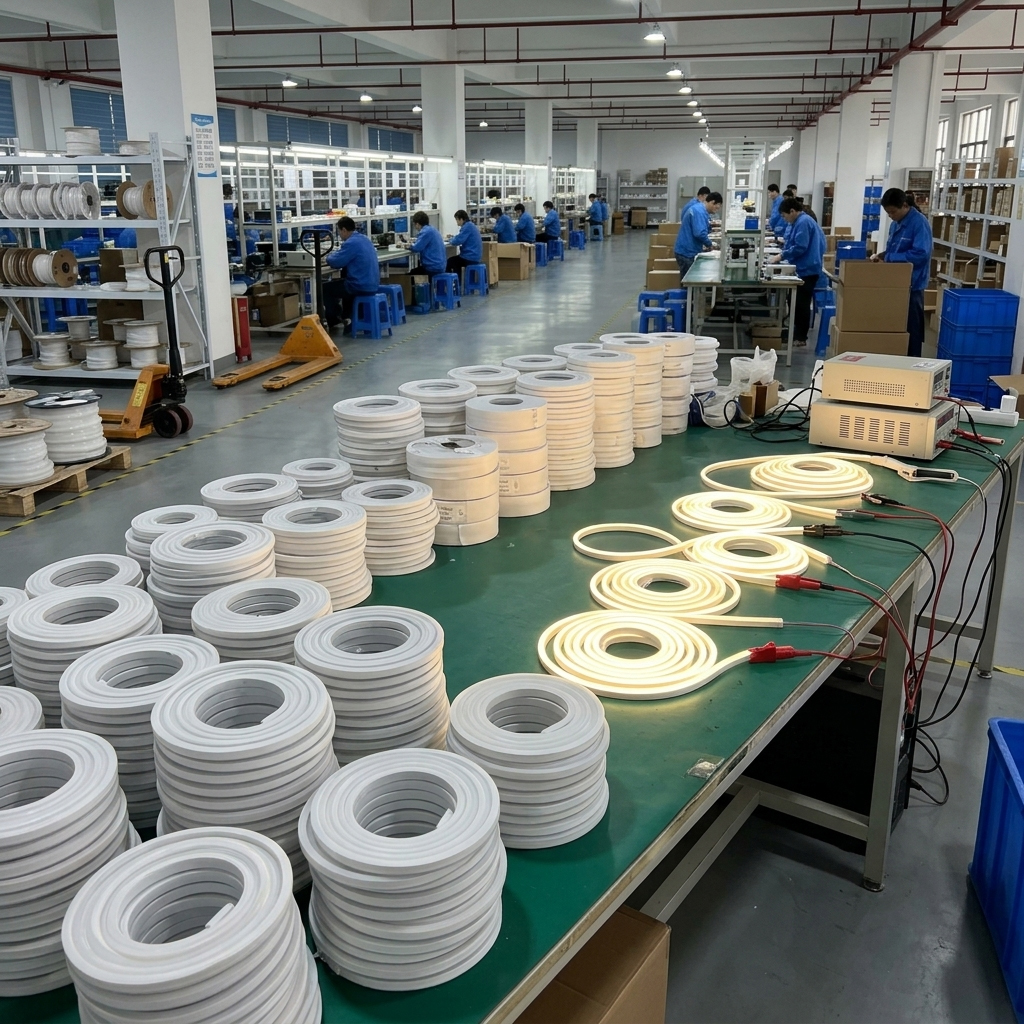
At Shenzhen Alister Technology Limited, we run compound environmental aging for every silicone formulation before it goes into production. Our testing chambers simultaneously apply UV radiation, 60°C heat, 90% humidity, and thermal cycling. We measure transmission every 250 hours for 3000 hours minimum. We track color shift using spectrophotometry, not visual inspection. We document hardness changes across the full temperature range.
This testing costs more than most suppliers spend on their entire quality program. But it's the only way to actually know whether a material will survive real outdoor conditions. When a project specifies our transparent silicone, they're not just buying tubing—they're buying three years of material science validation that ensures their installation won't become a maintenance nightmare.
Conclusion
Transparent waterproof silicone tubing succeeds or fails based on what happens after installation, not during testing. Smart specifications focus on material system stability, optical retention, and long-term compatibility—because fixing a building-wide lighting failure costs far more than specifying the right material from the start.