

When you choose a power supply, the real factor that determines your project's success or failure is never "whether the wattage is enough." It's whether you treat "the power supply as part of the material system."
The truth is this: if you only select a power supply based on power ratings without factoring in temperature rise, load curves, driver efficiency, and material aging, you're essentially gambling on "engineering site longevity" using "lab condition assumptions." This is where most LED projects silently fail.
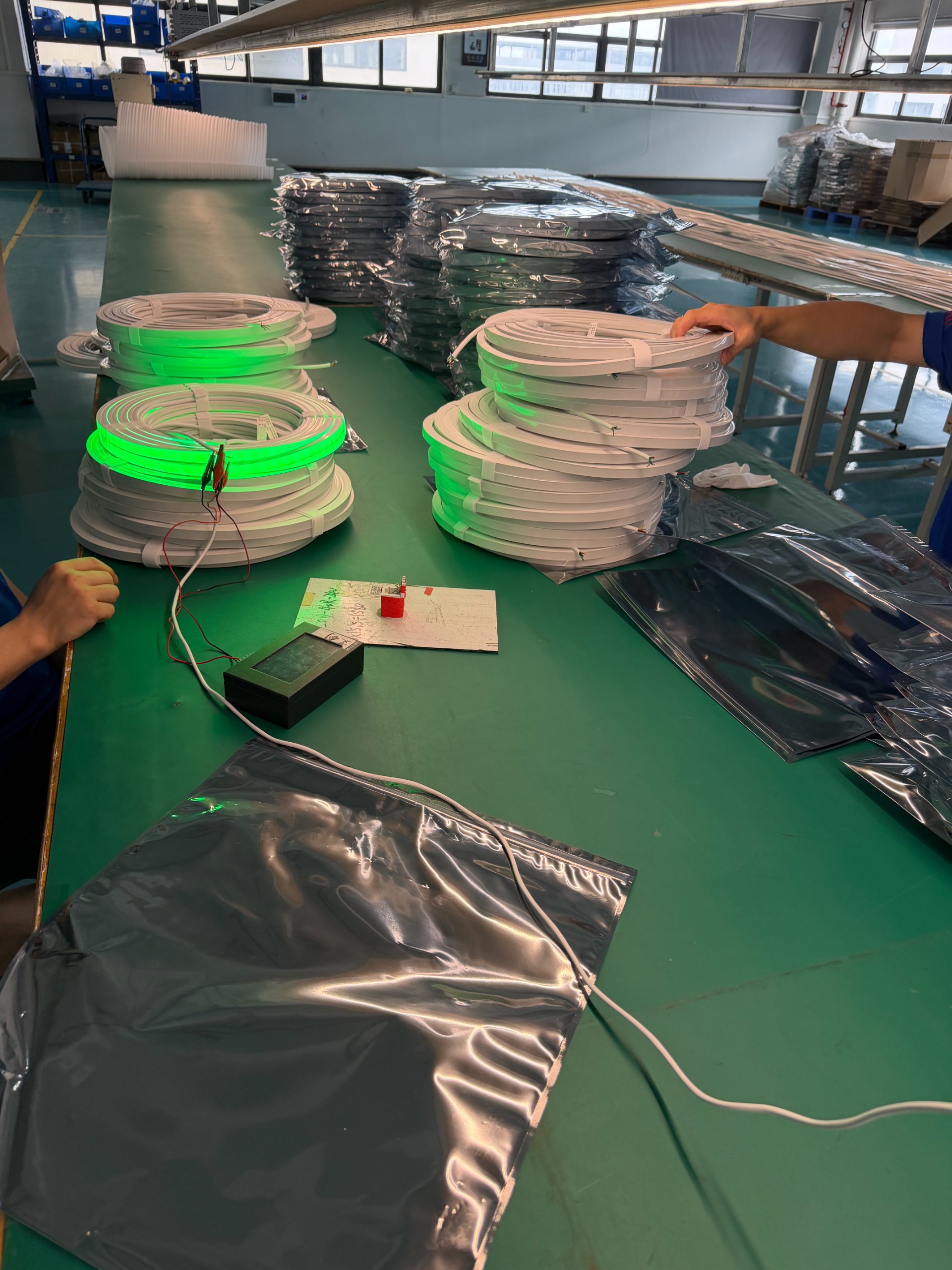
Many projects develop problems later on, not because the LED strips fail, but because the power supply destabilizes under environmental stress. Voltage drift accelerates light decay, ripple overlay causes color temperature drift, and thermal degradation triggers premature derating. When these issues stack up, the entire line starts to look "not broken, but increasingly wrong."
What Causes Most LED Strip Projects to Fail Slowly?
Many people think LED failures are sudden. They're not.
In B2B projects, the most overlooked truth is this: your LED strip plus power supply plus installation environment form a thermal-electrical-material coupled system. But most people only check three things: 24V or 12V, 100W or 200W, and CE or UL certifications.
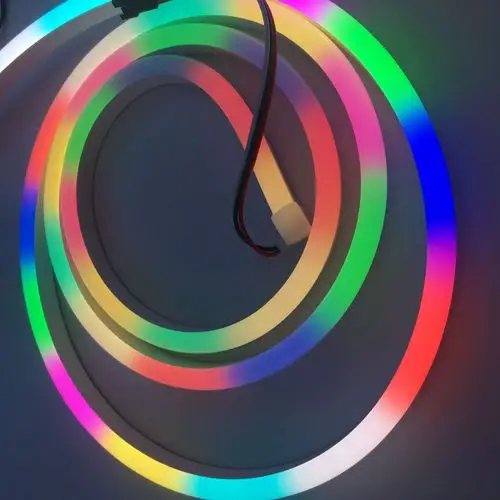
The problem is these parameters are all "cold state indicators," while engineering sites operate in long-term thermal states. What actually causes rework are these hidden mismatches I've seen repeatedly:
First, power supply efficiency drops at high temperatures, causing slight voltage drift, which leads to LED bin shift. Second, long-term operation at 80-90% load accelerates electrolytic capacitor degradation, raising ripple levels. Third, ripple enters PWM dimming systems, creating "subtle but visible" color drift. Fourth, LED thermal drift plus power supply thermal drift combine, causing the light decay curve to collapse prematurely.
When you see "lights getting dimmer," the essence is system coupling loss of control, not a light problem. I need to emphasize this because we manufacture these strips, and most warranty claims trace back to power supply selection mistakes, not LED quality issues.
Why "System Mismatch" Kills More Projects Than Component Failure?
Let me share a typical project failure I witnessed personally.
A commercial facade used linear LED strips with a centralized power supply system. Everything looked perfect for the first two months. Verification passed with flying colors. But three months later, problems started appearing.
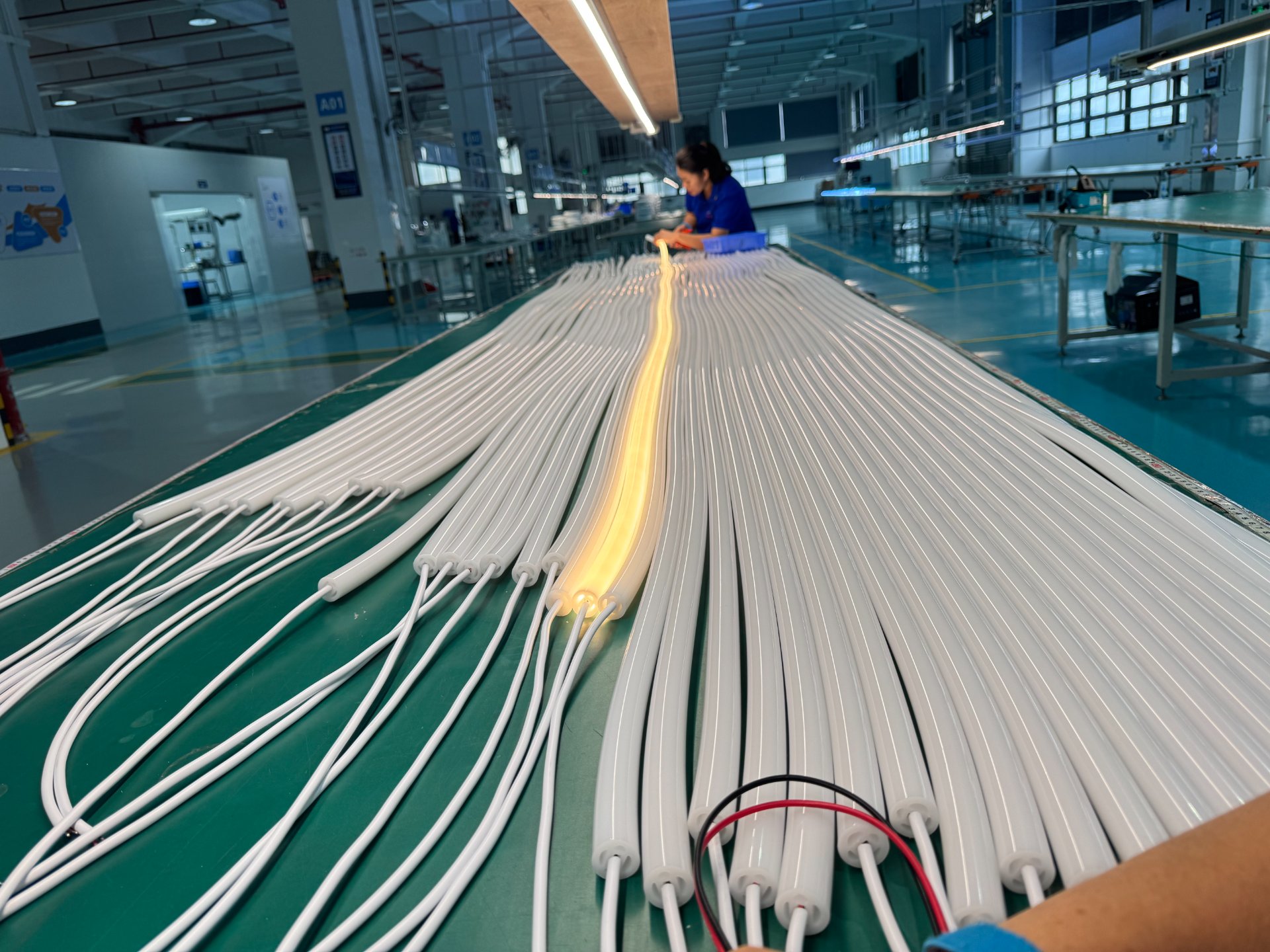
Different areas of the same facade showed inconsistent brightness. Night photography revealed slight "color banding." The client complained the overall effect looked "dirty and unclean." When we opened it up, the lights weren't broken, and the power supply wasn't broken either.
The real problem was this sequential failure chain:
| Issue | Root Cause | System Impact |
|---|---|---|
| Long-term near-full-load operation | Insufficient design redundancy | Efficiency degradation |
| Summer temperature rise | Environmental stress | Voltage drift (0.5-1.2V) |
| Different circuit voltage drops | Non-linear driving zone at terminals | Visual inconsistency |
| Coupled thermal drift | LED + power supply heat stacking | Accelerated light decay |
The final result wasn't failure but the system entering "uncontrollable gray zone operation." This kind of problem has one common root cause: power supply selection was based on "power rating," not on "lifetime curves."
I learned this the hard way when clients started calling months after installation. They weren't angry about broken lights. They were frustrated because the system "just didn't feel right anymore." That's actually harder to fix because it's not a single point of failure but systemic degradation.
How Do Professional Engineers Actually Size Power Supplies?
If you're still selecting power supplies by "total LED strip power × 1.2," this approach is insufficient for engineering projects.
The real engineering logic follows these principles that separate amateur installations from professional ones.

Load Derating Must Be Design Priority, Not Safety Margin
In industrial-grade projects, power supply long-term load should be controlled in the 60-75% range, not 80-90%. The reason isn't safety margin but physics. Electrolytic capacitor lifespan decays exponentially with temperature. Full-load state causes irreversible ripple increase. High temperature plus high load equals lifetime curve cliff collapse.
I remember a warehouse project where the contractor insisted on running power supplies at 85% capacity to "save money." Six months later, they spent three times more replacing the entire system. The lights didn't break. The power supplies technically worked. But the visual quality deteriorated so badly the client refused payment.
Driver Stability Matters More Than Output Voltage
Voltage stability does not equal light stability. What you really need to examine is load regulation, ripple and noise levels, and warm-up drift time. Many color difference problems actually stem from power supplies slowly "drifting" in thermal state.
LED Material System Must Match Power Supply Character
Different LED strip structures have completely different power supply requirements:
| LED Strip Type | Critical Power Supply Parameter | Why It Matters |
|---|---|---|
| Silicone neon flex | Ripple sensitivity | Affects continuous emission uniformity |
| High-density SMD strip | Voltage drop and transient response | Prevents cascading brightness loss |
| Long-distance series systems | Voltage maintenance capability | Ensures end-to-end consistency |
The same 24V power supply performs completely differently in different material systems. This is why we always ask clients about installation length and strip density before recommending power supplies.
Environmental Thermal Derating Cannot Be Ignored
Many power supplies are rated at 25°C, but actual engineering environments include ceiling cavities at 45-60°C, aluminum channel interiors running even hotter, and enclosed commercial structures reaching extreme temperatures. Without thermal derating design, halving the lifespan isn't an exaggeration.
Waterproof Rating Is Not the Endpoint But a Lifetime Variable
The problem with IP65/67 power supplies isn't water ingress but breathing membrane aging, sealing adhesive thermal cycle fatigue, and long-term condensation accumulation. These won't cause immediate failure but will make output "slowly become unstable."
I've dissected dozens of "failed" IP67 power supplies that still technically functioned. The casings were intact. The circuits showed no burn marks. But the output voltage wandered by 2-3 volts under load, which for precision LED systems meant complete visual failure.
What's the Single Most Important Principle for Power Supply Selection?
After years of manufacturing silicone neon flex and supporting thousands of installations, I've learned this rule.
Don't select "the cheapest power supply" or "the highest parameter power supply." Select a system-grade power supply that maintains linear output in the worst environment.

Because engineering sites have no "standard working conditions," only summer heat, voltage fluctuations, long-time full load, installation errors, and uneven structural heat dissipation. If you treat LED strips as "light-emitting devices" and power supplies as accessories, you will definitely pay the price for system instability later.
But if you treat the power supply as a "lifetime controller," you're not designing brightness but the entire project's stability curve. This perspective shift changed how we recommend products to clients. We stopped competing on price and started competing on system reliability. Our clients stopped experiencing mysterious "visual quality degradation" months after installation.
The power supply isn't just feeding electricity to your LED strips. It's controlling how long your entire investment remains visually stable. That's the difference between a $50 power supply that costs you $5000 in callbacks and a $120 power supply that runs flawlessly for five years.
Conclusion
Picking the right power supply isn't about matching wattage but about understanding thermal-electrical coupling, lifetime curves, and environmental stress factors that determine long-term visual stability.