
When you ask me "What's the most popular LED light brand?", I know you're actually asking the wrong question. Because in real B2B projects, this isn't about choosing a famous name—it's about selecting a material system that won't fail you over time.
The truth is: Brand popularity doesn't equal project reliability. What matters is whether that brand's engineering control capability can cover your project's real environmental variables over 3-5 years. I've seen too many "famous brand" installations turn into maintenance nightmares simply because the system consistency wasn't there.
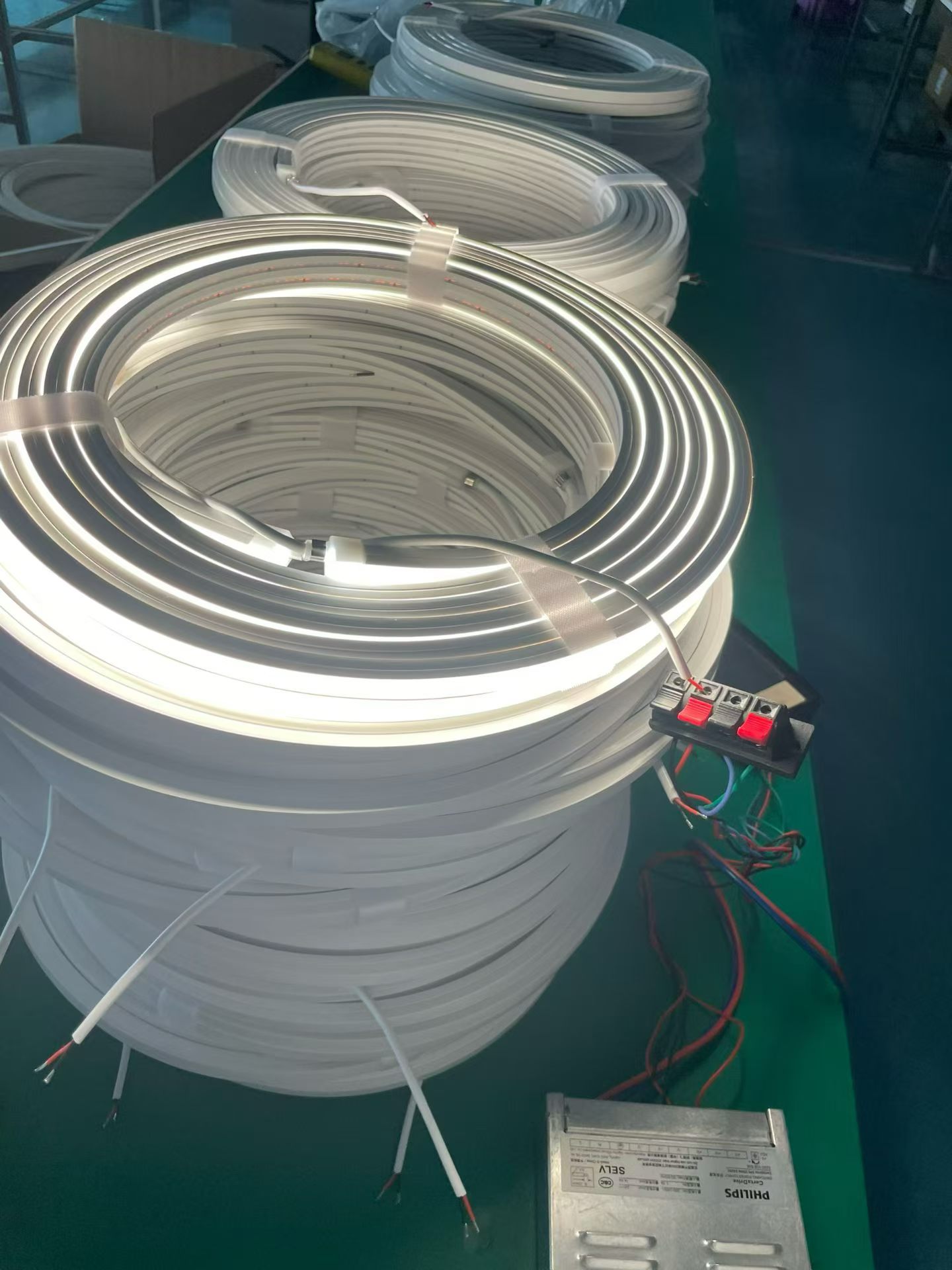
Let me show you what actually happens on job sites, and why we need to stop thinking about brands and start thinking about systems.
Why do people focus on brand names when system consistency matters more?
I see this pattern repeat in almost every consultation: clients come to me asking "Which brand should I choose?", when they should be asking "Which system won't drift apart after six months?"
The real question isn't "which brand is popular"—it's "which manufacturing partner can maintain batch-to-batch consistency across your entire project timeline, control thermal paths properly, and match forward voltage stability with your power supply system."
Here's the engineering reality most people miss. In B2B projects, especially large commercial installations, failure almost never comes from "bad LEDs." It comes from five specific system breakdowns:
Critical failure points in LED systems (not brand quality)
| System Variable | What Goes Wrong | Why Brands Can't Always Fix It |
|---|---|---|
| Batch Consistency | Different production runs have slightly different binning specs | Even major brands don't always lock down color temperature bins across multiple orders |
| Thermal Management | Junction temperature isn't controlled properly | Heat design varies even within the same brand's product line |
| Material System Stability | Silicone/epoxy systems age differently under UV | Long-term material compatibility isn't always tested in real conditions |
| Driver Matching | Forward voltage drift causes color shift | Many brands don't co-design their drivers with LED arrays |
| Installation Structure | Thermal expansion creates stress points | System-level thinking is rare even in premium brands |
I've worked on projects where we used "internationally recognized LED brands" with perfect sample performance. Initial installation looked flawless. Color temperature matched. IP ratings passed. Client was happy. Then at month 8-12, problems started appearing:
- Same store, different batches showing slight color drift
- Edge areas developing brightness inconsistency (not dead LEDs—just different decay curves)
- Some locations running warmer white, others cooler
- Corner sections showing localized dimming
- Overall brand visual identity starting to "float"
When we did the post-mortem analysis, every single component was "brand-name quality." But the system had no unified control logic. Different batch binning standards. Driver tolerance ranges too wide. Aluminum channel heat dissipation paths not standardized. Silicone UV decay curves out of sync. Installation-induced stress variations amplified over time.
That's when I learned the hard lesson: In professional lighting projects, you're not buying a brand—you're buying a controlled material system that maintains consistency under real-world stress cycles.
What actually determines LED system reliability over time?
When I evaluate LED suppliers for our OEM partnerships, I don't start with brand reputation. I start with five engineering control capabilities that actually predict long-term performance.
Real reliability comes from: batch-to-batch material consistency, thermal design control capability, material system stability under UV/thermal cycling, driver-to-LED matching precision, and system-level engineering thinking that accounts for installation structure variables.
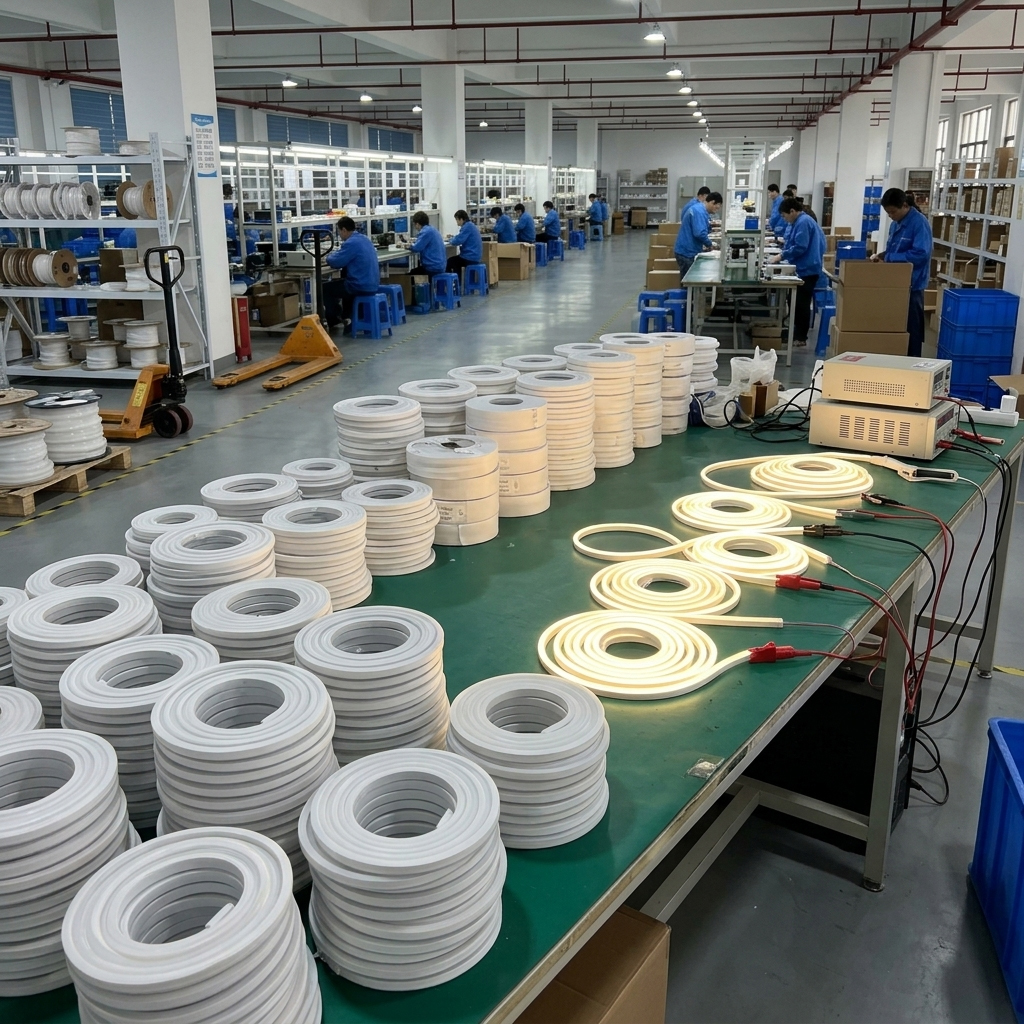
Let me break down what each of these actually means in project terms, because this is where most "popular brands" either pass or fail.
① Batch consistency control (not quality—stability)
The most expensive mistakes I've seen don't come from "bad batches." They come from "slightly different batches." When a contractor orders Phase 1 lighting in January and Phase 2 in May, the critical question isn't whether both batches meet spec—it's whether they're identical.
Here's what batch consistency actually controls:
| Parameter | Why It Matters | What Happens If It Drifts |
|---|---|---|
| Color Temperature Binning | Human eyes detect 100K CCT differences | Mixed warm/cool whites destroy brand uniformity |
| Forward Voltage | Determines current flow through LED | Same driver produces different brightness/heat |
| Luminous Flux | Total light output | "Matching" fixtures show visible brightness variation |
| Dominant Wavelength | For colored LEDs | RGB systems lose color calibration |
A "popular brand" might guarantee each batch meets specification. But do they guarantee batch-to-batch identical binning codes? That's the difference between a lighting product and a lighting system.
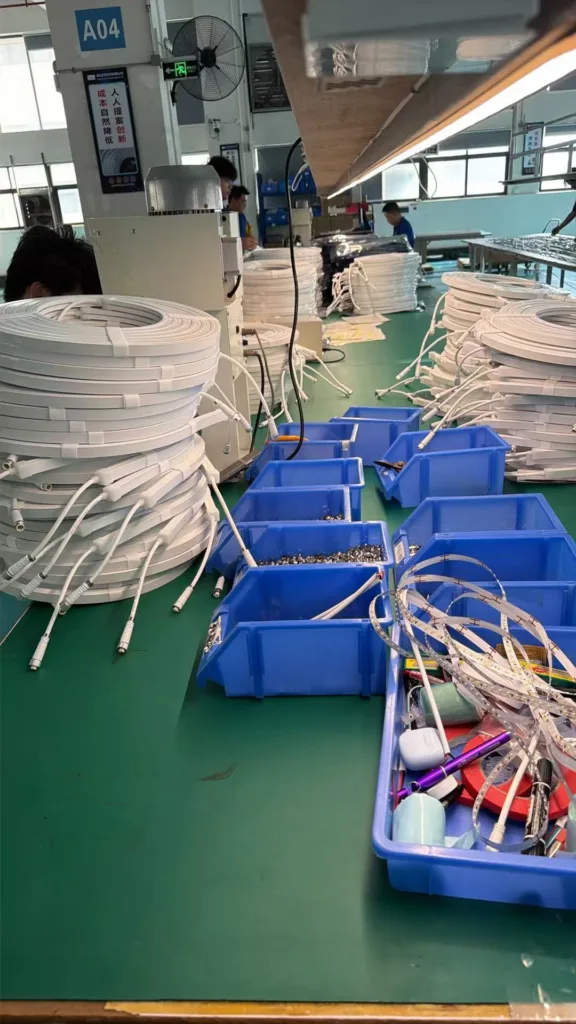
In our manufacturing process at Shenzhen Alister, we maintain batch traceability specifically for this reason. When a client reorders for expansion phases, we can match the exact binning parameters from 18 months earlier. Not "similar spec"—identical material batch control.
② Thermal design capability (determines decay curve)
Every LED brand will show you lumen maintenance charts. But here's what those charts don't tell you: those curves were measured under controlled lab conditions with perfect heat sinking. Your actual installation? That's a different story.
The real thermal design question is: What's the junction temperature control capability when your LED is installed in a 2-meter aluminum extrusion, mounted vertically, in direct summer sun, at 45°C ambient temperature?
Because that's when thermal path design matters:
- Poor thermal design: Junction temp hits 95°C, accelerated aging starts, color shift begins within 6 months
- Good thermal design: Junction temp stays at 65°C, maintains L80 lumen maintenance past 50,000 hours
I've tested "premium brand" LED strips that performed beautifully in air-conditioned showrooms but showed 15% lumen depreciation after one summer season in outdoor signage. Not because the LEDs were bad—because the thermal path design didn't account for real installation conditions.
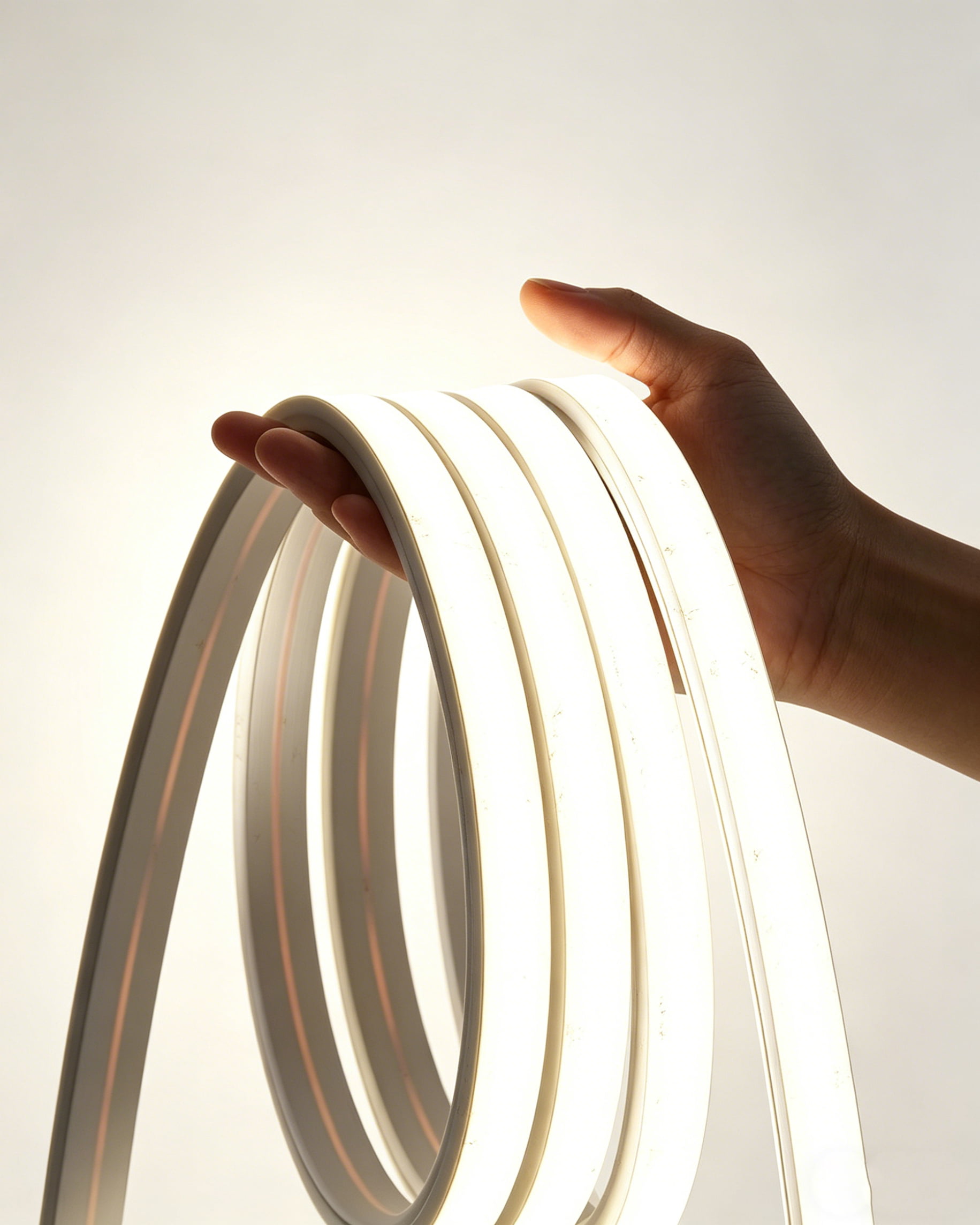
This is why we use silicone extrusion rather than PVC in our neon flex systems. Silicone has superior thermal conductivity and maintains material stability from -40°C to +60°C. When junction temperature cycles daily through 40°C swings, material thermal expansion compatibility becomes your reliability factor—not LED chip brand.
③ Material system stability (silicone/encapsulation/adhesives)
Here's an uncomfortable truth about LED longevity: In outdoor installations, the LED chip usually outlasts the encapsulation material. UV degradation, thermal cycling, and moisture ingress attack the material system, not the semiconductor.
I've analyzed failed outdoor LED installations where the chips were still functioning perfectly, but:
- Silicone encapsulation yellowed (UV damage)
- Adhesive systems delaminated (thermal stress)
- Moisture penetrated PCB coatings (material porosity)
- Optical diffuser hazing reduced effective lumen output
What determines material system stability:
Silicone molecular weight and cross-linking density (high-molecular silicone resists UV yellowing), UV stabilizer package (determines 5-year vs 2-year outdoor life), thermal cycling tolerance (CTE matching prevents stress cracking), water absorption rate (determines true IP rating longevity), chemical compatibility (prevents long-term material interaction failures).
When we specify 100% food-grade high-molecular silicone for our neon flex systems, it's not marketing language—it's material engineering for 50,000+ hour outdoor exposure. Our anti-UV formulation maintains <5% yellowing index change over 5 years continuous UV exposure, tested per ASTM G154 accelerated weathering protocols.
A "popular brand" might use standard silicone compounds. But do they publish long-term UV aging data? Thermal cycling fatigue limits? Material compatibility testing results? That's the difference between a product spec sheet and a material system datasheet.
④ Driver system matching capability
One of the most common failure modes I diagnose is "color shift without LED failure." The LEDs are still working. Brightness seems okay. But the white light has drifted from 4000K to 3800K, or one section looks slightly green-tinted compared to another.
This isn't an LED problem—it's a driver matching problem. Here's what happens:
LED forward voltage has a tolerance range (typically ±0.3V). Driver current regulation also has tolerance (±5% is common). When you multiply these variations across a long LED string, you get:
| Condition | Forward Voltage | Driver Current | Result |
|---|---|---|---|
| Nominal spec | 3.0V per LED | 700mA regulated | Perfect brightness |
| High-side tolerance | 3.3V per LED | 735mA actual | 15% overcurrent → excess heat → accelerated aging |
| Low-side tolerance | 2.7V per LED | 665mA actual | Undercurrent → color shift toward blue |
Over months of operation, these tolerance stack-ups cause different sections to age at different rates. It's not visible in week one. By month six, you're seeing it. By month twelve, it's a maintenance issue.
Professional LED system design requires driver forward voltage matching within ±0.1V per string and current regulation stability better than ±3% across load/line/temperature variations. This is why we specify constant current drivers with active PFC and thermal derating curves matched to our LED forward voltage profiles.
⑤ System engineering thinking (the real differentiator)
This is where "popular brands" and "engineering-driven manufacturers" completely diverge in approach. A popular brand sells you a product. An engineering partner designs you a system.
What does system-level thinking actually look like? It means asking questions that go beyond the LED specification:
Installation environment: What's the thermal expansion coefficient of your mounting surface? (Aluminum channels expand 0.23mm per meter per 10°C—your LED strip needs to accommodate that.) Maintenance access: Can you replace a section without dismantling the entire installation? (Modular design with standardized connection points.) Power distribution: Are you accounting for voltage drop over 20-meter runs? (Wire gauge selection, power injection points.) Environmental stress: What's the UV index at installation latitude? Salt spray exposure? Temperature cycling range? Long-term serviceability: Will replacement parts be available in 3 years? (Component lifecycle planning.)
I've worked with contractors who selected "the most popular brand" based on initial product performance, only to discover:
- No documentation for thermal expansion compensation
- No guidance for power distribution in long runs
- No consideration for UV aging differences between rooftop vs ground-level installations
- No serviceability design for section replacement
Meanwhile, our engineering approach at Shenzhen Alister includes thermal stress analysis, IP68 underwater testing protocols, accelerated UV aging verification, and modular installation systems designed for field serviceability. Not because we're "better than popular brands"—but because we think in terms of systems, not products.
Which LED manufacturers actually maintain long-term system control?
So when you ask me "What's the most popular LED light brand?", I need to reframe that question into something more useful: Which LED manufacturers have demonstrated the engineering control capability to maintain system consistency over your project's actual operational timeline?
The answer depends on: your specific application environment (indoor/outdoor, temperature range, UV exposure), your project scale and timeline (single batch vs multi-phase rollout), your maintenance capability (replace-in-place vs full system swap), and your quality control requirements (tolerance for batch variation).
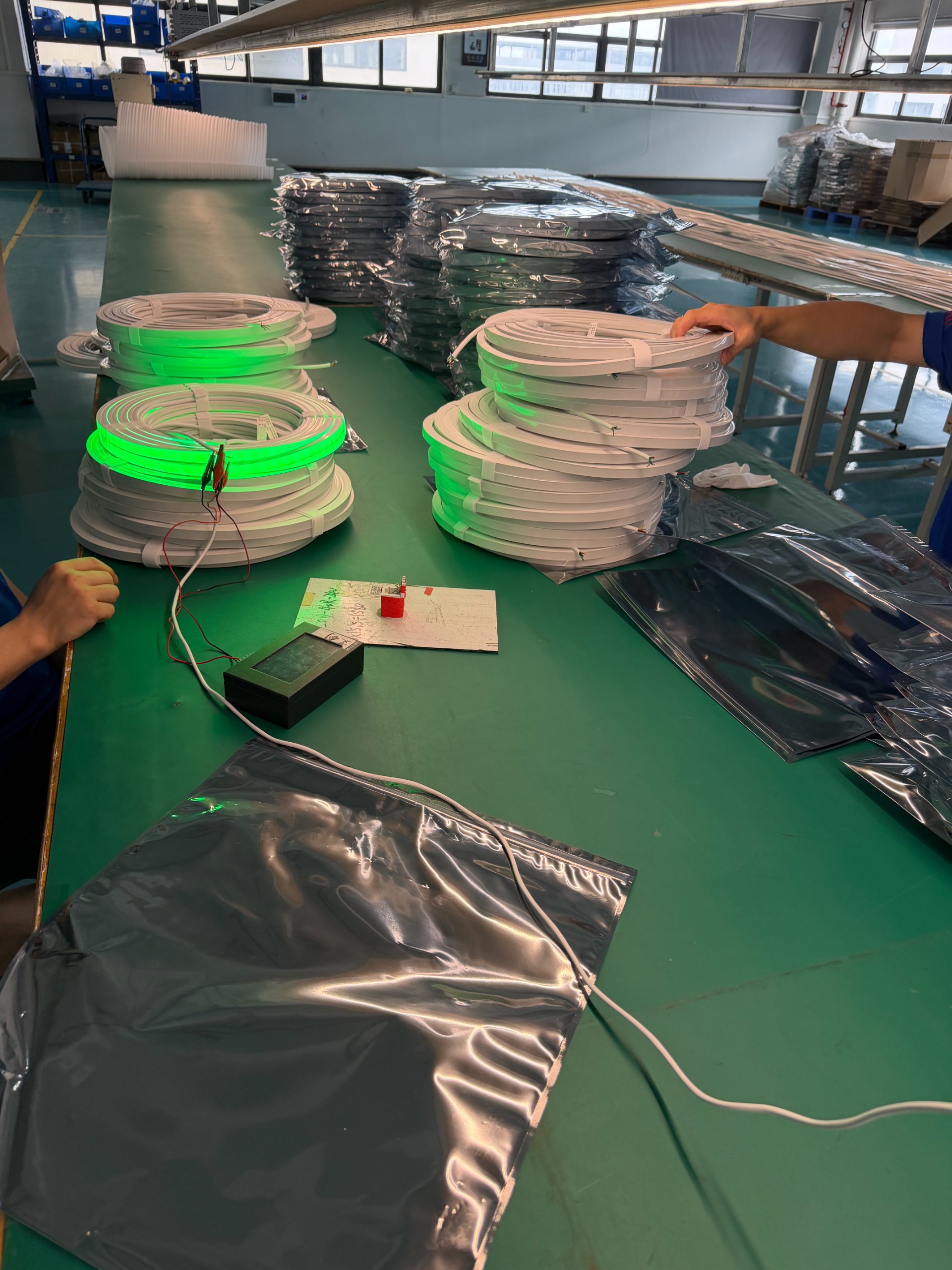
In my experience working with both major international brands and specialized OEM manufacturers like ourselves, here's how different suppliers actually perform in real-world B2B scenarios:
Major international brands (Philips, Osram, Cree)
Strengths: Extensive product testing, established quality systems, broad product ranges, strong technical documentation, global distribution networks.
Limitations in B2B projects: Premium pricing structure (often 2-3x specialized manufacturers), less flexibility for custom specifications, batch consistency can vary across different production facilities, limited system-level engineering support, longer lead times for custom orders.
Best fit for: Projects where brand recognition is contractually required, applications with extremely harsh environments requiring extensive certification, clients with internal engineering teams who can design the full system, smaller installations where price premium is acceptable.
Specialized silicone LED manufacturers (like our facility)
Strengths: Deep material expertise in specific product categories, flexible customization capability, direct manufacturer pricing, batch-to-batch consistency control (single production facility), system-level design support, faster custom development cycles.
Limitations: Narrower product range (focused expertise vs broad catalog), less brand recognition in some markets, may require more detailed technical specification from buyer.
Best fit for: Large-scale commercial installations requiring cost efficiency, projects needing custom specifications (cut lengths, CCT, control systems), applications where system consistency is critical across multiple phases, clients seeking OEM/ODM partnership rather than just product supply.
The questions you should actually be asking
Instead of "What's the most popular brand?", here are the questions that predict project success:
-
Can you provide batch traceability documentation showing binning consistency across multiple production runs? (Not just "we meet spec"—actual data showing batch-to-batch variation.)
-
What's your junction temperature control capability in worst-case installation scenarios? (Not lab data—real thermal modeling for vertical mounting, direct sun exposure, etc.)
-
Do you have accelerated aging test data for your complete material system under UV/thermal/moisture stress? (Not just LED chip lifespan—full encapsulation system durability.)
-
How do you match driver specifications to LED forward voltage profiles across production batches? (This reveals whether they think in terms of systems or just components.)
-
What's your approach to thermal expansion compensation in installations longer than 5 meters? (Shows whether they understand real installation challenges.)
If a supplier can't answer these questions with specific engineering data, it doesn't matter how "popular" their brand is—they're not equipped to support a professional B2B installation that needs to maintain performance over years, not months.
Conclusion
The most popular LED brand isn't the answer to your real question. What you actually need is a manufacturing partner whose engineering control systems can maintain consistency over your project's 3-5 year operational life—because brands determine your first-day appearance, but system design determines your third-year results.