
When most people search for an LED linear lighting solution provider, they focus on product range, profile variety, luminous efficacy, and competitive pricing. But those factors rarely predict whether your project will run flawlessly for five years.
The real deciding factor? System consistency under long-term thermal, mechanical, and environmental stress. This single factor is the root cause of most post-installation rework—and it's dangerously underestimated.

Linear lighting isn't just a product. It's a continuously operating system. When your project scales from tens of meters to hundreds or thousands, every tiny deviation gets amplified exponentially.
What Really Causes Linear Lighting Projects to Fail?
I've seen it too many times. Projects don't fail because of insufficient luminous output or incorrect specifications. They fail because of system-level misalignment.
Here's what actually goes wrong: thermal expansion gaps weren't planned. Different materials deform at different rates. Long-distance voltage drop spirals out of control. Optical materials age inconsistently. LED bins drift across batches. Profiles and diffusers mismatch. Installation structures have zero tolerance for error.
Several years ago, I worked on a high-end commercial complex facade project. We installed over 6,000 meters of continuous linear lighting to outline the building's architecture. Sample testing was flawless. Color temperature was uniform. Brightness was even. Efficacy met standards. IP ratings passed. The project was smoothly accepted.
For the first six months, everything ran perfectly. Then came the second summer. The south-facing facade started showing localized brightness irregularities. Color banding gradually became visible. From a distance, the entire building looked segmented into different brightness zones.
Initially, we suspected the power supply. We replaced it. The problem persisted. After detailed analysis, we discovered that neither the LEDs nor the drivers had failed. The structural system had.
The installation used ultra-long continuous mounting with almost zero thermal expansion allowance. The design prioritized visual completeness. During summer, surface temperatures exceeded 70°C. The aluminum profile and diffuser had different thermal expansion coefficients. After prolonged cycling, the diffuser experienced micro-deformation. The optical cavity structure changed. Light distribution became abnormal.
Every product passed factory inspection. Every test parameter was normal. But real-world thermal stress eventually breached the design boundaries. This type of failure is the most dangerous because it's invisible during acceptance testing. By the time you notice it, repair costs have already surpassed procurement costs several times over.
Why Do Projects Using the Same Specifications Look Different After Two Years?
Another typical case involved a global brand chain project. They wanted unified store imaging worldwide using identical linear lighting solutions. The first batch of stores looked excellent. Two years later, they expanded. After installing replenishment products, new and old areas showed obvious color temperature differences.
Testing revealed identical LED models, identical driver models, and identical power ratings. The problem came from optical materials. The diffuser supply chain had changed. Light transmittance varied by less than 2%. Individual testing fully met standards. But across hundreds of meters of continuous visual interface, this tiny difference was infinitely amplified. The result was visible color banding.
This wasn't a quality incident. It was a supply chain consistency management failure. For linear lighting projects, consistency failure is often more fatal than single-point failure.

How Do You Actually Evaluate an LED Linear Lighting Solution Provider?
If you genuinely want to find an LED linear lighting solution provider capable of supporting large-scale engineering projects, you must prioritize validating these core capabilities.
Verify Thermal Management Systems, Not Just Luminous Efficacy
Many linear fixtures are bright when they leave the factory. The real problems occur after operation begins. You must focus on PCB thermal resistance design, aluminum profile heat dissipation capacity, LED junction temperature control, and power supply temperature rise control.
High temperatures cause accelerated lumen depreciation, color shift, shortened driver lifespan, and solder joint fatigue cracking. Luminous efficacy determines how bright it is today. Thermal management determines how much brightness remains after five years.
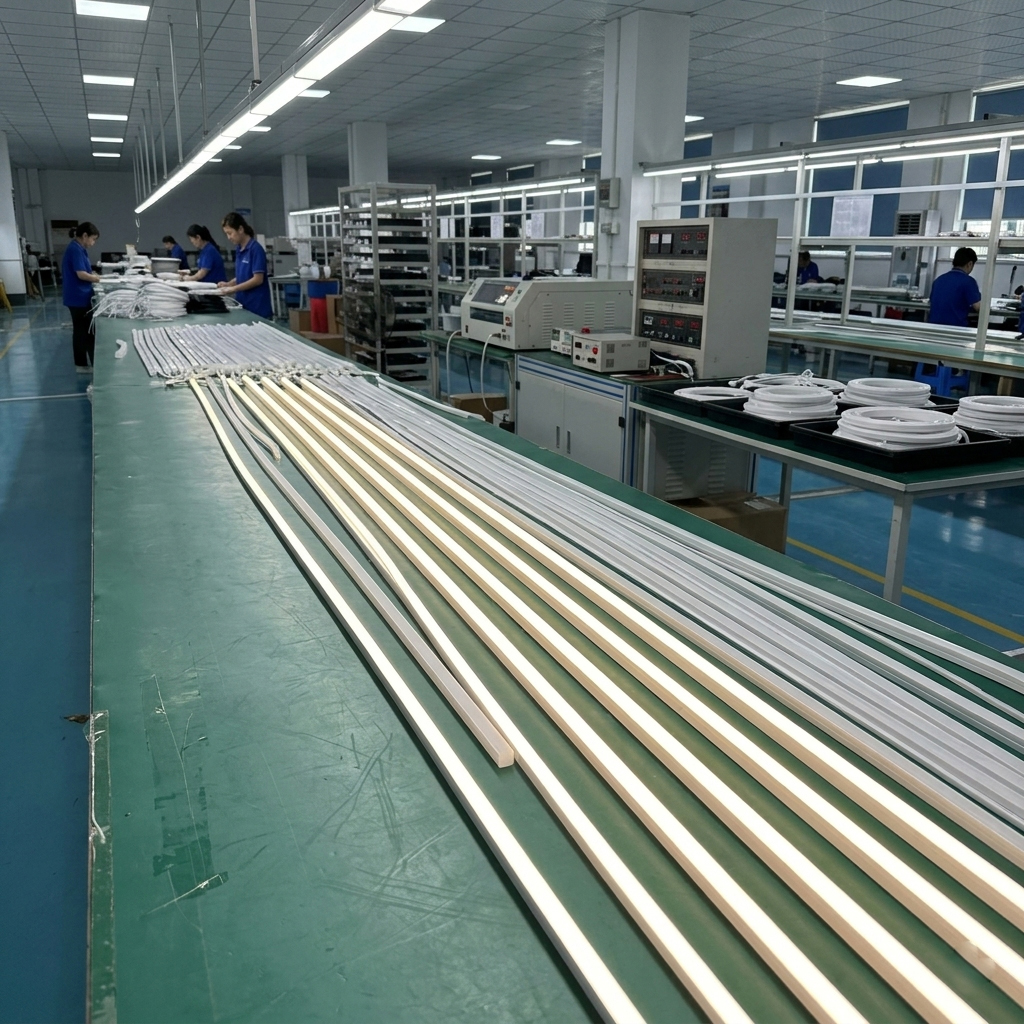
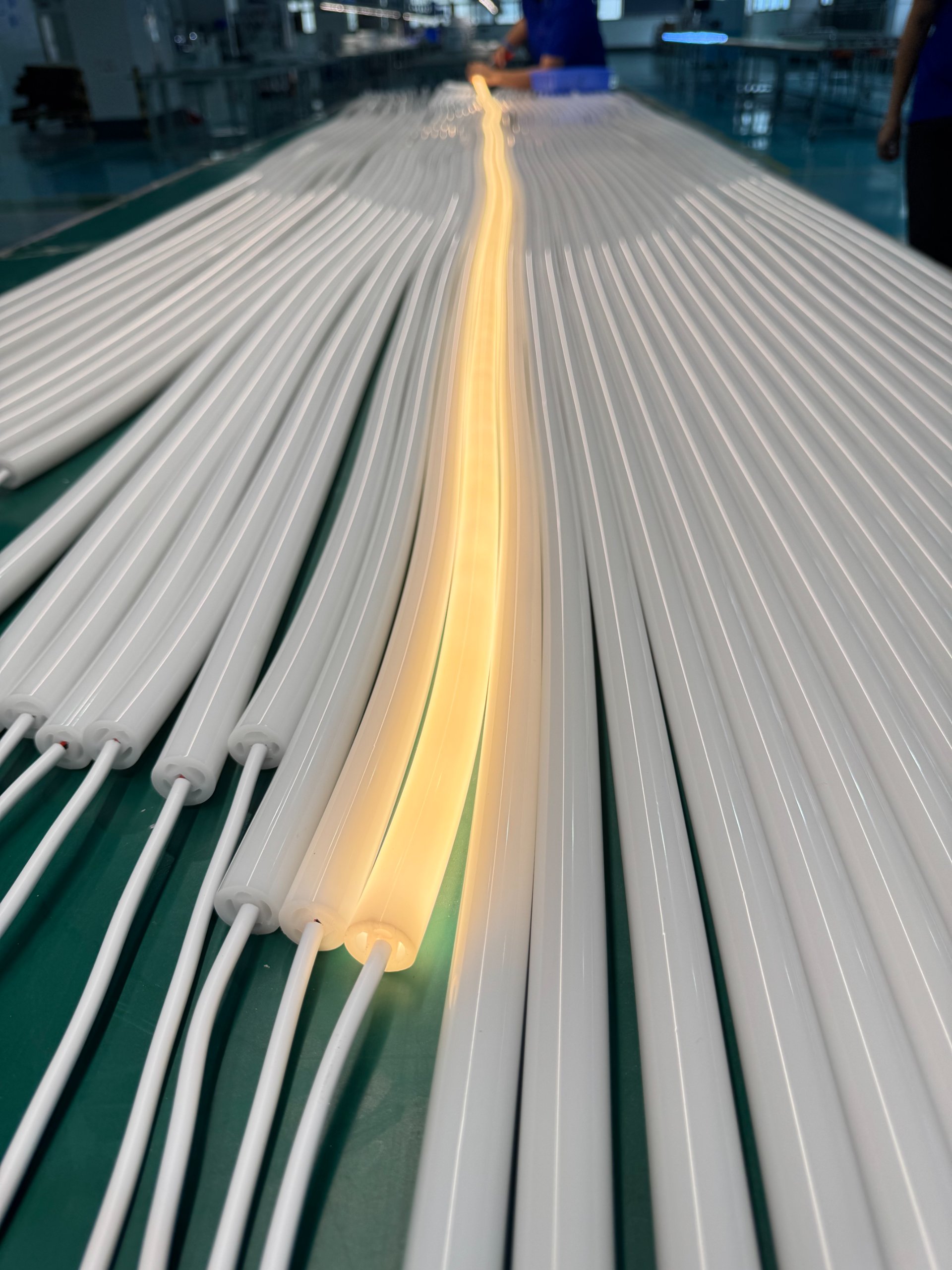
Here's what we've validated through our manufacturing process at Shenzhen Alister Technology Limited: high-molecular silicone extrusion provides superior thermal interface characteristics compared to traditional PVC or standard silicone compounds. Our silicone neon flex products operate reliably from -40°C to +60°C precisely because the material system itself resists thermal degradation.
Verify Material Compatibility, Not Just IP Ratings
Most outdoor project failures don't result from waterproofing structure design errors. They result from material system mismatches. This includes silicone-to-aluminum compatibility, PC diffuser-to-sealant compatibility, UV stabilizer systems, and thermal expansion coefficient matching.
Many products pass IP67 testing but can't withstand years of thermal cycling. The real failure point is material interfaces, not sealing structures. In our OEM/ODM projects, we specifically engineer material combinations that maintain adhesion integrity through thousands of thermal cycles. That's why our products carry CE, RoHS, and UL certifications—these standards verify not just momentary performance but long-term material stability.
| Failure Mode | Root Cause | Prevention Strategy |
|---|---|---|
| Color Banding | Material Aging Mismatch | UV-Stabilized Silicone |
| Diffuser Cracking | Thermal Coefficient Difference | Matched Material Systems |
| Adhesion Failure | Incompatible Chemistry | Validated Material Pairs |
Long-Distance Projects Must Control Thermal Expansion Stress
This is the most overlooked problem in linear lighting, especially in building facades, bridge illumination, landscape corridors, and commercial complexes. When continuous installation length increases, cumulative thermal expansion stress amplifies rapidly.
You must design expansion joints, segmented structures, and floating mounting points in advance. Otherwise, you'll eventually see profile deformation, diffuser cracking, joint displacement, and seal failure.
We've developed specialized mounting accessories for our silicone neon flex products that allow controlled movement without compromising waterproofing. These floating clip systems accommodate up to 15mm of thermal expansion across 100-meter runs while maintaining IP68 integrity.
Lock Down Bin and Optical Material Batches
Large projects are terrified of replenishment orders. Replenishment orders mean consistency challenges. You must lock down LED bin, CCT range, MacAdams ellipse class, diffuser material, and optical formula specifications.
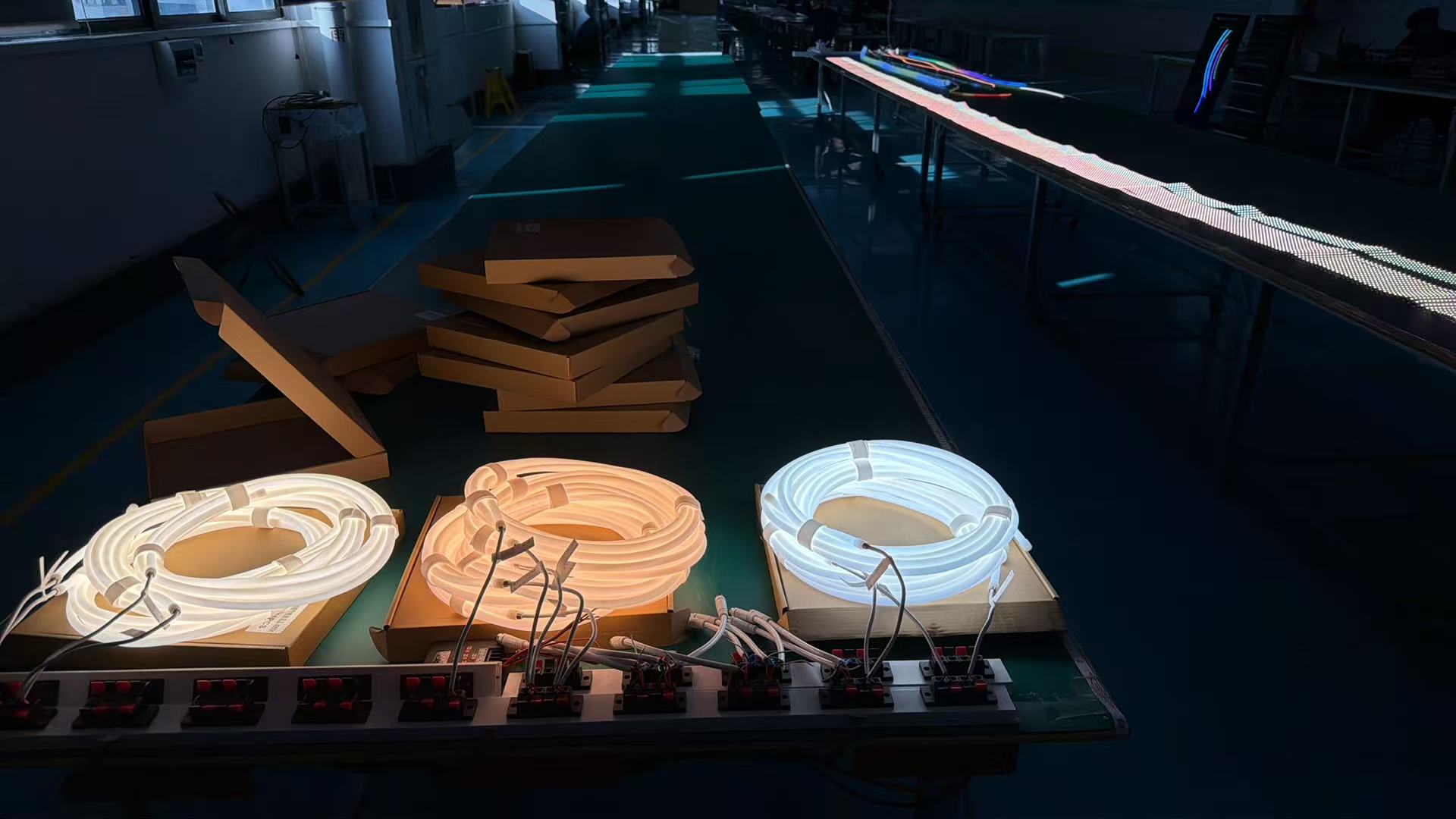
Otherwise, replenishment products delivered years later—even if fully compliant—may not match the original project. As a B2B-focused manufacturer, we maintain batch traceability for all major projects. When you order from us, we archive your specific LED bin codes, silicone formulation batch numbers, and extrusion die specifications. This ensures that your project expansion three years later matches your original installation perfectly.
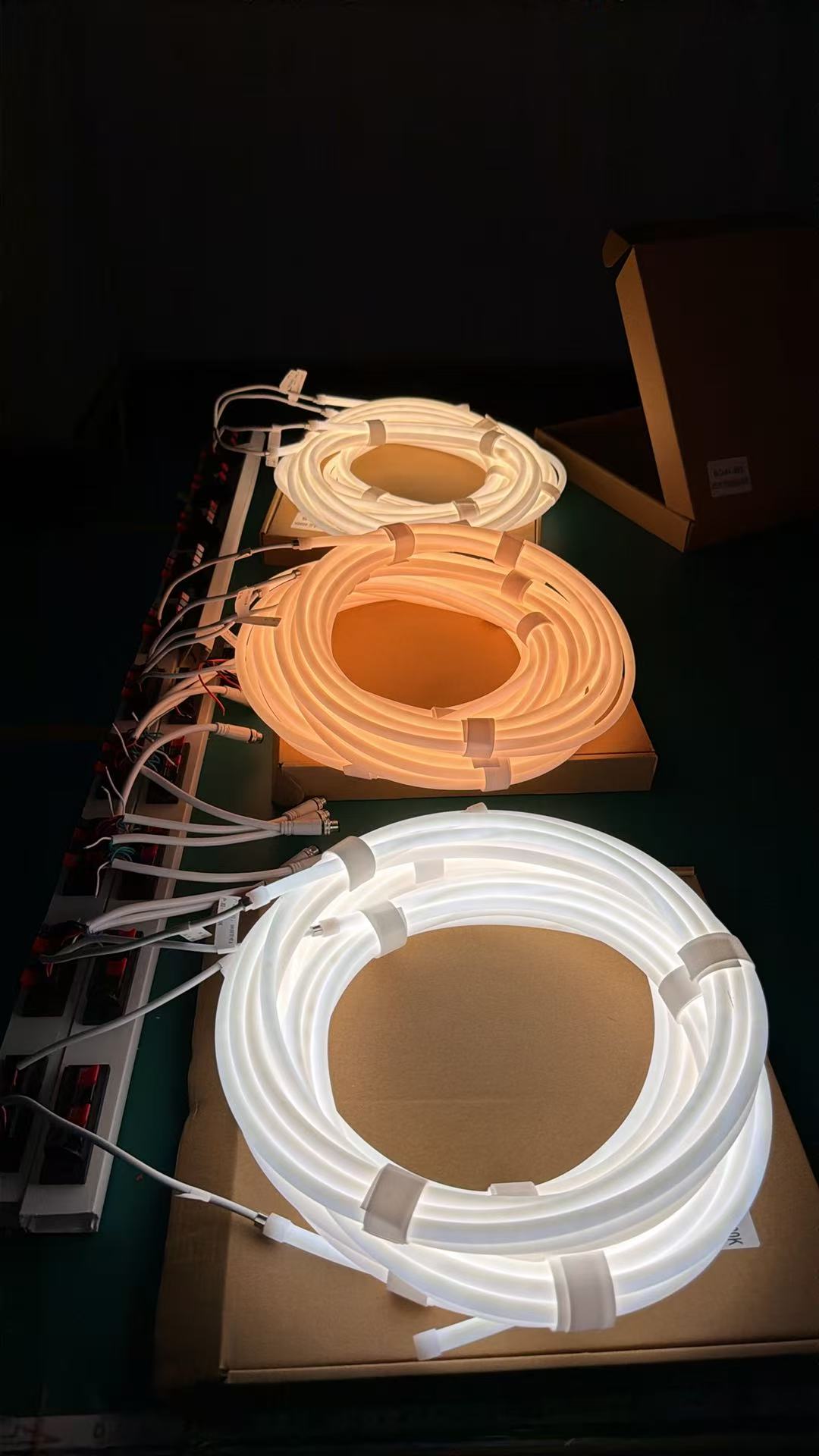
Different Installation Methods Require Different Structural Designs
Recessed mounting, surface mounting, suspended installation, curved surface mounting, and outdoor facade mounting correspond to completely different mechanical load models. Mature solution providers don't apply the same structure to every project.
Instead, they redesign structural solutions based on wind load, thermal expansion, vibration environment, and maintenance methods. Many failures aren't product problems—they're mismatches between installation structure and application scenario.
Our side-view silicone neon flex products, for example, use different mounting channel designs depending on whether you're installing them in a recessed architectural detail or mounting them exposed on a glass facade. The mechanical stress distribution is completely different, and the structure must adapt accordingly.
What Makes a Real LED Linear Lighting Solution Provider Different?
Truly excellent LED linear lighting solution providers aren't selling fixtures. They're managing risk. Because the most expensive cost in large projects has never been procurement cost. It's rework cost. It's not product price. It's the maintenance burden over the next five to ten years.
Genuinely professional linear lighting solutions don't just make projects light up successfully today. They maintain the original design luminous effect after enduring countless cycles of high temperature, low temperature, rain, ultraviolet radiation, and thermal stress.
| Provider Type | Focus | Risk Profile |
|---|---|---|
| Component Supplier | Unit Price | High Long-Term Risk |
| System Integrator | Installation | Medium Risk |
| Solution Provider | System Consistency | Low Long-Term Risk |
That's the real value of engineering-grade linear lighting. It's also the core standard that distinguishes ordinary suppliers from genuine project-oriented solution providers.
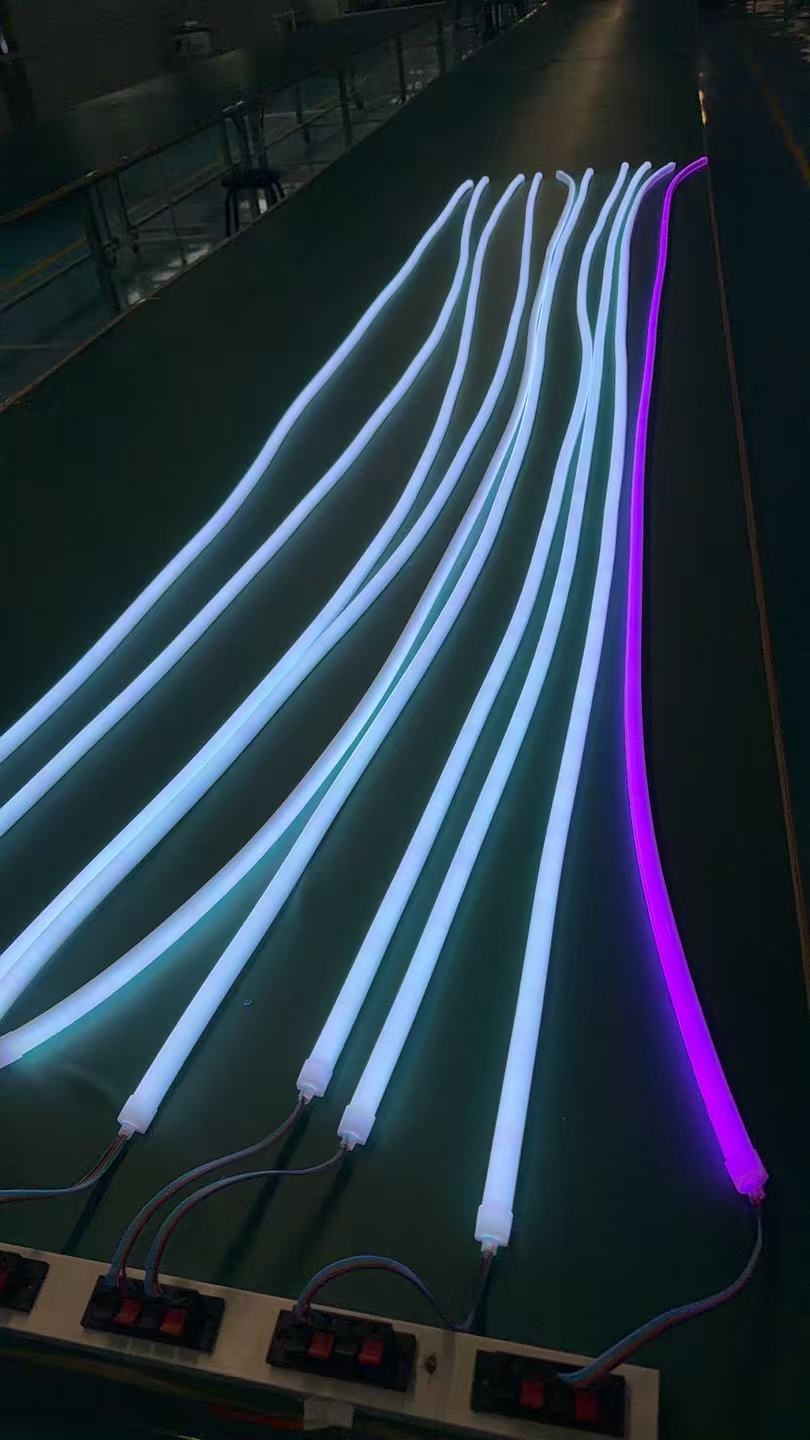
When you're evaluating potential partners, ask them about their thermal cycling test protocols. Ask them how they manage LED bin consistency across multi-year projects. Ask them what happens when you need to expand your installation three years from now. Their answers will tell you immediately whether they understand system-level risk management or just product-level specifications.
At Shenzhen Alister Technology Limited, we've built our entire OEM/ODM manufacturing process around one principle: engineering predictability. Our silicone neon flex products don't just meet specifications at the moment of shipment. They're designed to maintain those specifications through five years of real-world environmental stress. That's why global wholesalers, lighting designers, architects, and contractors trust us as their manufacturing partner—not just their supplier.
Conclusion
The right LED linear lighting solution provider manages system consistency under long-term stress, not just initial brightness. Choose partners who engineer for five-year stability, not just today's specifications.