

When you're searching for LED suppliers in China, you probably think success means finding the factory with the lowest price, biggest certifications, or fastest shipping. But I've watched million-dollar projects fail not because of bad products—but because batch 100 looked nothing like batch 1.
The best Chinese LED companies aren't those who make perfect samples. They're the ones who can deliver identical performance in year three as they did on day one. Most failures don't happen at installation—they happen 18 months later when you need to match your original project and discover your supplier changed their material formula to save $0.03 per meter.

I need to be honest with you about something most people won't tell you. The LED industry in China operates in two completely different worlds. One world focuses on winning your first order. The other focuses on supporting your tenth project. Most buyers can't tell the difference until it's too late.
Why Do Most "Top-Rated" Chinese LED Suppliers Eventually Fail Your Projects?
I watched a commercial complex project collapse not because of product failure, but because of something far more insidious. The supplier passed every test. Their samples looked perfect. Then they quietly changed their silicone diffusion formula between orders.
Material consistency—not initial quality—determines whether your architectural lighting project will look unified or fragmented after two years. A 2% change in diffusion materials creates visible color banding across building facades, turning a $500,000 installation into a visible failure that no amount of troubleshooting can fix.
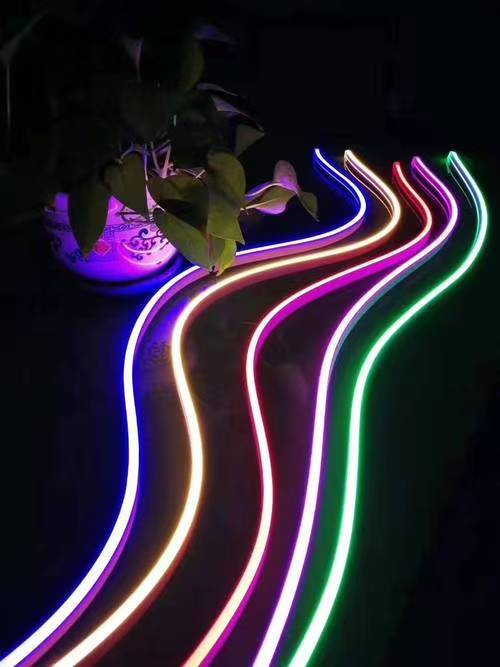
Let me break down what actually happened. The building owner approved the lighting design based on perfect samples. First installation went flawlessly. Eighteen months later, they expanded the building and ordered 1,500 additional meters of "identical" fixtures. When powered on at night, the building looked like someone drew lines across it with different colored markers.
The LED chips were the same brand. The drivers were identical. The certifications matched. But the supplier had switched their silicone gel supplier to reduce costs by less than 5%. That tiny change—invisible in individual fixtures—became brutally obvious when thousands of meters operated simultaneously on a building facade.
The real cost wasn't the replacement fixtures. It was the crane rental, the labor for reinstallation, the project delay, and the reputational damage to everyone involved. All because someone in the supply chain thought "close enough" was acceptable.
This reveals the fundamental problem. Most Chinese LED suppliers optimize for sample approval, not long-term consistency. They know you'll test their first batch carefully. They also know you probably won't compare batch five to batch one with the same scrutiny.
What Material Control Separates Reliable LED Manufacturers From Sample-Only Factories?
I need you to understand something critical about LED manufacturing in China. Buying the same LED chips and drivers doesn't create equivalent products. Two factories can source identical Epistar chips and Meanwell drivers, yet produce completely different long-term results.
True manufacturing control exists in the material systems—silicone gel formulations, PC diffusion compounds, sealing adhesives, PCB substrate quality, and copper foil specifications. These determine yellowing rates, color stability, waterproof longevity, and light decay patterns that only appear after thousands of operating hours.

Here's what most buyers miss. When you request quotes from ten factories, nine will offer nearly identical specifications. They'll all claim food-grade silicone, anti-UV formulation, and IP68 ratings. The technical datasheets look nearly identical.
The difference emerges in three critical areas:
Material Formula Ownership: Superior manufacturers develop proprietary silicone formulations. They don't just buy generic compounds from material traders. They work directly with silicone manufacturers to create custom molecular structures optimized for specific thermal expansion coefficients, UV resistance curves, and long-term flexibility retention.
Supplier Lock-In Protocols: The best factories implement strict supplier qualification systems. When they validate a silicone gel supplier, that relationship becomes permanent. They don't switch suppliers to save 3% on material costs. They understand that even "equivalent" materials from different suppliers create batch-to-batch variations that destroy project consistency.
Batch Traceability Systems: Professional manufacturers maintain complete material traceability. Every production run links back to specific material lot numbers. If you order matching fixtures two years later, they can verify whether their current material inventory will produce identical optical characteristics to your original order.
I saw this play out dramatically with a coastal city landscape project. The supplier provided IP68-rated fixtures with complete test reports. Salt spray tests passed. Waterproof tests passed. Aging tests passed. Everything looked perfect.
Twelve months into operation, fixtures started showing condensation. Within eighteen months, multiple units experienced water ingress. The failure analysis revealed something subtle but devastating. The housing material and sealing adhesive had different thermal expansion coefficients.
Laboratory testing over 72 hours showed no problems. But after hundreds of real-world thermal cycles—summer heat followed by winter cold, repeated monthly for a year—microscopic cracks formed at the sealing interface. Water vapor gradually penetrated these micro-failures.
This is what I call "laboratory-compliant, field-failure" design. The product passed every standard test because standard tests don't simulate twelve months of daily thermal cycling. The manufacturer had changed their housing material supplier to reduce costs. The new material met all specifications. But nobody verified thermal compatibility with the existing sealing system.
How Does Manufacturing Change Control Determine Five-Year Project Consistency?
Most purchasing teams audit certifications. They verify CE marks, UL listings, ETL approvals, and RoHS compliance. These documents confirm baseline safety and performance. But they tell you nothing about what happens when your supplier changes their PCB manufacturer to save costs.
Change management systems—not certification counts—determine whether batch 50 matches batch 1. Professional manufacturers implement formal Engineering Change Orders (ECO) requiring customer notification before any material substitution, even if the replacement material meets identical specifications.
Let me explain why this matters so critically. LED fixtures combine dozens of materials and components. Each component has multiple qualified suppliers. When factories face cost pressure or supply disruptions, they substitute materials.
Most substitutions seem harmless:
- Switching from Supplier A's silicone to Supplier B's silicone (both food-grade)
- Changing PCB manufacturers (both 2oz copper)
- Using alternative LED bins (same color temperature range)
- Replacing diffusion PC material (same light transmission rate)
Each individual change tests as equivalent. But combine three "equivalent" substitutions in one product, and you've created a completely different material system with unpredictable long-term interactions.
Professional manufacturers treat material systems as integrated designs, not collections of interchangeable parts. When they need to change any component, they revalidate the entire system. They test thermal cycling performance. They verify color consistency. They measure long-term aging characteristics.
More importantly, they notify customers before implementing changes. They understand that for architectural projects, matching existing installations matters more than incremental cost savings.
Here's what you need to demand from any Chinese LED supplier:
Fixed LED Bin Requirements: LED chips vary in color and brightness even within the same production batch. Manufacturers sort them into "bins" based on these characteristics. Your purchase order should specify exact bin codes, not just general color temperature ranges. Without bin locking, your supplier might ship 3000K fixtures ranging from 2900K to 3100K across different orders.
Supplier Qualification Lists: Request documentation of all material suppliers for critical components—silicone gel, PC diffusion material, copper-clad laminates, sealants, and adhesives. Verify that these suppliers remain consistent across orders. If your manufacturer can't provide this information, they don't control their material systems.
Material Lot Traceability: Every production batch should link to specific material lot numbers. When you reorder eighteen months later, your supplier should verify whether current material inventory matches your original order's optical and physical characteristics. Without this capability, consistency becomes accidental rather than controlled.
Formal ECO Processes: Establish contractual requirements for Engineering Change Orders. Any proposed material substitution should require your written approval, even if the supplier believes the change is inconsequential. This forces transparency and prevents silent formula modifications.
Long-Term Inventory Commitment: For large projects with multi-phase installations, negotiate material inventory retention. The supplier should maintain sufficient critical materials to support your project's complete installation timeline, even if that spans two years.
I know this sounds demanding. But consider the alternative. You approve a supplier based on perfect samples. They win your order. Six months later, they quietly change their silicone supplier to improve margins. Your phase-two installation doesn't match phase one. Now you face the choice between accepting visible inconsistency or funding complete reinstallation.
That's not a product quality issue. That's a supply chain control failure. And it's entirely preventable through proper change management requirements.
Why Does Thermal Management Determine Real-World Longevity More Than Initial Light Output?
I've watched countless buyers select LED suppliers based on impressive lumen-per-watt specifications. The datasheet shows 180 lm/W. The price is competitive. The decision seems obvious. Then three years later, they're replacing fixtures showing 40% light degradation.
Junction temperature—not initial efficiency—determines LED lifespan and color stability. Every 10°C increase in LED junction temperature roughly doubles the light decay rate and accelerates color shift. High-efficiency LEDs operating in poorly designed thermal systems fail faster than moderate-efficiency LEDs in well-engineered thermal architectures.
Let me explain what actually happens inside LED fixtures. LEDs convert electrical energy into light, but they're not 100% efficient. Roughly 60-70% of input power becomes heat. This heat must transfer from the LED junction, through the PCB, through the housing, and ultimately into the surrounding air.
If heat removal fails at any point in this chain, junction temperature rises. Higher junction temperature causes:
Accelerated Phosphor Degradation: The phosphor coating that converts blue LED light into white light degrades faster at elevated temperatures. This causes color shift—fixtures that started at 3000K warm white gradually shift toward 3200K or higher, creating visible inconsistency across installations.
Increased Light Decay: LED light output decreases over time through a process called lumen depreciation. This decay accelerates exponentially with temperature. LEDs operating at 85°C junction temperature might retain 90% of initial output after 50,000 hours. The same LEDs at 105°C might drop to 70% output in the same timeframe.
Solder Joint Fatigue: PCB solder joints experience thermal stress from heating and cooling cycles. Higher operating temperatures increase this stress, eventually causing solder joint cracking and electrical connection failures.
Driver Component Degradation: Electrolytic capacitors in LED drivers have temperature-dependent lifespans. Operating a capacitor rated for 105°C at its maximum temperature might give 2,000 hours of life. Operating the same capacitor at 85°C could extend life to 20,000 hours or more.
So what creates effective thermal management? It's not magical—it's engineering discipline applied to multiple design elements:
PCB Thermal Design: Professional manufacturers use multi-layer PCBs with dedicated thermal planes. These internal copper layers spread heat across the PCB surface, reducing hot spots. They specify minimum copper weights (typically 2oz or heavier) to ensure adequate thermal conductivity. Budget manufacturers use single-layer or thin copper PCBs that can't effectively dissipate heat.
Thermal Resistance Optimization: Every interface in the thermal path creates resistance to heat flow. Professional designs minimize these interfaces and use thermal interface materials (TIMs) where necessary. They avoid designs requiring thermal pads or thermal paste, because these materials add resistance and degrade over time.
Current Derating: Superior manufacturers operate LEDs below their maximum rated current. Running LEDs at 80-90% of rated current significantly reduces heat generation while minimally impacting light output. This single decision can double fixture lifespan.
Ambient Temperature Considerations: Real products operate in real environments. Professional manufacturers design for worst-case ambient temperatures—not laboratory conditions. An LED system designed for 25°C ambient operation will fail in architectural applications where fixtures experience 45°C summer temperatures plus solar heating.
Driver Heat Management: LED drivers generate significant heat, especially in constant-current designs. Professional manufacturers separate driver heat from LED heat, preventing thermal coupling. Budget designs place drivers adjacent to LEDs, creating compounding thermal problems.
Here's a practical example. I evaluated two seemingly identical silicone neon flex products. Both specified 10W/m power consumption, 3000K color temperature, and 50,000-hour lifespan. Laboratory testing showed similar initial performance.
The difference emerged in thermal imaging. Product A maintained LED junction temperatures around 75°C under continuous operation at 25°C ambient. Product B showed junction temperatures exceeding 95°C under identical conditions.
That 20°C difference seems abstract until you run the reliability calculations. Product A will likely maintain 90% of initial light output after 50,000 hours. Product B might drop to 70% output after 30,000 hours while simultaneously shifting color temperature by 200-300K.
The buyer won't notice this difference in sample testing. They'll discover it three years into their architectural project when fixtures show visible dimming and color inconsistency.
This is why thermal management matters more than efficiency ratings. I'd rather specify an LED system achieving 150 lm/W with excellent thermal design than one claiming 180 lm/W with poor heat management. The "less efficient" system will outlast and outperform the higher-efficiency design in real-world applications.
What Separates Laboratory Water Resistance From Five-Year Outdoor Durability?
Every supplier shows you IP67 or IP68 test reports. Water doesn't get in during the test. The fixture passes. Everyone celebrates. Then eighteen months into outdoor operation, you start seeing failures. What happened?
IP ratings verify short-term water exclusion, not long-term material system durability. Real outdoor reliability requires UV stability testing, thermal cycling validation, compression set resistance, hygrothermal aging analysis, and material yellowing curves—tests that simulate years of environmental exposure, not hours of laboratory immersion.
I need to explain why IP testing creates false confidence. The IP68 test protocol submerges the fixture in water under pressure for a specified duration—typically several hours. The test passes if water doesn't penetrate the housing during this period.
This test verifies immediate water resistance. It doesn't verify anything about long-term material stability. Here's what actually happens to outdoor fixtures:
UV Degradation: Sunlight contains ultraviolet radiation that attacks polymer materials. Over months and years, UV exposure breaks down molecular bonds in plastics and silicones. This degradation manifests as:
- Surface chalking and cracking
- Hardening and loss of flexibility
- Color yellowing
- Reduced mechanical strength
- Compromised sealing interfaces
A fixture that passes IP68 testing fresh from the factory might develop micro-cracks after 5,000 hours of UV exposure, allowing water ingress despite the original watertight design.
Thermal Cycling Stress: Outdoor fixtures experience daily temperature swings. Summer days might reach 60°C surface temperature, followed by 20°C nights. Winter operation might cycle between -10°C and 30°C. Each cycle causes materials to expand and contract.
Different materials expand at different rates (thermal expansion coefficients). If a silicone housing expands differently than a polycarbonate end cap, the sealing interface experiences stress with every temperature change. After hundreds of cycles, this stress can create separation or cracking—failures that won't appear in room-temperature IP testing.
Compression Set: Sealing gaskets and O-rings work by maintaining compression against mating surfaces. Over time, especially at elevated temperatures, elastomer materials experience permanent deformation called compression set. The material partially "remembers" its compressed shape and loses its ability to maintain sealing pressure.
A gasket that creates perfect sealing when installed might lose 30-40% of its recovery force after 10,000 hours at elevated temperature. Water resistance degrades gradually, not suddenly. By the time you notice failures, multiple units may be compromised.
Hygrothermal Aging: Materials exposed to combined heat and humidity experience accelerated degradation. This is particularly critical for coastal installations or humid climates. The combination of temperature and moisture accelerates chemical reactions that wouldn't occur under dry conditions or at moderate temperatures.
Yellowing and Optical Degradation: Transparent silicone materials can yellow under UV exposure or thermal stress. This yellowing doesn't necessarily compromise water resistance, but it dramatically affects light transmission and color quality. A fixture that maintains its IP rating might still fail its aesthetic and photometric function.
So how do professional manufacturers address these challenges? They implement testing protocols that go far beyond basic IP verification:
Accelerated UV Aging: Quality manufacturers subject materials and complete assemblies to accelerated UV exposure equivalent to years of outdoor operation. Testing standards like ASTM G154 or ISO 4892 simulate solar radiation using specialized lamps. Products should demonstrate minimal yellowing, cracking, or mechanical property changes after 2,000+ hours of UV exposure.
Thermal Shock Testing: Fixtures undergo rapid temperature cycling between extreme hot and cold conditions. A typical protocol might cycle between -40°C and +80°C with rapid transitions. This test reveals material compatibility issues and structural weaknesses that develop under thermal stress.