
Most buyers start by comparing prices, lead times, product catalogs, and certifications. They check off boxes. They feel confident. But here's the truth: the real question isn't whether you're getting LED strips—it's whether you're getting a validated system solution. This distinction is what separates projects that perform flawlessly for years from those that require costly retrofits within months.
An LED strip lighting solutions provider should deliver more than components. They should engineer systems where every element—strips, drivers, cables, mounting structures, heat dissipation, waterproofing, and control systems—works together reliably. When one link fails, the entire project fails. And most failures don't happen during installation. They happen 12 to 24 months later, when warranty claims start piling up and your client is calling.
You're not just choosing a supplier. You're choosing who will manage your project's risk over the next five years. Because the most expensive cost isn't the purchase order—it's the call you get two years later when sections of your installation start failing and you realize your "solutions provider" only sold you parts.
What Happens When You Buy Components Instead of Solutions?
I worked on a commercial complex facade project once. The design was elegant. Linear LED strips traced the building's architectural lines. Over 8,000 meters of installation length. The tender went to a Chinese supplier with competitive pricing. The samples were perfect. Brightness uniformity was excellent. Color temperature was accurate. Waterproofing passed all tests. Every parameter met the design requirements.
Installation went smoothly. For the first three months, everything worked beautifully. Then summer arrived. Some sections started dimming. Scattered flickering appeared. Six months in, dark spots emerged. One year later, visible color shifts ruined the nighttime aesthetics.
Everyone assumed the LED strips were defective. We disassembled several sections for analysis. The strips themselves were fine. The problem was systemic. The project used 24V long-distance power distribution. The design phase calculated voltage drop based on theoretical power consumption. Lab tests passed. But real-world conditions are never laboratory conditions.
Where the System Failed
| System Element | Design Assumption | Real-World Reality |
|---|---|---|
| Cable temperature rise | Controlled environment | Ambient heat + solar load |
| Power supply efficiency | Rated efficiency | Degraded efficiency under sustained load |
| Driver loading | Design capacity | Continuous high loading |
| Connection resistance | Factory specification | Increased resistance over time |
The end result was insufficient voltage at the far end of each run. LEDs operated outside their design parameters. Brightness loss was just a symptom. System design failure was the root cause. This is standard in the industry. Many so-called solutions providers are just component suppliers. They ship LED strips, power supplies, and accessories. But they never validate whether these components function reliably as an integrated system.
When Materials Degrade Faster Than Expected
Another project taught me an even more subtle lesson. This was an outdoor landscape installation in a high-UV coastal region. The supplier provided what looked like a complete solution. Samples tested excellently. IP68 certification was in order. UV resistance reports looked solid. Eighteen months later, the sun-facing sections started yellowing. Two years in, light transmission degraded noticeably. Brightness dropped. Then connection points began leaking. Mass maintenance became necessary.
The waterproof structure wasn't the problem. The material system was. The supplier validated IP ratings in a lab. But they never validated long-term performance under combined environmental stress—UV degradation, salt spray corrosion, thermal cycling, and continuous thermal stress working together.

What Lab Tests Miss
| Lab Test | Real Environment | What Gets Missed |
|---|---|---|
| UV exposure (168 hours) | Cumulative 5-year exposure | Molecular chain breakdown |
| Salt spray (48 hours) | Daily salt-laden humidity | Long-term material migration |
| Thermal shock (10 cycles) | Daily thermal expansion cycles | Interface stress cracking |
| Waterproof test (IP68 static) | Pressure changes + movement | Seal degradation over time |
Laboratory data wasn't wrong. The lab environment just never equals real-world conditions. This is why I now focus on five specific capabilities when evaluating LED strip lighting solutions providers from China.
Five Capabilities That Separate Real Solutions Providers from Component Sellers
Can They Design at the System Level?
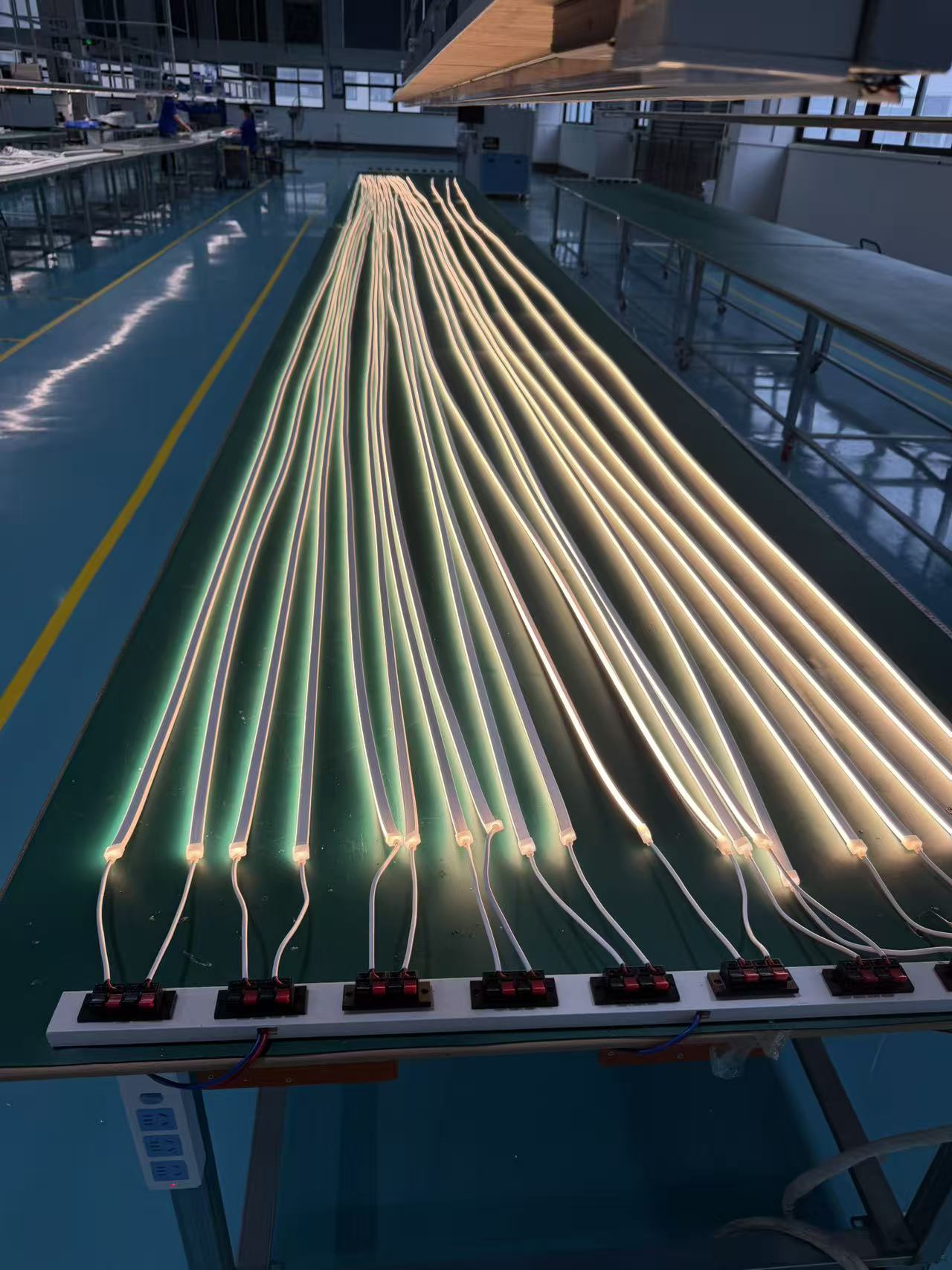
Real solutions don't start with LED strips. They start by validating that strips, power supplies, control systems, and mounting structures will operate reliably together over time. I ask suppliers to show me how they test integrated systems, not individual components. I want to see:
- Load testing with all components connected
- Thermal imaging of complete installations
- Long-term stress testing under combined environmental conditions
- Documentation of compatibility between different subsystems
System capability matters more than product specifications. Because when a project fails, nobody cares that each component passed its individual test. They only care that the system doesn't work.
Do They Understand Thermal Management?
Many project failures look like LED problems. They're actually thermal problems. LED lifespan fundamentally depends on junction temperature, not rated lifetime specifications. I need to know:
- PCB copper thickness and thermal conductivity
- Heat dissipation pathways from LED to ambient
- Power density calculations based on real mounting conditions
- Whether the mounting substrate can actually conduct heat away
I've seen too many installations where the LED strips are excellent but the mounting method traps heat. Within a year, accelerated degradation becomes visible. A proper solutions provider calculates thermal performance for your specific installation, not just repeats datasheet values.
Do They Understand Material System Compatibility?
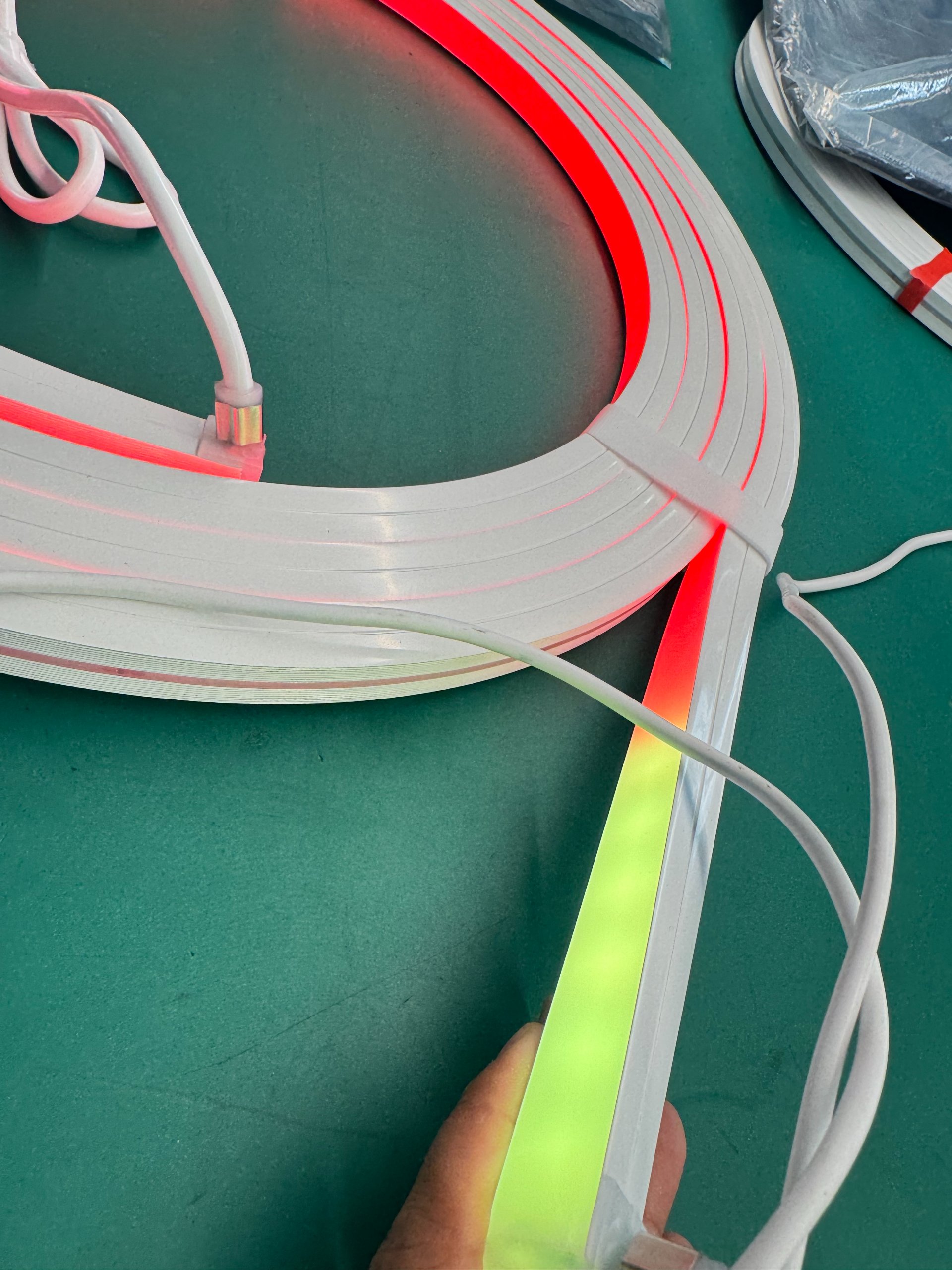
Many outdoor failures come from long-term reactions between materials. Adhesive migration into silicone. UV-induced molecular chain degradation. Thermal expansion coefficient mismatches between components. These issues don't appear during acceptance testing. They accumulate over years and eventually cause:
- Yellowing
- Cracking
- Delamination
- Water ingress
Mature solutions providers identify these risks upfront. They don't just send you a material specification sheet. They explain which material combinations are proven over years in conditions similar to your project.
Can They Lock Down Supply Chain Consistency?
Large projects have a hidden enemy: replenishment variation. I need suppliers who can guarantee:
- LED bin locking across multiple orders
- PCB system consistency
- Silicone formulation control
- Optical diffusion system stability
Otherwise, future replenishment orders will show color temperature shifts, brightness differences, and illumination uniformity changes. For architectural projects, consistency often matters more than peak performance. I'd rather have 90% performance with perfect consistency than 100% performance that varies by 10% between batches.
Do They Have Failure Analysis Capability?
Professional teams don't just recite specifications. They tell you where failure is most likely, why it will happen, when it will probably occur, and how to prevent it. Because engineering value isn't solving problems after they appear. It's eliminating problems before they happen.
I ask potential suppliers to walk through the most common failure modes for projects similar to mine. If they can't immediately identify three likely failure points and their mitigation strategies, they're not system engineers—they're salespeople reading datasheets.
The Real Question You Should Ask
When I evaluate LED strip lighting solutions providers from China now, I don't start with "What's your price per meter?" I start with "What's your failure rate at 24 months, and what causes it?" Because the most expensive cost isn't the purchase price. It's the maintenance call two years later when your building is operational, high-altitude access is required, batch consistency has changed, and all the hidden risks surface simultaneously.
The right LED strip lighting solutions provider doesn't just sell you strips. They engineer systems where strips, power, structure, and environment stay balanced throughout the project lifecycle. That's what large-scale projects actually need.
At Shenzhen Alister Technology Limited, we approach every project as a system integration challenge, not a product sales opportunity. Our silicone neon flex solutions are engineered for 5+ year outdoor performance because we validate thermal management, material compatibility, and supply chain consistency before we quote. We don't just meet specifications—we design around the failure modes that appear 18 months after installation.
If your project demands more than components, let's discuss system solutions. Because the difference between a component supplier and a solutions provider shows up when it matters most—long after installation is complete.
Conclusion
Choosing an LED strip lighting solutions provider from China isn't about finding the cheapest components. It's about finding a partner who engineers complete systems, validates long-term performance, and takes responsibility when environmental conditions exceed laboratory predictions. Real solutions providers manage risk. Component suppliers just ship boxes.