
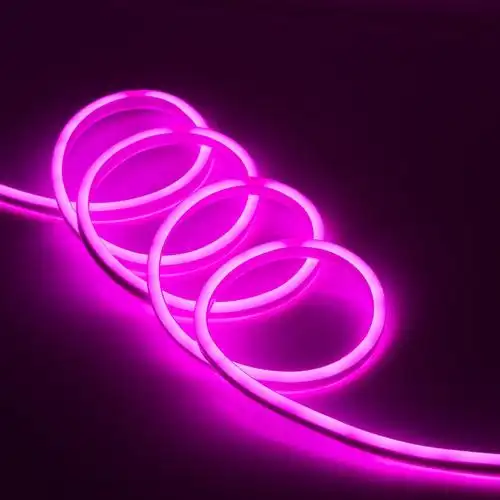
When most people purchase Neon LED Strip, they focus on light uniformity, brightness, color temperature, and waterproof ratings.
But here's the truth that separates successful projects from future failures: The biggest risk isn't the lighting system—it's whether the material structure can survive long-term thermal cycling and environmental stress.
Neon LED Strip reliability doesn't depend on how bright it is today. It depends on whether silicone, PCB, copper foil, adhesives, and mounting structures maintain their original relationship after a thousand thermal expansion cycles.
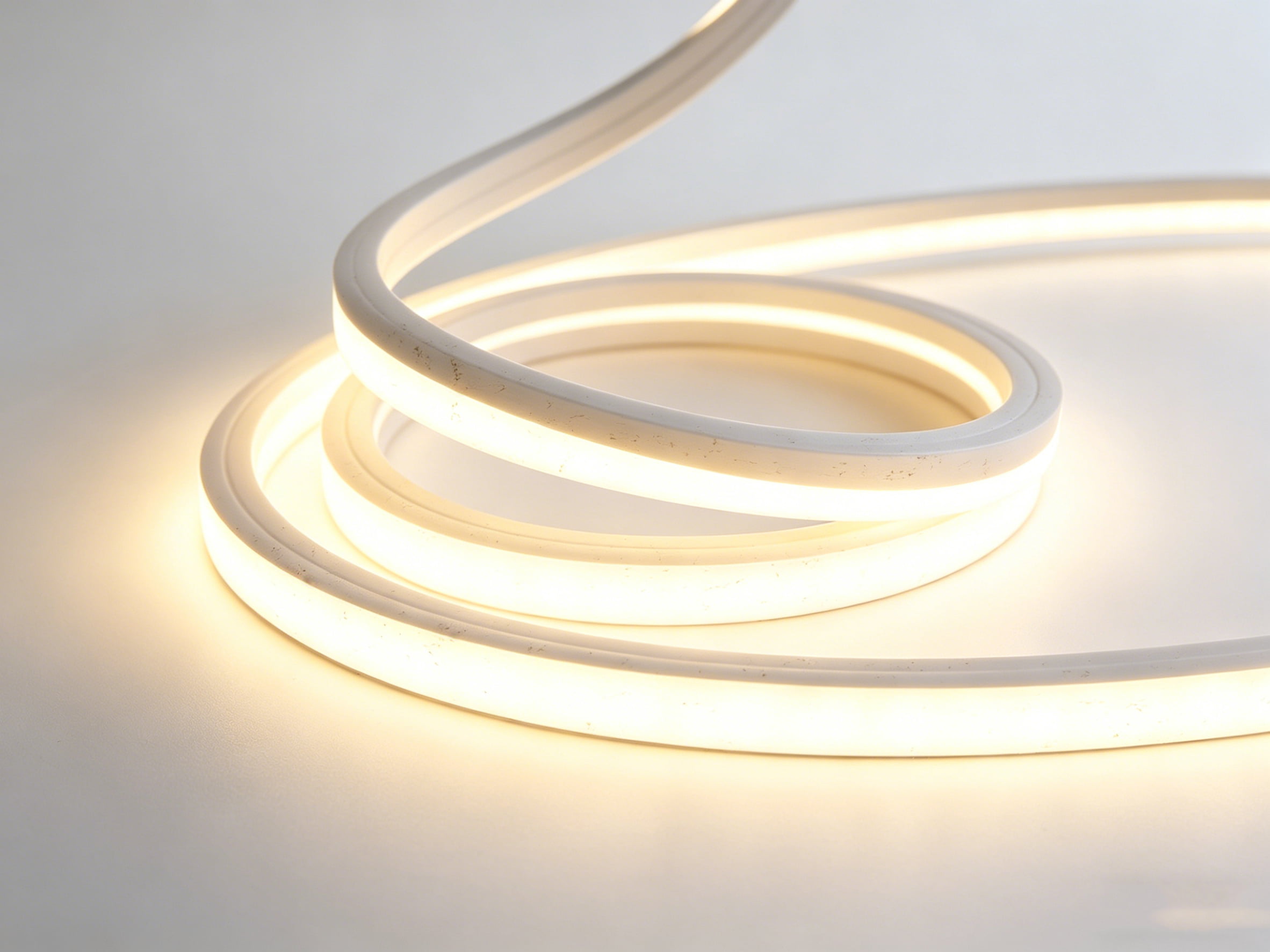
I've been manufacturing Neon LED Strip systems for years at Shenzhen Alister Technology. I've seen projects that looked perfect during acceptance testing completely fail eighteen months later. Not because the LEDs died. But because nobody validated the system—only the product.
Why Do Most Neon LED Strip Projects Fail After Year One?
Most engineers test products in controlled lab conditions.
Real projects face UV radiation, day-night temperature swings, wind loads, vibration, and humidity cycling.
The actual failure starts at microscopic stress points. By the time you see visible problems, the degradation process has been running for months—or years.
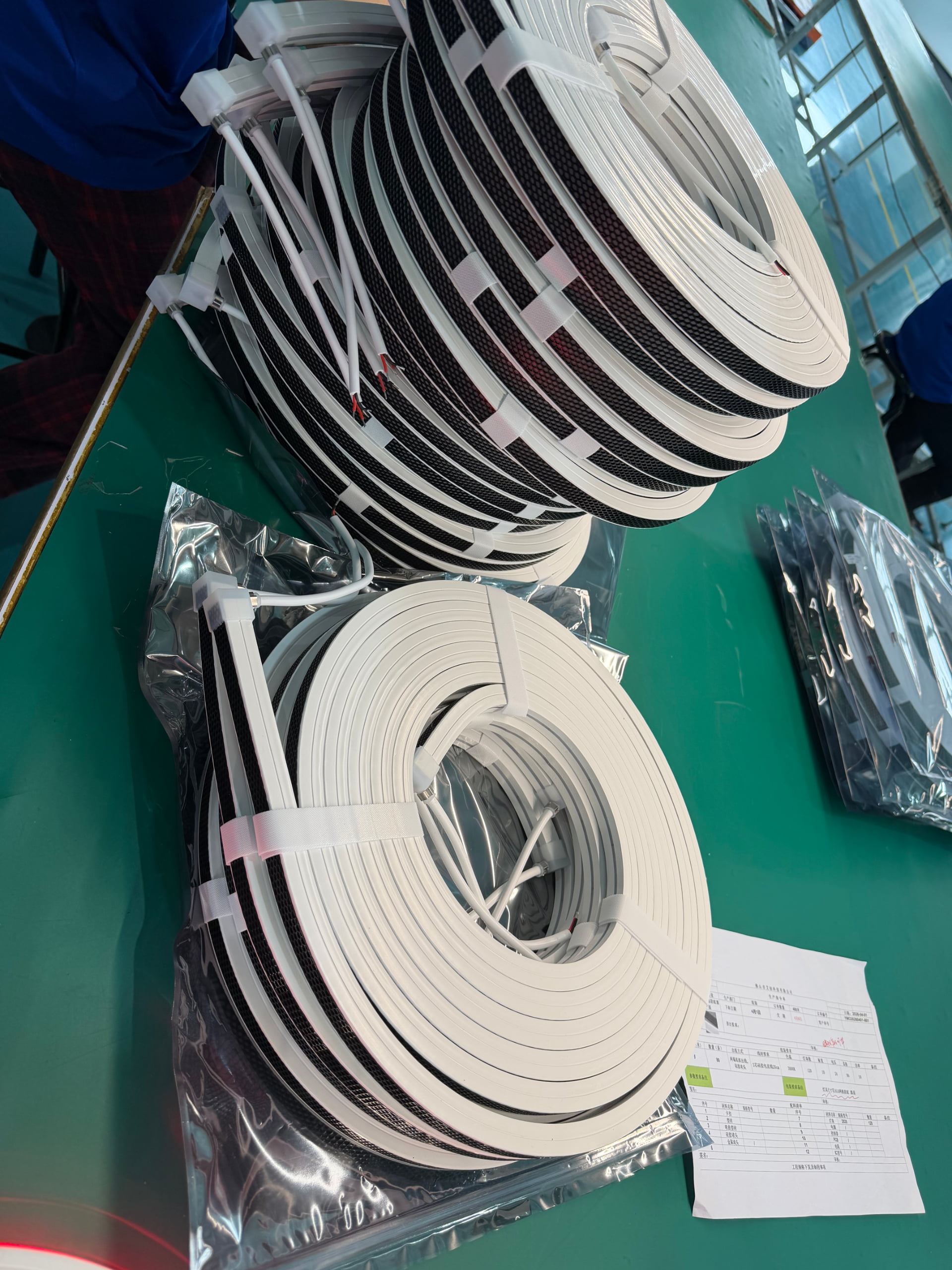
The Real Failure Points Nobody Tests For
I worked on a commercial street project several years back. Over 4,000 meters of Neon LED Strip outlining building facades. The samples were flawless—uniform light, no hot spots, consistent CCT, IP67 certified, passed UV aging tests.
Three months after installation: perfect operation.
Six months in: slight dark zones appeared at corner joints.
One year later: uneven brightness in multiple zones.
Eighteen months: water ingress at vertical sections.
We had to conduct high-altitude repairs. When we disassembled the failed sections, the LEDs were fine. The structure had collapsed. The installation used continuous fixed mounting with tight clip spacing to achieve perfectly straight lines. But there was no thermal expansion space.
During summer heat cycles:
- Silicone expanded continuously
- Stress concentrated at corners and joints
- PCB developed micro-fatigue
- Solder joints cracked
- Sealing interfaces loosened
Everything failed within design parameters—but perfectly aligned with material mechanics laws.
This pattern repeats across the industry. People validate products but never validate installed systems. Laboratory tests use static samples. Job sites deliver compound environmental stress over years.
What Causes Color Shift in Identical Neon LED Strip Batches?
Another hidden failure mode comes from material batch variation.
A retail chain installed white Neon LED Strip across multiple locations. Initial installation looked identical across all stores.
One year later, they ordered replacement stock for new locations. New sections showed visible color difference next to older installations.
Most people assume LED bin mismatch. The real problem was silicone system variation. Different batches used slightly different diffusion materials. At factory acceptance, the difference was invisible. After long-term UV exposure, different aging rates created visible color banding.
This problem is nearly impossible to catch in lab testing. But in 100+ meter continuous installations, it gets amplified to the point where it affects brand image.

| Failure Mode | Typical Onset Time | Root Cause | Prevention Method |
|---|---|---|---|
| Water ingress at joints | 12-18 months | Thermal fatigue breaks seal | Design expansion joints every 3-5 meters |
| Dark zones at corners | 6-12 months | Copper trace fatigue | Control minimum bend radius, optimize trace layout |
| Color shift between batches | 12-24 months | Material aging rate variation | Lock LED bin + silicone formulation + diffusion system |
| Surface yellowing | 18-36 months | UV degradation of low-quality silicone | Use anti-UV silicone with proven outdoor track record |
| PCB solder joint failure | 12-18 months | Mechanical stress from thermal expansion | Reduce fixing point density, allow material movement |
Does Higher IP Rating Actually Mean Longer Lifespan?
Many people ask "IP67 or IP68?" first.
But most water ingress doesn't come from seal failure. It comes from structural fatigue that breaks the seal.
For outdoor projects, you must design thermal expansion space—especially for:
- Long continuous runs
- Metal substrate mounting
- Building facade applications
Otherwise, stress will eventually concentrate and release catastrophically.
I've seen IP68-rated installations fail within months because mounting clips were spaced too tightly. The system couldn't breathe. Thermal expansion had nowhere to go except into the PCB and silicone interface.
Silicone Hardness Must Match Installation Method
Too soft: long-term sagging under self-weight.
Too hard: stress cannot dissipate, causing interface cracking.
Different applications need different hardness ranges:
- Suspended mounting: Requires higher tensile strength but moderate hardness (Shore A 60-70)
- Embedded mounting: Needs structural support, can use harder compounds (Shore A 75-85)
- Curved surface mounting: Demands flexibility and stress distribution (Shore A 50-65)
There is no universal silicone that works for every project. Material strategy must align with mechanical loading conditions.
Should You Prioritize UV Stability or Waterproof Rating?
Many projects treat IP rating as a lifespan indicator.
They have no direct relationship.
What actually determines outdoor lifespan:
- UV stability (anti-yellowing additives)
- Yellowness index after 2000+ hour UV exposure
- Tensile strength retention after aging
- Surface chalking resistance
Because material degradation usually happens before waterproof failure. Projects don't typically fail by water ingress first. They fail by aging first. Water ingress is just the final symptom.
At Alister Technology, we test our food-grade silicone extrusion through 3,000-hour UV exposure cycles. We measure yellowness index and tensile retention. Because we know outdoor projects in high-UV regions (Middle East, Australia, Southern California) won't survive on IP rating alone.
Why Bent Sections Fail First in Most Projects
The biggest structural risk zones in Neon LED Strip installations:
- Sharp corners
- Small-radius bends
- Cable exit points
These areas sustain long-term mechanical stress. Many dark zones aren't LED burnout—they're copper foil fatigue fractures.
You must design based on structural limits:
- Control minimum bend radius (typically 10x strip width)
- Optimize copper trace layout to avoid stress concentration
- Minimize solder joint loading through flexible PCB design
Otherwise, lifespan gets dramatically shortened. I've measured failed installations where copper traces showed clear fatigue patterns—microscopic cracks propagating from repeated flexing cycles.
How Do You Lock Consistency Across Large-Scale Installations?
For building facades and brand identity projects, the hardest challenge isn't point failure.
It's consistency loss across the installation.
You must lock down:
- LED bin (within 2-step MacAdam ellipse maximum)
- Silicone formulation (same supplier, same batch ideally)
- Diffusion material composition
- Extrusion process parameters
Because once replacement batches drift from original specs, you can never restore visual uniformity through maintenance. You'll have permanent color banding across your facade.
This is why at Alister, we maintain material traceability for major projects. We archive silicone batch data, LED bin codes, and extrusion parameters. If you need replacement stock two years later, we can reproduce the exact optical characteristics.
The Hidden Cost Nobody Calculates
Mature Neon LED Strip projects aren't competing on brightness.
They're competing on stability.
Because in engineering, the most expensive cost isn't procurement. It's post-delivery maintenance.
Failure doesn't only mean lights going dark.
When color temperature starts drifting, when sections begin yellowing, when brightness becomes uneven, when architectural outlines no longer maintain the original design intent—failure has already occurred.
Professional solutions don't just mount Neon LED Strip on a wall. They ensure it maintains original design state through five to ten years of environmental change cycles.
That's real engineering reliability.
| Quality Factor | Budget Product | Alister Standard | Long-Term Impact |
|---|---|---|---|
| Silicone base material | Recycled/mixed grade | 100% food-grade virgin | 3-5 year lifespan difference |
| UV stabilizers | Minimal or none | High-concentration package | Prevents yellowing and brittleness |
| Copper trace thickness | 1 oz standard | 2 oz reinforced at stress points | Reduces fatigue failure by 60% |
| PCB flexibility design | Rigid standard board | Flex-rigid hybrid zones | Allows thermal movement without cracking |
| Batch consistency control | No tracking | Full material traceability | Enables matching replacements years later |
Conclusion
Real Neon LED Strip reliability comes from material science and structural design—not from brighter LEDs or higher IP ratings. At Alister Technology, we engineer systems that survive thermal cycling, UV exposure, and mechanical stress for 5+ years because we understand that failure starts at microscopic interfaces long before lights go dark.