
Most people think buying cheaper LED strips saves money. I've watched projects collapse not because the lights failed, but because nobody treated the lighting system as a long-term structural component from day one.
The real money-saving lighting choice isn't about upfront cost—it's about selecting LED systems engineered to survive thermal stress, UV degradation, and mechanical fatigue for 5+ years without hidden maintenance costs eating your budget alive.

Here's what I've learned after years of manufacturing silicone neon flex and troubleshooting failed installations: you're not buying a product, you're buying a material system that must endure coupled stress from heat, light, chemistry, and movement.
Why Do "Good" Lights Still Fail After Six Months?
I remember a high-end commercial facade project where everything looked perfect during sampling. The brightness was stable, IP testing passed, and the laboratory aging test ran for 1000 hours without issues.
The failure appeared 3-6 months post-installation: yellowing white sections, dark corners where LEDs still worked, summer heat causing partial delamination, and worst of all—visible color temperature shifts creating striped patterns across the entire building at night.
The root cause wasn't the LED chips. It was system mismatch that laboratory tests never caught. Different batches had slight silicone hardness variations causing inconsistent thermal expansion paths. The adhesive reacted slowly with the silicone substrate over months. The aluminum channel design had no thermal stress release mechanism. The IP structure worked for static water resistance but failed under dynamic breathing cycles. And the power supply ran at 80-95% load continuously, accelerating hidden light decay.
This is the industry's most invisible and expensive problem: you test products, but failures happen at the system level. The lights passed every spec sheet metric, yet the real-world material interactions destroyed structural lifespan.
| Failure Type | Root Cause | Cost Impact |
|---|---|---|
| Yellowing | Silicone-adhesive incompatibility | Replacement + brand damage |
| Dark zones | Thermal stress on copper substrate | Labor-intensive troubleshooting |
| Water ingress | IP structure breathing imbalance | Emergency repairs + downtime |
| Color shift | Binning batch inconsistency | Full section replacement |
How Does Material Stress Actually Kill LED Strips?
When I say "stress," I'm not talking about turning lights on and off. I'm talking about what happens when silicone, copper, and LED packages experience thousands of thermal cycles while UV radiation attacks surface bonds and moisture tries to penetrate every seal interface.
LED strip failures don't happen because components break—they happen because material systems interact in ways that degrade structural integrity over time, and most buyers never account for this during selection.
Let me break down the invisible warfare happening inside every LED strip installation. First, silicone isn't just insulation—it's a stress buffer layer. If the hardness is wrong, you get either permanent deformation from being too soft or thermal cracking from being too rigid. I've seen projects fail because silicone hardness varied between batches, creating inconsistent thermal expansion paths that pulled apart joints.
Second, every bend or corner is a failure waiting to happen. The copper substrate experiences concentrated mechanical stress at flex points. If you use the same copper foil thickness for curved sections as straight runs, fatigue cracks develop invisibly until entire segments go dark. The solution isn't better adhesive—it's redesigning the bend structure to distribute stress.
Third, IP ratings measure instant water resistance, not long-term seal integrity. I've tested strips that passed IP67 immersion tests but failed within months outdoors because UV radiation caused surface micro-cracking, thermal cycling opened seal interfaces, and moisture slowly wicked through degraded material boundaries. The water didn't force its way in—the material system gradually lost its ability to keep it out.
Fourth, color consistency isn't a purchasing problem—it's a binning control problem. If you don't lock down LED batches with matching forward voltage characteristics, small driver current variations create visible color temperature differences across large installations. At night, buildings display striped patterns because each section drifts slightly under different electrical stress.
What's the Difference Between Testing Products and Testing Systems?
I want to share something that changed how I approach lighting specifications. A distributor once asked me why our samples worked perfectly but their installation failed after three months. I realized they tested individual components but never validated system-level interactions.
Real engineering doesn't test if lights turn on—it tests whether material compatibility, thermal management, electrical loading, and environmental protection can survive coupled stress for the expected service life.
Here's the shift in thinking that saves money: stop evaluating lumens, wattage, and IP ratings as isolated specifications. Start asking whether the silicone compound remains chemically stable with the adhesive system after 5000 thermal cycles. Ask if the copper substrate can handle flexural fatigue at the specified bend radius without cracking. Question whether the power supply operates within thermal limits when installed in the actual enclosure, not on a test bench with forced air cooling.
I've seen projects where buyers checked every datasheet parameter, yet nobody asked how the aluminum mounting channel's thermal expansion coefficient matched the silicone strip's expansion rate. When summer temperatures peaked, the differential expansion sheared adhesive bonds and created gaps where moisture condensed.
The expensive lesson: laboratory data shows compliance, but system mismatches destroy lifespan. You're not buying components—you're integrating a material ecosystem that either works together or fights itself until something fails.
| Test Type | Component Testing | System Testing |
|---|---|---|
| Focus | Individual performance | Interaction stability |
| Duration | Hours to days | Months to years |
| Environment | Controlled lab | Real installation stress |
| Failure detection | Immediate malfunction | Progressive degradation |
Which Five Control Points Actually Determine Long-Term Costs?
After troubleshooting hundreds of installations, I've identified exactly five system-level factors that determine whether your lighting investment saves money or bleeds maintenance costs for years.
Professional LED strip selection isn't about choosing products—it's about controlling material stress buffering, structural fatigue distribution, seal aging behavior, optical consistency preservation, and electrical thermal management.
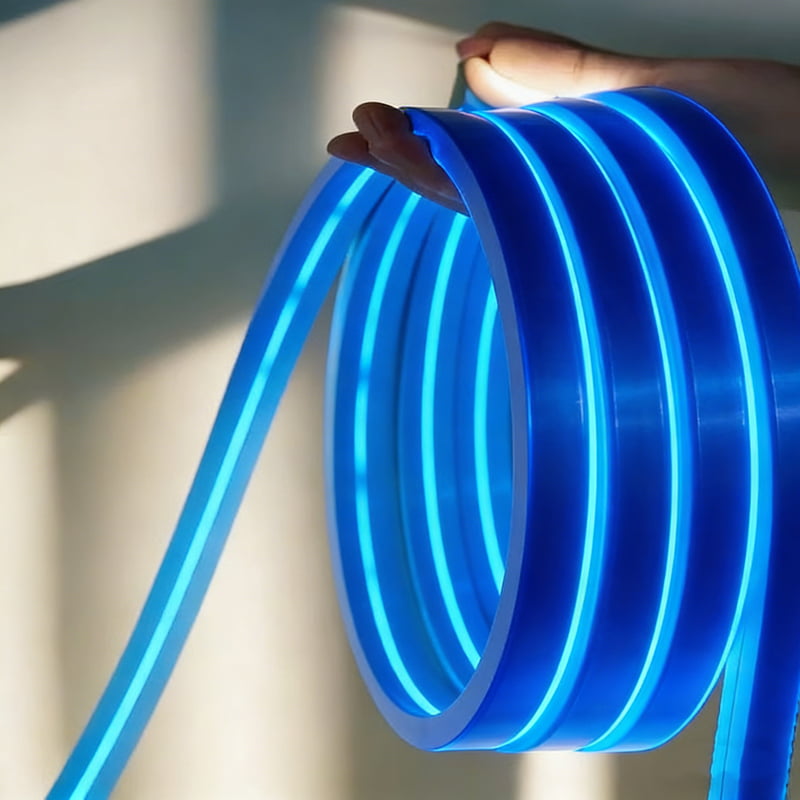
Control point one: silicone functions as a stress buffer, not just weather protection. Outdoor projects must specify silicone hardness within a tight range because too soft causes permanent deformation (creep) while too hard leads to thermal stress cracking. You're controlling thermal cycle rebound consistency, not hand feel. I've replaced entire installations where silicone batches varied by just 5 Shore A points, causing differential aging rates.
Control point two: bend sections are failure hotspots, not design details. Any corner structure needs different copper foil thickness than straight runs, reduced stress concentration through segmented release structures rather than continuous tensile loading, and wider tolerances for flexural deformation. Otherwise you see dark zones that aren't burned-out LEDs—they're structural fatigue failures cutting current paths.
Control point three: IP ratings measure instant water resistance, not aging performance. Engineering specifications must address micro-crack propagation after UV aging, seal interface stability through thermal expansion cycles, and surface powdering rates under prolonged ultraviolet exposure. IP failures never happen when water enters—they happen after months of material fatigue created the entry path.
Control point four: color temperature consistency requires batch control, not just purchasing. If you don't lock LED binning groups, different forward voltage characteristics cause driver current distribution variations that create visible building facade stripes at night. This isn't a lighting problem—it's optical consistency collapse from electrical stress variations.
Control point five: power supply design determines lifespan, not just electrical delivery. Stable long-term projects maintain 20-30% load margin, avoid continuous maximum output operation, and control voltage fluctuation impacts on LED junction temperature rise. Otherwise lights operate successfully while lifespan accelerates toward failure. The strips glow, but reliability dies invisibly.
How Do Professional Installers Calculate Real Project Costs?
I've worked with contractors who thought they saved money buying economy-grade LED strips, only to spend triple the savings on service calls, replacements, and reputation damage. The math seems obvious in hindsight, but it's invisible when you're comparing unit prices.
Real project economics aren't determined by purchase price per meter—they're determined by total installed cost plus maintenance expenses plus business disruption costs over the expected service period.
Let me walk through actual numbers from a commercial installation I consulted on. The client chose strips at $8/meter over our recommended $12/meter option to save $4000 on a 1000-meter project. Within eighteen months, they experienced partial failures requiring replacement of 30% of the installation. The replacement cost wasn't just materials—it included lift rentals, after-hours labor premiums, business disruption during replacement, and customer compensation for visual inconsistency during the failure period.
The total unplanned cost reached $18000, more than quadruple the initial "savings." But the real damage was harder to quantify: customer perception of a premium brand suffering visible lighting failures, ongoing anxiety about when the next section would fail, and lost opportunities because maintenance became an ongoing operational burden.
Professional installers calculate three cost layers. First, installed cost including all materials, labor, equipment access, and commissioning time. Second, projected maintenance over five years based on realistic failure rates from similar environmental conditions, not datasheet claims. Third, disruption costs including business downtime, customer impact, and risk of premature total replacement if partial repairs create unacceptable visual inconsistency.
When you model all three layers, the "expensive" specification often delivers 40-60% lower total cost of ownership because it eliminates the failure-replacement-disruption cycle entirely.
What Questions Should You Ask Before Selecting LED Strips?
Most specification conversations focus on brightness, color temperature, and IP rating. Those matter, but they're not where money gets saved or lost. The questions that determine long-term economics probe system-level interactions and environmental stress resistance.
Money-saving lighting choices start by asking: How will material compatibility, thermal management, structural fatigue resistance, seal aging behavior, and electrical stress interact in my specific installation environment over five years?
Ask about silicone hardness specifications and batch-to-batch consistency tolerances. If the supplier doesn't control this within 3-5 Shore A points, thermal expansion mismatches will create failure points. Ask how copper substrate thickness changes at bend sections and what minimum bend radius prevents fatigue cracking after 10000 thermal cycles. If they give you a single number without discussing flexural stress distribution, the design isn't engineered for reliability.
Question how IP sealing maintains integrity after UV exposure equivalent to your installation latitude and orientation. Laboratory IP testing in fresh condition doesn't predict seal performance after two years of material aging. Ask for accelerated aging data showing moisture vapor transmission rates after equivalent UV exposure cycles.
Demand LED binning specifications beyond just color temperature. You need forward voltage matching within each batch because driver current variations across LED groups create visible color shifts. If your supplier can't provide three-digit binning codes or doesn't understand why this matters, you'll face optical consistency problems across large installations.
Verify power supply thermal performance in your actual installation environment, not open-air test conditions. Enclosed channels trap heat, and many drivers fail not from electrical overload but from chronic thermal stress at 85-90% rated capacity. Ask for thermal derating curves and confirm they account for your worst-case ambient temperature plus enclosure heat buildup.
These questions sound technical because they are. But they're the difference between a lighting system that works reliably for five years versus one that creates expensive problems after eighteen months.
Conclusion
The lighting choices that save money aren't the cheapest purchases—they're the systems engineered to survive real-world stress without hidden costs. When you treat LED strips as long-term structural components rather than commodity products, you eliminate the expensive cycle of failure, replacement, and reputation damage that erodes profitability for years.