

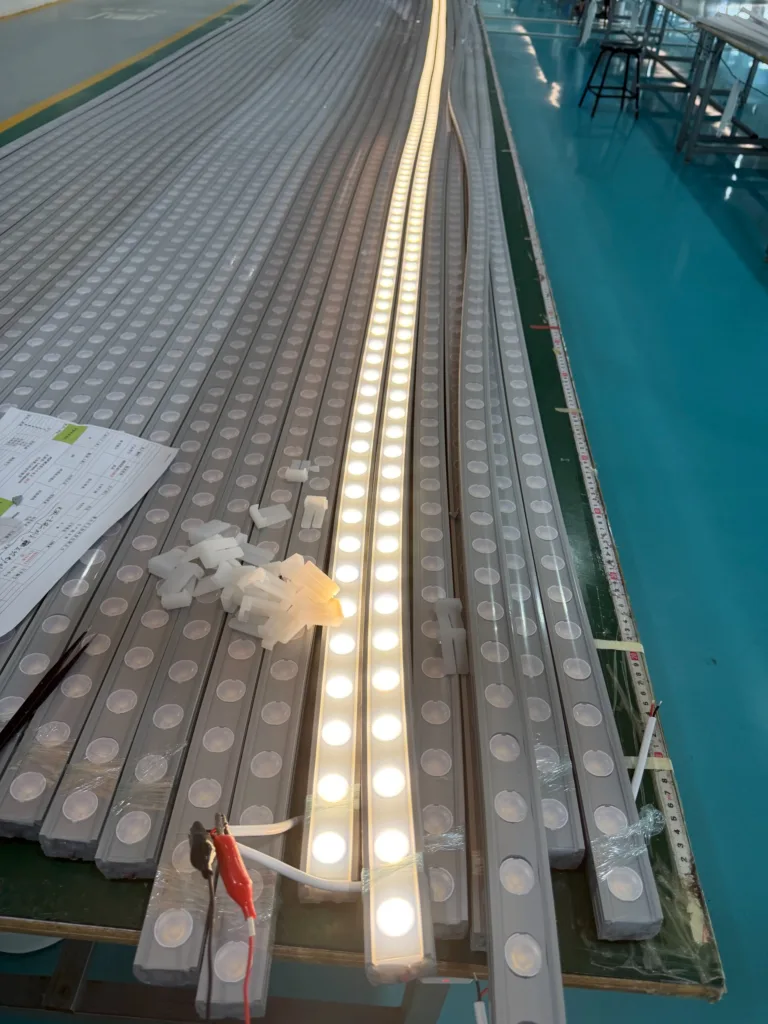
When people see "neon" lighting installations glowing across cityscapes worldwide, a natural question arises: where does all this come from? You might assume it's about argon gas and glass tubes. But if you're sourcing modern architectural lighting, you're probably asking about the wrong type of neon. The real manufacturing power today lies in flexible LED alternatives.
China produces approximately 70-80% of the world's LED neon flex products, with Shenzhen serving as the undisputed global manufacturing hub. While traditional glass neon tubes originated in France and the U.S., modern silicone LED neon flex manufacturing is overwhelmingly concentrated in China's Pearl River Delta region, where we operate.

If you're a distributor, architect, or contractor planning a facade project or commercial installation, understanding this manufacturing landscape is not just interesting. It directly impacts your supply chain reliability, customization options, and long-term project success.
Why Does China Dominate LED Neon Flex Manufacturing?
Most people think China leads because of low labor costs. That was true twenty years ago. Today, it is something entirely different.
China controls LED neon flex manufacturing because it has built the only complete vertical supply chain in the world. From LED chip fabrication to silicone extrusion, from driver electronics to DMX control systems, everything exists within a 200-kilometer radius of Shenzhen.
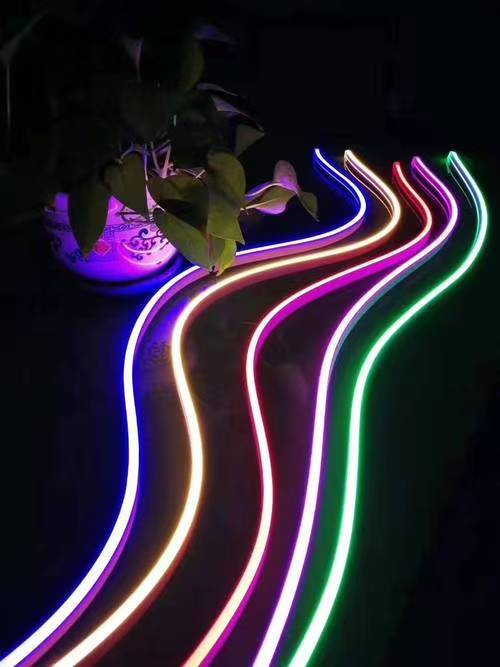
The Real Manufacturing Advantage: Vertical Integration
When I work with overseas clients, they often ask why they cannot source similar quality locally. The answer is simple. It is not about one factory. It is about an entire ecosystem.
Consider what goes into a single meter of silicone LED neon flex:
| Component | Local Supplier Distance | Lead Time |
|---|---|---|
| SMD LED chips (2835/5050) | 15 km | 3-5 days |
| High-grade silicone compound | 30 km | 1 week |
| PCB with copper substrate | 20 km | 2-3 days |
| Aluminum channels & mounting clips | 10 km | 1-2 days |
| Power drivers & controllers | 25 km | 3-4 days |
| IP67/IP68 end caps & connectors | 12 km | 2 days |
In North America or Europe, gathering these components would take weeks or months. Here in Shenzhen, we can prototype a completely custom specification in 72 hours. This speed is not magic. It is infrastructure.
Why Traditional Glass Neon Manufacturing Declined
Before LED technology emerged, glass neon manufacturing was distributed globally. France, the U.S., and Japan all had significant production capacity. But traditional neon faced three fatal problems:
- Fragility: Glass tubes break during shipping and installation.
- Energy consumption: Traditional neon uses 3-5 times more power than LED alternatives.
- Installation complexity: Each tube requires skilled artisans and high-voltage transformers.
We saw the market shift around 2015. Architects still wanted the "neon aesthetic" but needed something more practical. Silicone LED neon flex solved all three problems simultaneously. And because China already dominated LED production, the transition was natural.
The Shenzhen Manufacturing Ecosystem
People often ask me why competitors cannot simply copy what we do. They can copy one factory. They cannot copy an ecosystem that took thirty years to build.
Within Shenzhen's Bao'an and Longhua districts, you will find:
- 47 specialized LED packaging plants producing over 2 billion LED chips monthly
- 23 silicone compound manufacturers developing UV-resistant, non-yellowing formulations
- Over 200 PCB fabrication facilities with specialized capabilities for flexible circuits
- Dozens of extrusion molding specialists who understand the precise temperature control needed for silicone neon flex
This concentration creates something economists call "knowledge spillover." When a UV-stabilization breakthrough happens at one silicone plant, it spreads across the entire district within months. When we need to solve a thermal management issue on a custom PCB layout, we can visit three potential solution providers in one afternoon.
What About Other Countries in LED Neon Flex Production?
Some manufacturing exists outside China, but the scale and capability differences are significant. Let me be honest about the global landscape.
The U.S., Germany, and South Korea have boutique manufacturers serving local markets, but they typically source core components from China anyway. True end-to-end manufacturing outside China is rare and expensive.
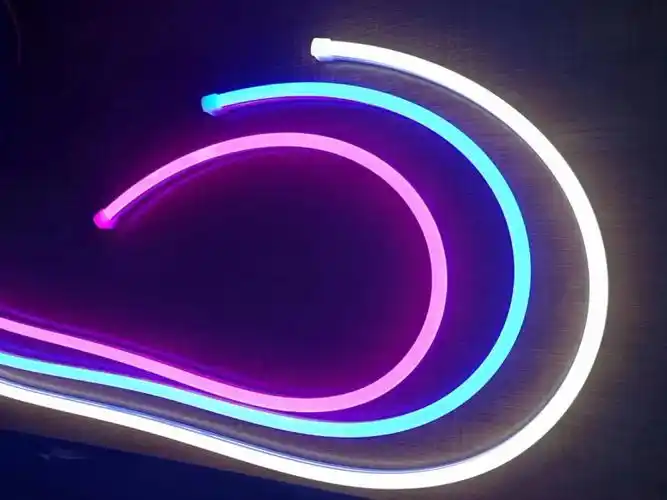
United States: Custom Fabrication, Not Core Manufacturing
The U.S. has skilled fabricators who can cut, install, and customize LED neon flex for specific projects. What they typically cannot do is manufacture the core product itself.
Most "American-made" LED neon flex uses:
- LED chips from Taiwan or China
- Silicone compounds from Asian suppliers
- Pre-manufactured flex strips from Chinese OEMs
The value they add is real: custom design, UL certification management, and installation expertise. But it is not primary manufacturing.
Europe: Standards and Certification, Limited Production
European manufacturers focus on high-end architectural projects with strict CE and RoHS compliance. Germany and the Netherlands have companies producing LED neon flex, but they face two challenges:
- Raw material costs: European silicone and LED components cost 40-60% more than Asian equivalents.
- Labor costs: Extrusion and assembly labor in Europe costs 8-10 times what we pay in Shenzhen.
These companies survive by focusing on ultra-premium projects where certification and local support justify the price premium. For volume projects, even European distributors eventually source from China.
Southeast Asia: Growing But Still Dependent
Vietnam, Thailand, and Malaysia are building LED assembly capacity. I have visited several facilities in these regions. They are improving, but they face a critical limitation: they still depend on Chinese suppliers for core components.
A Thai manufacturer might assemble LED strips, but:
- Their LED chips come from Shenzhen or Taiwan
- Their silicone comes from Chinese suppliers
- Their drivers and controllers are Chinese-made
- Their testing equipment was manufactured in China
They are essentially performing final assembly, not integrated manufacturing.
Does Manufacturing Location Really Matter for Your Project?
Now we reach the question that matters most for buyers: does it actually matter where your LED neon flex is manufactured?
Yes, but not for the reasons most people think. Location matters because it determines your access to customization, supply chain stability, and the ability to solve problems when they inevitably appear.
The Hidden Cost of Long Supply Chains
I worked with a U.S. distributor last year who tried to diversify away from Chinese suppliers. They found a European manufacturer offering "locally produced" LED neon flex at a 30% premium.
The first two shipments arrived perfectly. Then their third order required a custom color temperature adjustment. The European supplier needed six weeks to modify the specification because they had to wait for their Chinese LED supplier to produce custom chips.
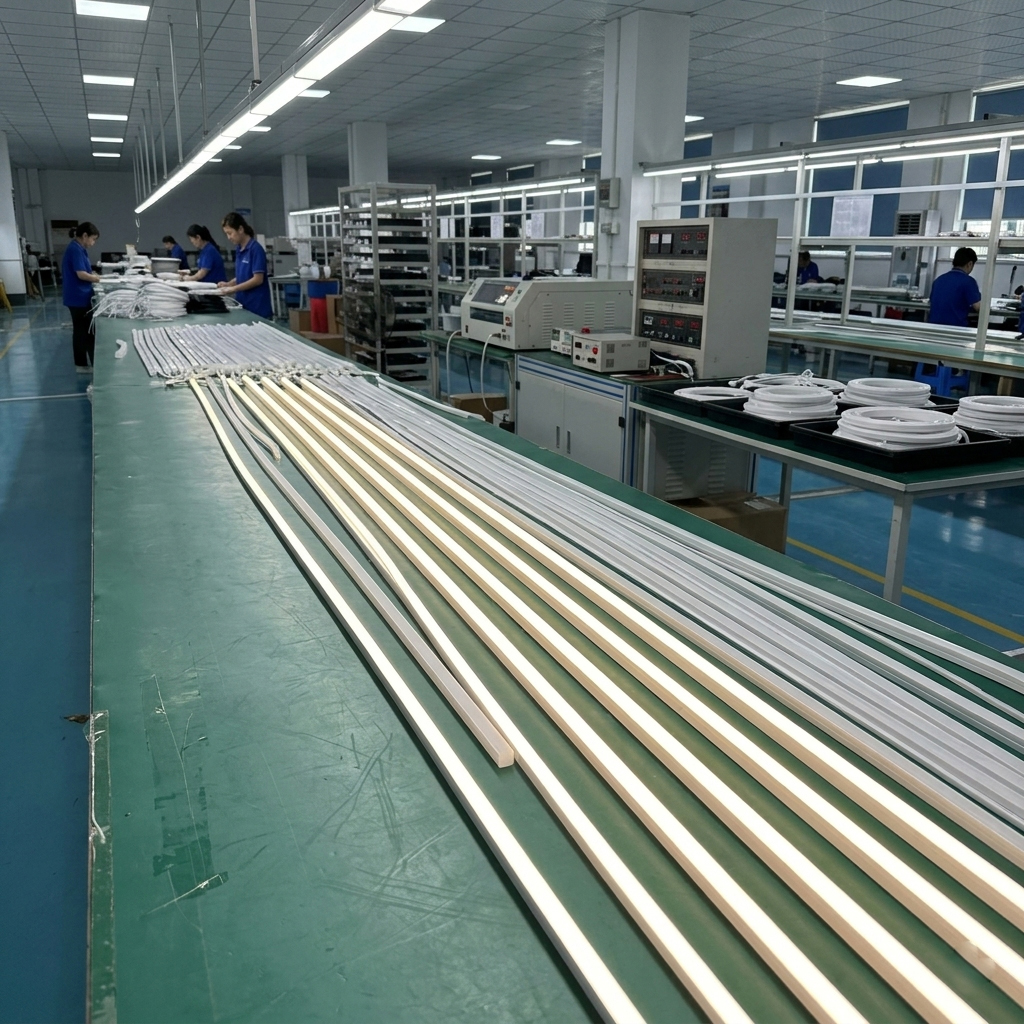
When you source directly from integrated Chinese manufacturers like us, the same modification takes 72 hours. We walk down the street to our LED packaging partner, discuss the exact binning requirements, and have custom chips ready for production by the end of the week.
This flexibility is worth more than the price difference for time-sensitive projects.
Quality Control at the Source
Another factor people underestimate is quality control. When all your components come from different countries, tracking defects becomes nearly impossible.
We had a client who experienced premature color shifting on a hotel facade project. The LED neon flex came from a European assembler. Investigation revealed:
- LEDs were sourced from Taiwan
- Silicone came from a Chinese supplier
- PCB was manufactured in Vietnam
- Final assembly happened in Germany
Identifying which component caused the failure took three months. Each supplier blamed someone else in the chain. The project had to be completely replaced.
When manufacturing is vertically integrated, accountability is clear. If one of our products fails, we control every component in the chain. We can identify the root cause in days, not months.
Customization Speed and Complexity
For architects and lighting designers, customization capability often determines what projects are even possible. Let me give you a real example.
An architect in Dubai needed LED neon flex with:
- Custom 2700K warm white with CRI >90
- IP68 rating for underwater pool installation
- DMX512 digital control compatibility
- Custom cutting lengths every 37mm instead of standard 50mm
- Non-reactive silicone compatible with specific pool chemicals
Could a European manufacturer do this? Technically, yes. Timeline? 16-20 weeks. Cost premium? 60-70% above standard products.
We produced the same specification in four weeks at a 25% premium. Why? Because every specialized supplier we needed was within 30 kilometers. We could test pool chemical compatibility at a local laboratory. We could adjust the PCB cutting interval at our board house in two days. We could source custom-binned LEDs in 72 hours.
This is the real advantage of manufacturing concentration.
Conclusion
China produces 70-80% of the world's LED neon flex because it built the only complete vertical supply chain, not because of low labor costs. For serious architectural and commercial projects, this manufacturing concentration translates directly into customization speed, quality control, and long-term supply chain reliability.