

Most lighting contractors treat bulk RGB neon tubing purchases as a "price comparison task." That's the mistake. I've watched high-budget commercial projects fail—not because the product was bad, but because teams confused "buying RGB tubes" with "managing visual consistency across a system." The real question isn't what to buy. It's how to prevent your entire installation from becoming three different light shows in one space.
When you buy bulk RGB neon tubing, you're not buying color options—you're buying a visual consistency problem. The real risk lies in assuming "same spec = same result." In multi-supplier projects, RGB tubes with identical datasheets often produce visibly different blues, mismatched fade speeds, and zone-by-zone color shifts. Your job isn't picking RGB tubes. It's defining system-level color coherence before the first purchase order.

If you've ever received "approved samples" that looked perfect, then watched your installed project display three different shades of purple across three building facades, you already know what I'm talking about. Let me show you why this keeps happening—and what actually works to prevent it.
Why Do "Approved" RGB Samples Fail in Real Projects?
The sample looks flawless. The spec sheet matches. The price fits your budget. Then why does the installed system look like a Frankenstein's monster of competing color zones? Because sample approval typically happens in isolation. You test one supplier's tube under controlled conditions. What you don't test is how Supplier A's "blue" compares to Supplier B's "blue" when both are running under the same DMX controller at 60% brightness in a 35°C outdoor environment.
RGB color consistency isn't a product attribute—it's a system outcome. Samples fail in real projects because testing protocols measure product performance, not cross-supplier visual coherence. Without side-by-side multi-source comparison under identical control logic, you're approving components, not a unified lighting system.
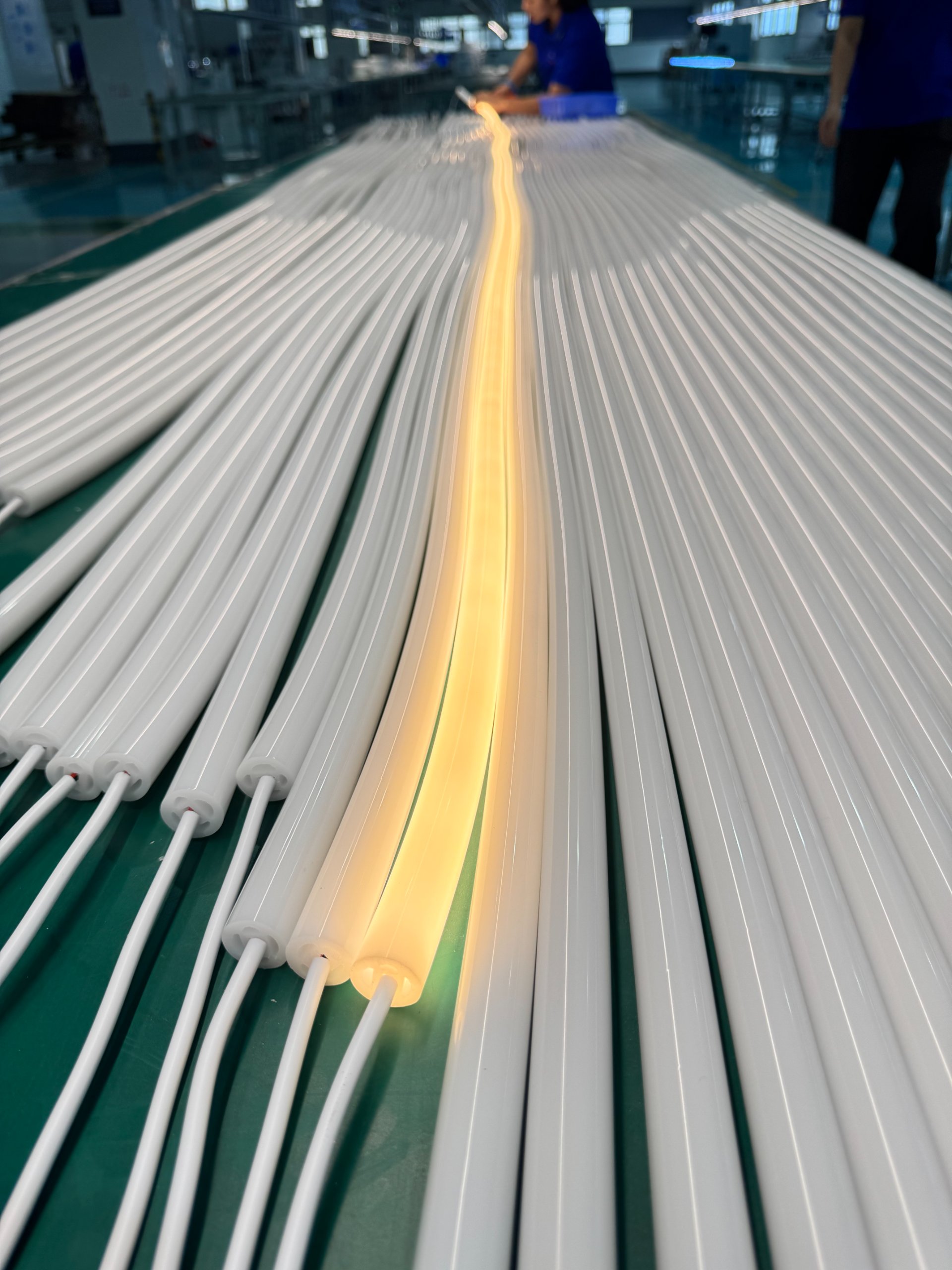
I need to walk you through why this distinction matters at every decision point. In one mid-scale urban lighting project I reviewed, the procurement team split orders across three manufacturers to "optimize cost." Each supplier provided RGB silicone neon flex that met the technical spec. Each passed sample approval. The disaster emerged when all three zones were powered simultaneously. The "blue" command produced cold blue in Zone A, violet-blue in Zone B, and cyan-blue in Zone C. From a distance, the street looked like three separate cities stitched together. The design called for "continuous flowing RGB light band." The reality delivered "three independent systems performing separately." No one did anything "wrong" by traditional standards. The product worked. The installation was correct. But the project failed because visual unity was never defined as a measurable system requirement. That's the hidden cost of treating RGB tube purchases as component procurement instead of system design.
When you source from multiple suppliers, you're not managing price—you're managing color generation logic. Different manufacturers use different LED binning strategies, different PWM driver implementations, and different thermal compensation algorithms. These aren't defects. They're engineering choices that produce measurably different RGB outputs even when input signals are identical. Your spec sheet might demand "RGB consistency," but if you haven't defined how to measure it, who verifies it, and under what conditions it applies, you've written a requirement without an enforcement mechanism.
The most dangerous assumption in bulk RGB purchases is that "technical compliance = visual compatibility." It doesn't. Two tubes can both meet IP68 rating, 120 LEDs/m density, and DMX512 protocol while producing noticeably different color rendering. The issue intensifies in dynamic modes. Static colors might pass visual inspection, but once you run animated sequences—gradients, chases, breathing effects—the difference in fade algorithms becomes glaringly obvious. One zone transitions smoothly while another jumps in discrete steps. The "synchronized breathing" effect becomes "three zones gasping at different intervals."
This isn't a supplier quality issue. It's a system definition failure. If you're buying in bulk, you're not just managing inventory. You're managing the risk that your "unified vision" becomes a "segmented installation." That requires a fundamentally different approach to specifications, sampling, and supplier management.
What Specification Gaps Cause Post-Installation Failures?
Your spec sheet looks thorough. It lists IP rating, LED count, power consumption, bending radius, control protocol. You've done your job, right? Not if those specs don't define the parameters that actually control visual outcomes. The most common specification gaps don't involve missing data—they involve ambiguous measurement contexts that make compliance meaningless.
Traditional RGB neon tube specifications define component capabilities, not system behaviors. They measure product states under test conditions, not installed performance under operational scenarios. The gap between "IP68 tested" and "IP68 after field installation with connectors and junction boxes" is where most waterproofing failures occur.
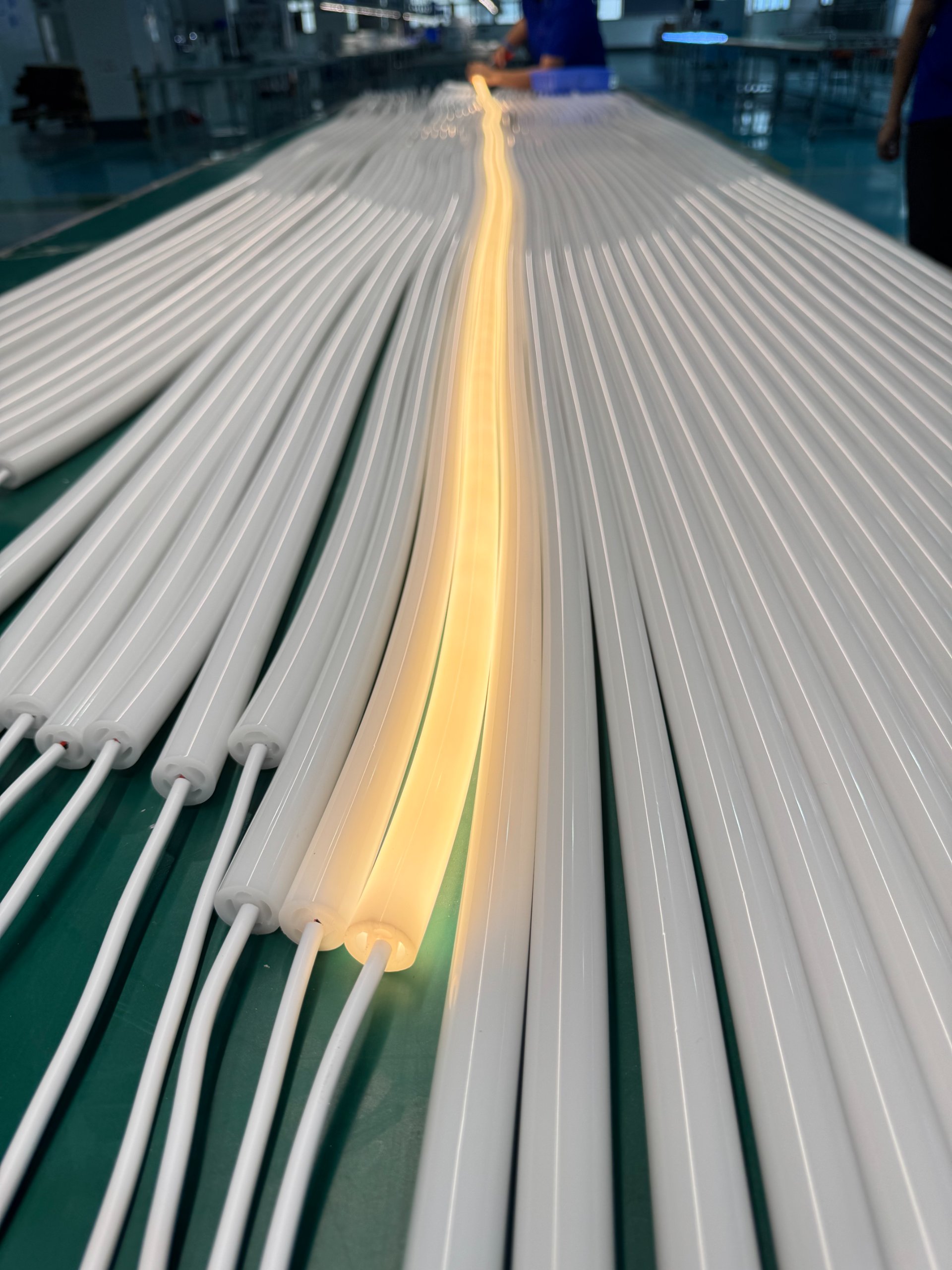
Let's examine the hidden traps in standard specifications. When your spec says "IP68," it typically means the tube itself passed submersion testing. What it doesn't clarify is whether that rating holds after you've installed field-cut connections, added distribution boxes, and created structural penetrations for mounting. The tube's IP68 rating doesn't extend to the system's IP rating. Most water ingress failures happen at connection points, not within the sealed extrusion. If your spec doesn't define "system-level waterproofing requirements," you've specified a product characteristic without addressing the installation vulnerability.
The same ambiguity undermines "RGB color consistency" claims. What does "consistent RGB" mean? Measured with a spectrometer or evaluated by human perception? Under what ambient lighting conditions? At what brightness levels? Using static colors or dynamic sequences? With what control system? Without defining the evaluation methodology, "consistency" becomes a subjective judgment that suppliers can claim to meet while producing visibly different results. I've seen projects where every supplier provided "consistent RGB" according to their internal testing, but when installed side-by-side under unified control, the color variation was immediately obvious.
The "bendable" specification creates similar confusion. Yes, the tube can bend. But to what minimum radius? Can it sustain repeated flexing during installation adjustments? Does bending affect light output uniformity? Does it create stress points that reduce lifespan? If your spec just says "flexible," you're leaving these critical parameters undefined. The result: field teams discover that the tube "can bend" but not into the tight curves your architectural design requires, or that bending creates visible hot spots in LED distribution.
Another critical gap emerges in control protocol specifications. Stating "DMX512 compatible" doesn't define response characteristics. What's the refresh rate? How does the tube handle rapid color changes? What's the maximum cable run before signal degradation requires amplification? Two "DMX512 compatible" tubes from different suppliers might respond to the same input signal with noticeably different timing, creating visible synchronization issues in multi-zone installations.
Power specifications often omit operational context. "24V DC, 10W/m" tells you nominal consumption but not how power draw varies with color mixing, brightness levels, or dynamic effects. It doesn't address voltage drop over long runs or specify whether the controller needs to compensate for supply fluctuations. When your installation spans 50+ meters with multiple branches, these unspecified factors determine whether the end of the run maintains consistent brightness and color.
Testing certifications present their own trap. "Passed UV resistance testing" sounds definitive until you ask: tested for how many hours? Under what UV intensity? At what ambient temperature? Accelerated aging tests don't always correlate with real-world degradation rates, especially when tubes face combined stressors—UV exposure plus thermal cycling plus mechanical stress from wind or structural movement. Your certification proves compliance with a test protocol, not necessarily long-term field durability.
The most insidious specification gap involves "sample approval equals production quality." You approve a sample batch that represents the supplier's best capability under ideal manufacturing conditions. Nothing in the spec prevents batch-to-batch variation in LED binning, silicone extrusion consistency, or assembly quality control. Unless your specification explicitly requires batch coding, traceability systems, and statistical process control documentation, you have no enforcement mechanism when later deliveries don't match sample standards.
This is why I keep emphasizing: specifications that don't define measurement contexts and operational scenarios aren't protecting you. They're creating an illusion of control while leaving the actual performance risks unmanaged. A truly protective specification must define not just product characteristics but system requirements, evaluation methodologies, installation conditions, and supplier quality assurance processes.
How Should Multi-Supplier RGB Procurement Actually Work?
If you're splitting bulk orders across suppliers—for cost optimization, redundancy, or capacity reasons—you need a fundamentally different procurement strategy. The standard approach of "define spec, solicit bids, award contracts" assumes suppliers are interchangeable. In RGB lighting systems, they're not. Visual consistency requires active coordination that most procurement processes never address.
Effective multi-supplier RGB procurement isn't about getting the best price from each vendor—it's about creating a unified visual outcome from independently manufactured components. This requires upfront standardization of control logic, comparative validation of color rendering, and continuous batch-to-batch verification. Without centralized color authority, you're buying ingredients for three different recipes.
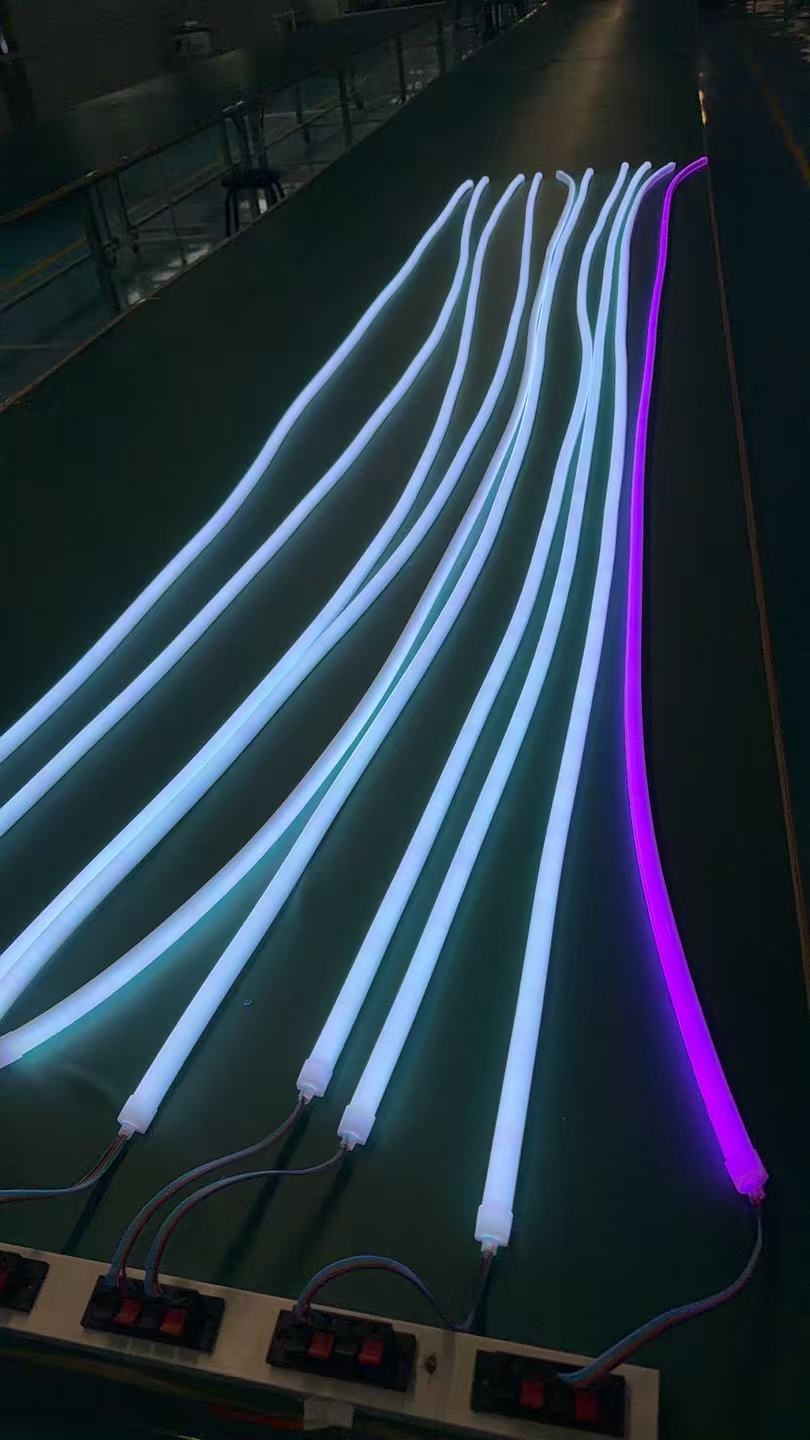
The process must start with "reference standard definition." Before any supplier engagement, you need to establish a physical color reference system. This means selecting one control platform, defining master color palettes with specific RGB values and fade algorithms, and documenting the measurement conditions under which these references will be evaluated. This reference isn't a spec sheet item—it's a physical lighting mock-up that becomes your comparison baseline for all supplier samples.
When you distribute RFQs to multiple suppliers, you're not asking "can you provide RGB neon tubing?" You're asking "can you match this specific color rendering under these control conditions?" The RFQ must include access to the reference installation or detailed video documentation showing color behavior in static and dynamic modes. Suppliers need to understand they're matching a system standard, not just meeting a technical specification.
Sample submission must be structured as "comparative validation," not individual approval. You don't evaluate Supplier A's sample in isolation, approve it, then evaluate Supplier B's sample separately. Instead, all suppliers submit samples simultaneously, and you install them in parallel test runs using the unified control system. This reveals color deviation immediately. You're not looking for each sample to be "good"—you're looking for all samples to be "identical."
During this comparative testing phase, you must evaluate multiple scenarios: static colors at various brightness levels, dynamic color transitions, gradient effects, and rapid switching. Pay attention to fade smoothness, color stepping artifacts, and synchronization lag. Document differences with calibrated photography and spectrophotometer measurements. Any visible deviation between suppliers becomes a disqualifying factor, not a "minor acceptable variance."
If suppliers show color discrepancies during comparison testing, you have three options: select a single supplier for all zones (eliminating multi-source risk), require non-conforming suppliers to adjust their LED binning and driver programming until they match the reference, or redesign your installation to create visually isolated zones where slight color differences won't be adjacent and obvious. What you cannot do is proceed with multiple suppliers whose outputs don't match while hoping "it'll look fine when installed."
Assuming suppliers pass comparative validation, the next critical step is "batch consistency management." Your contract must require that every production batch undergoes the same comparative testing. Suppliers must submit samples from each manufacturing run for centralized validation before shipping. This prevents the classic failure mode where approved samples represent peak capability but later batches drift in quality. Batch coding and traceability systems must be mandatory, creating an audit trail if field installations reveal color inconsistencies.
Control system unification is equally critical. If different zones use different controllers, you're introducing another variable that can cause synchronization issues. Specify a single control platform, controller model, and programming template across all suppliers and installation zones. This eliminates the possibility that apparent color differences are actually control logic differences.
Installation must follow a "zone-by-zone validation" approach. Don't install the entire system and then power it up. Commission each zone progressively, verifying color consistency before extending to the next area. This allows early detection of supplier batch variations or installation-induced issues. If problems emerge, you can halt installation and address them systematically rather than facing a complete post-installation rework.
Field adjustment capability must be built into the design. Even with perfect procurement, installation variables—viewing angles, ambient light, architectural reflections—can affect perceived color. Your control system should allow zone-level color correction to compensate for these contextual factors. This isn't "fixing supplier problems"—it's acknowledging that installed lighting is a system where final tuning happens on-site.
Finally, contractual responsibility assignment must be explicit. Who owns color consistency? If it's undefined, disputes will default to "each supplier met their individual spec, so no one's responsible." Your contract must state that the prime supplier (or lead contractor) guarantees system-level visual unity, even when using multiple sub-suppliers. This creates a single point of accountability for color management.
Multi-supplier procurement isn't inherently problematic. It becomes problematic when treated as parallel component purchases rather than coordinated system integration. The additional coordination effort—reference standards, comparative testing, batch validation, unified control—isn't "extra work." It's the minimum requirement to prevent your bulk RGB purchase from becoming a bulk visual disaster.
What On-Site Risks Emerge After "Correct" Installation?
You've done everything right. Spec was detailed. Samples were validated. Suppliers passed comparative testing. Installation followed approved drawings. Then you power up the system, and problems appear anyway. This is the phase where theoretical correctness collides with operational reality. The most damaging on-site risks aren't installation errors—they're systemic interactions that specifications never addressed.
Post-installation RGB failures typically aren't caused by defective products or poor workmanship—they're caused by operational conditions that differ from testing environments. Voltage drop over long cable runs, thermal effects in enclosed mounting, ambient light interference, and control signal degradation are real-world factors that ideal sample testing never encounters.

Let me break down the most common post-installation surprise failures. Voltage drop is the silent killer of RGB consistency. Your power supply delivers stable 24V DC at the distribution point. By the time current reaches the end of a 30-meter cable run, voltage has sagged to 22V. That 2V deficit might seem minor, but it's enough to shift color balance. LEDs don't scale their brightness proportionally—red, green, and blue channels respond differently to undervoltage, causing "white" to skew yellow or "blue" to appear cyan. The effect compounds with distance: your RGB system displays accurate colors near the power source but progressively shifts in hue toward the cable ends. Specifications rarely mandate maximum cable lengths or require voltage drop compensation, leaving this entirely to field discovery.
Thermal effects create similar inconsistencies. Silicone neon flex is thermally stable within rated ranges, but those ratings assume free-air mounting with adequate ventilation. When tubes are installed in recessed channels, behind frosted diffusers, or within architectural cavities, heat accumulates. As junction temperature rises, LED output shifts and color balance drifts. What tested perfectly in open-air samples now shows color variation based on mounting context. High-output RGB installations can experience 10-15°C temperature differentials between well-ventilated sections and enclosed areas, translating to visible color shifts that specifications never predicted.
Control signal integrity degrades over distance. DMX512 is robust, but it's not immune to interference or attenuation. Long cable runs, proximity to power lines, and electromagnetic noise from adjacent systems can corrupt control signals. The result: intermittent color glitches, synchronization lag, or complete communication failure in distant zones. Your control protocol "worked" in lab testing with short cables and clean electrical environments. It struggles in a real installation with 100+ meter signal runs sharing cable trays with AC power.
Ambient light contamination changes perceived color. Your RGB system was validated indoors under neutral lighting. When installed outdoors, it operates under changing daylight conditions—sunrise warm light, midday blue sky, sunset amber glow, artificial urban light pollution. The same RGB values produce noticeably different perceived colors depending on ambient context. What looked "pure white" indoors appears slightly blue at dusk. Design teams rarely account for this contextual color shift, assuming "correct RGB output = correct visual result."
Viewing angle effects create zone-by-zone inconsistencies. Silicone neon flex has wide beam angles, but not perfectly uniform emission. When viewed head-on, color appears consistent. When viewed at oblique angles—common in architectural applications where tubes are mounted on vertical surfaces viewed from street level—color shifts slightly. In installations where different zones are viewed from different angles, this creates perceived color variation even when tubes are outputting identical RGB values.
Structural movement introduces mechanical stress. Buildings expand and contract with temperature. Wind induces vibration. These movements stress tube mounting systems, creating micro-flexing at connection points and potential loosening of electrical terminations. Over time, this mechanical stress can cause intermittent electrical faults, water ingress at compromised seals, or physical damage to LED strips inside the silicone extrusion. Specifications test static mechanical properties, not fatigue under cyclic loading.
The interaction of all these factors is what makes post-installation failures so frustrating. An individual issue—slight voltage drop, minor thermal rise, moderate ambient light—might be tolerable. Combined, they push the system outside acceptable performance. You troubleshoot one