

Most buyers focus on the wrong things. They see RGBW, 24V, IP67, and think they have found the perfect solution. But the real question is not whether the strip works today. The real question is whether it will still work consistently after two years of dynamic operation.
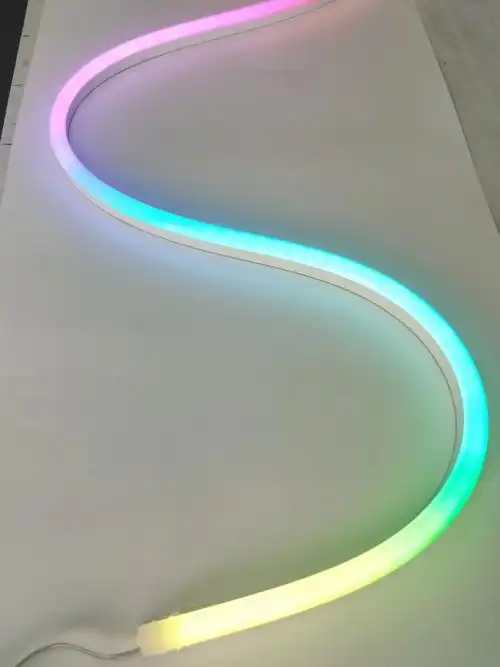
A 5m RGBW Silicone LED Neon Strip Light is a flexible, multi-color lighting solution that combines RGB color-changing capabilities with dedicated white LEDs in a durable silicone housing, designed for architectural, commercial, and outdoor applications requiring long-term color stability and weather resistance.
I have seen dozens of projects fail not because the product was defective, but because the buyer did not understand what happens when RGB and white channels run simultaneously for thousands of hours.
What Makes RGBW Different from Standard RGB Neon Flex?
Adding a white channel sounds simple. But it changes everything about thermal management, color consistency, and long-term reliability.
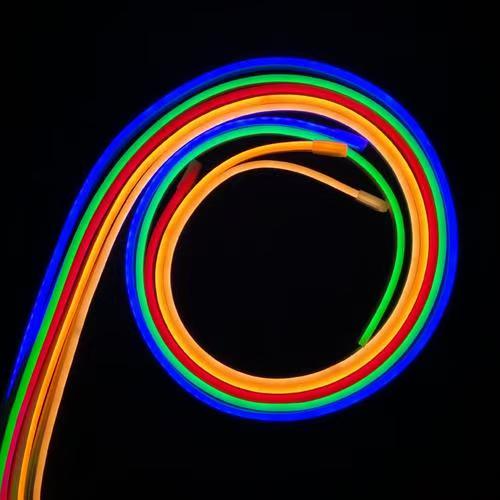
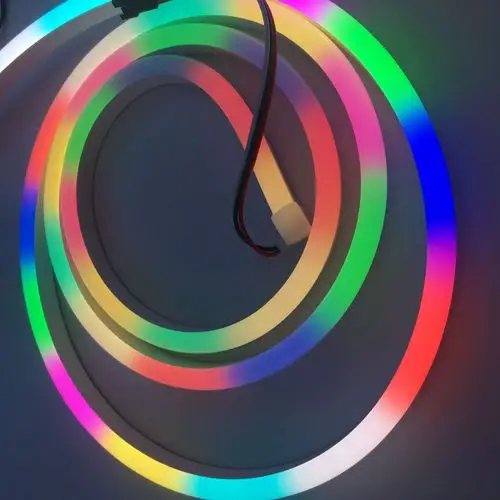
RGBW integrates a dedicated white LED chip alongside red, green, and blue chips, allowing for purer white light and expanded color mixing options, but it also increases heat output and requires more sophisticated PCB design to maintain stability.
Why White Channel Integration Increases System Complexity
When you add white LEDs to an RGB strip, you are not just adding one more color. You are adding another heat source on the same PCB. This matters because silicone, while flexible and waterproof, is not as efficient at dissipating heat as metal housings.
I once worked with a developer on a high-rise facade project. They chose RGBW neon flex for dynamic building contour lighting. Sample testing passed. Installation looked perfect. Three months later, sections of white light started shifting warm. Six months later, RGB colors no longer mixed properly. The building started showing visible color bands at night.
The failure analysis revealed the issue was not LED quality. It was not the power supply. It was thermal design. The PCB copper thickness was too thin. RGB and white channels ran simultaneously for extended periods. Junction temperature stayed elevated. Over time, different color chips aged at different rates. Red degraded faster than blue. White shifted warmer. The color balance that looked perfect on day one was completely broken after a few thousand operating hours.
| Parameter | Standard RGB | RGBW with Proper Design | RGBW with Poor Design |
|---|---|---|---|
| Heat Output | Moderate | Higher (but managed) | Excessive |
| Color Stability | Good | Excellent (with binning) | Poor (color drift) |
| White Light Quality | Mixed from RGB (poor CRI) | Dedicated chip (high CRI) | Inconsistent |
| Long-Term Reliability | Stable if cooled | Stable if designed correctly | High failure risk |
This is why I always ask suppliers about PCB copper weight before I ask about brightness. Because brightness means nothing if it cannot be sustained.
How Does Thermal Management Impact RGBW Strip Longevity?
Heat is the silent killer. Most buyers never see it because it does not show up in sample testing. It shows up six months into operation.
Effective thermal management in RGBW strips requires adequate PCB copper thickness, controlled operating temperature limits, and heat dissipation pathways that prevent localized hot spots, ensuring all LED chips age uniformly over time.
What Happens When RGB and White Channels Run Simultaneously
When RGB and white LEDs operate together, total power consumption increases. More power means more heat. If the PCB is designed with standard copper thickness, local temperature can rise beyond safe operating limits. High junction temperature accelerates LED degradation. But here is the critical issue: not all colors degrade at the same rate.
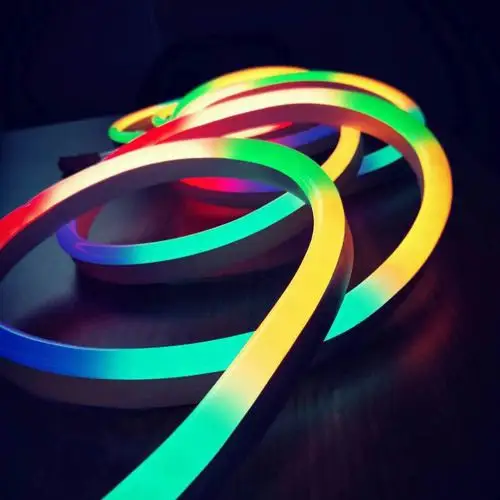
Red LEDs typically degrade faster under heat stress than blue LEDs. White LEDs have their own aging curve. When these chips are mounted on the same strip and exposed to uneven thermal stress, color shift becomes inevitable. The strip that looked perfectly white in month one starts looking warm white by month six. RGB mixing that was balanced initially begins showing green or blue bias.
I have processed warranty claims where the LED chips themselves were not defective. Power supply was stable. Waterproofing was intact. But the color temperature had drifted so far that the installation no longer matched the original design intent. This type of failure is expensive because you cannot fix it. You can only replace it.
Key Thermal Design Questions Every Buyer Should Ask
Do not just accept datasheets. Ask these questions directly:
- What is the PCB copper thickness? (1 oz is minimum, 2 oz is better for RGBW)
- What is the maximum junction temperature under full load?
- Has the strip been tested with RGB and white channels running simultaneously for 3,000+ hours?
- What is the measured temperature rise at ambient 40°C?
- Is there thermal simulation data available for your specific installation method?
If the supplier cannot answer these questions, they are selling you a product, not a solution.
Why Does Color Consistency Matter More in RGBW Projects?
Single-color projects can tolerate some variation. RGBW projects cannot. Because when you are mixing four different light sources, any inconsistency multiplies.
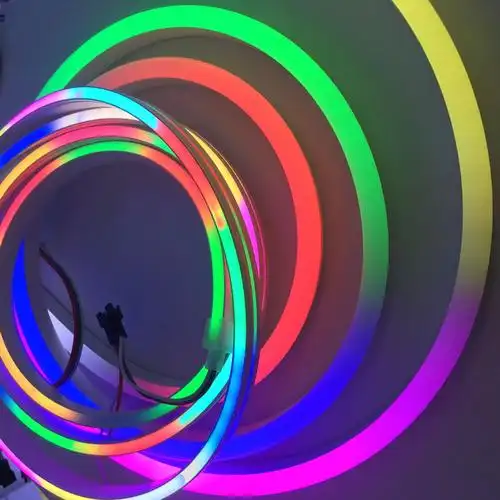
Color consistency in RGBW strips requires binning of RGB and white chips within tight tolerance ranges and maintaining the same production batch for the entire project to prevent visible color mismatch across multiple strips.
How Color Drift Becomes Visible in Large Installations
I handled a hotel exterior lighting project. The design called for 200 meters of RGBW neon flex. First shipment arrived. Color matched perfectly. Six months later, they needed 50 meters more for an expansion. New batch arrived from the same supplier. Different production run. When installed next to the original strips, the difference was immediately visible. Same color setting. Different output. The hotel facade now had a visible line where old and new sections met.
This is a common issue. LED manufacturing involves natural variation in chip wavelength and brightness. Responsible manufacturers control this through binning. They test every LED. Sort them into narrow wavelength ranges. Match them within each strip. Lock the bins used for a specific project. Maintain batch traceability so future orders use chips from the same or equivalent bins.
But many suppliers do not do this. They accept whatever chips come from the factory. Mix them randomly. The result looks fine in a single strip. But when you install fifty strips together, the variation becomes obvious.
What to Specify for Color-Critical Applications
For projects where color accuracy matters—hotels, retail facades, brand signage, architectural lighting—specify the following:
- RGB chips binned within 5nm wavelength tolerance
- White chips binned within 3-step MacAdam ellipse
- Color rendering index (CRI) specified for white channel
- Batch locking for the entire project
- Color matching guarantee for future purchases within same project cycle
This level of control costs more. But it costs far less than replacing an entire installation because the colors do not match.
What Role Does Silicone Quality Play in Outdoor RGBW Installations?
Everyone focuses on IP rating. But IP68 on day one does not guarantee IP68 after three years of sun exposure and thermal cycling.
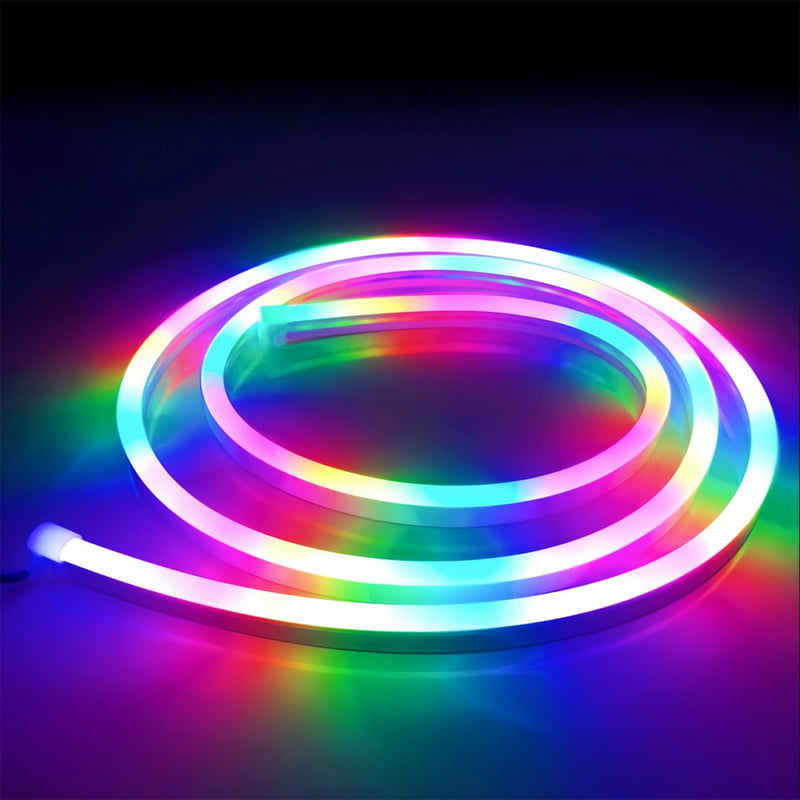
High-quality silicone for outdoor RGBW strips must resist UV degradation, maintain flexibility across temperature extremes (-40°C to +60°C), and prevent yellowing or cracking over multi-year exposure to ensure waterproof integrity remains intact.
Why RGBW Strips Age Faster Than Single-Color Strips
RGBW strips generate more heat. Higher heat accelerates material aging. Silicone exposed to elevated temperature undergoes physical changes. If the silicone compound is not formulated for thermal stability, it can harden over time. Hardened silicone loses flexibility. Thermal expansion and contraction create micro-cracks. Water enters through these cracks. Waterproofing fails.
I have seen IP68-rated strips fail in less than 18 months because the silicone was not UV-stabilized. Direct sunlight caused yellowing. Yellowing was cosmetic at first. But as degradation progressed, material became brittle. Flexing during installation or thermal movement caused hairline cracks. Rain entered. LEDs shorted. Entire sections failed.
Critical Silicone Specifications for Long-Term Reliability
Do not accept generic silicone. Demand material certifications:
- Shore hardness between 65A and 75A (balances flexibility and structural integrity)
- Compression set below 10% after 1000 hours at 70°C (resists permanent deformation)
- UV resistance rating of at least 2000 hours with minimal yellowing
- Food-grade silicone (indicates high purity and low volatiles)
- Anti-salt spray certification for coastal installations
Also verify extrusion consistency. Wall thickness should be uniform across the entire 5-meter length. Thinner sections are weak points. They fail first.
How Does Installation Method Affect RGBW Strip Reliability?
You can have perfect product design. But improper installation will still cause failure.
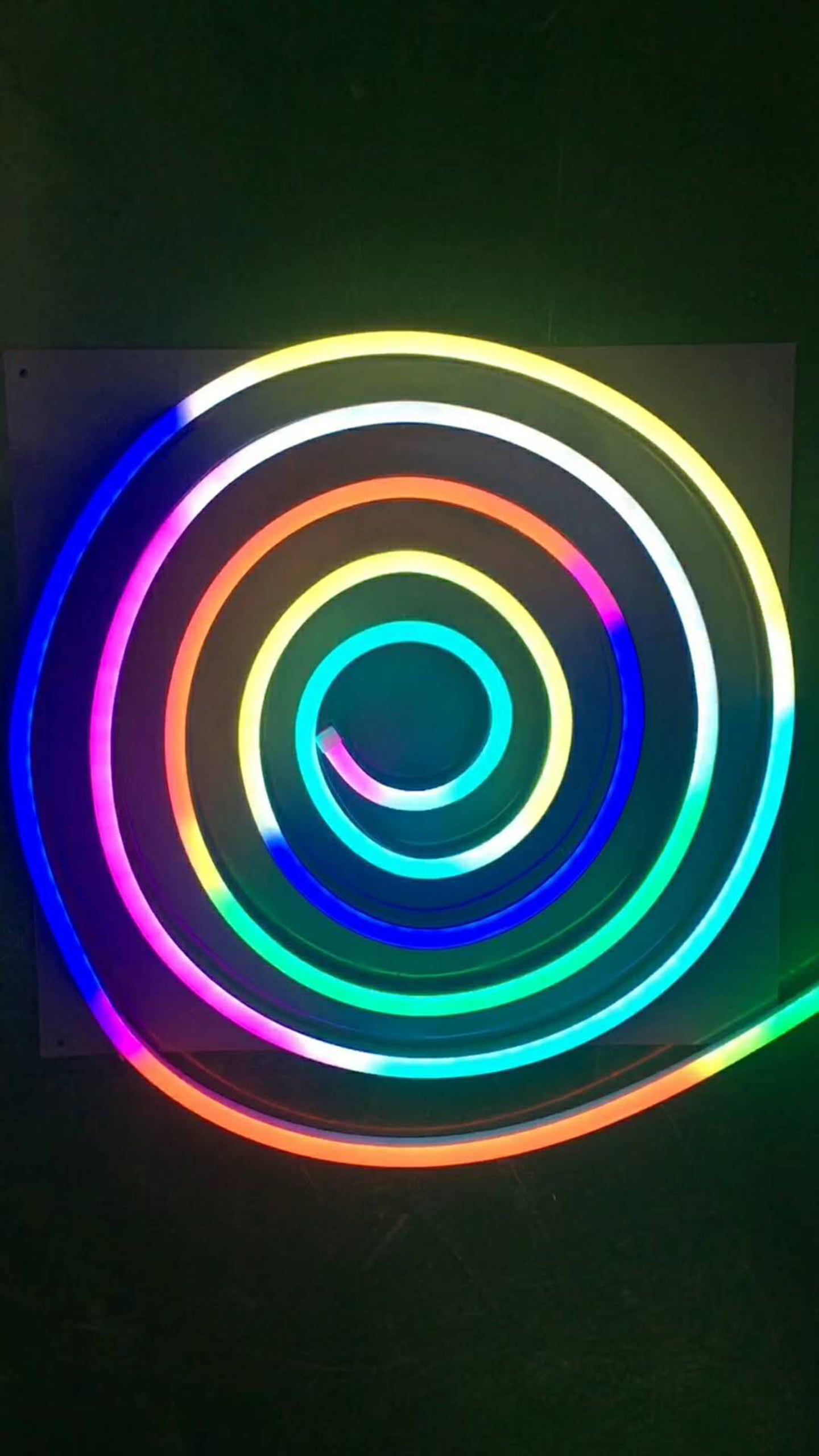
Installation-related failures in RGBW strips typically occur at bends, corners, and mounting points where mechanical stress exceeds design limits, causing PCB fatigue, solder joint cracking, or conductor breakage over time.
Why Bends and Corners Are High-Risk Zones
Architectural applications require complex contours. Building facades have sharp corners. Signage has tight curves. But every bend puts mechanical stress on the internal PCB. Copper foil stretches. Solder joints experience tension. If the bend radius is too tight, this stress becomes permanent. Initial installation looks fine. But after months of thermal cycling—heating during operation, cooling when off—micro-cracks develop in the PCB traces or solder joints.
I analyzed a failure case from a shopping mall. RGBW strips were installed along curved ceiling edges. Bending radius was below the manufacturer's minimum specification. For the first few weeks, everything worked. Then random dark sections appeared. Not complete failures. Just partial outages. Inspection revealed cracked solder joints at bend points. The mechanical stress had fatigued the connections.
Installation Guidelines for Structural Integrity
Follow these rules to prevent mechanical failures:
| Installation Type | Minimum Bend Radius | Mounting Interval | Special Considerations |
|---|---|---|---|
| Horizontal curves | 50mm | Every 300mm | Support at outer edge of curve |
| Vertical installation | 60mm | Every 250mm | Prevent sagging with clips |
| Top-view mounting | 40mm | Every 400mm | Ensure even adhesive contact |
| Side-view mounting | 50mm | Every 300mm | Use mounting channel for stability |
Never force the strip into a tighter radius than specified. Never stretch the strip during installation. Never mount without adequate support intervals. And always leave stress relief loops at connection points.
What Should You Verify Before Committing to a 5m RGBW Strip Supplier?
Samples can be misleading. Factory audits are better. But the best verification is operational history.
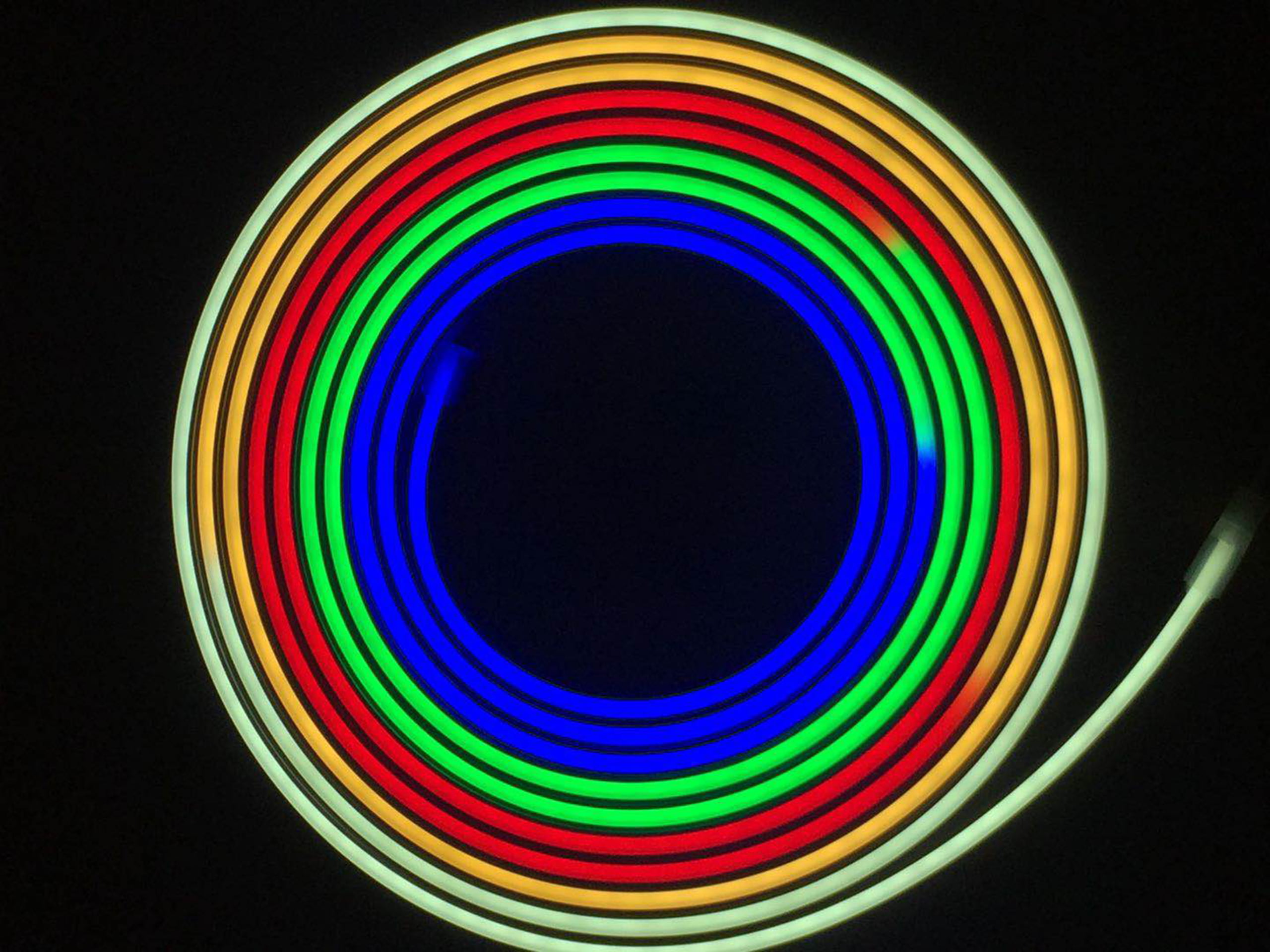
Verify supplier capability through thermal test reports, color binning documentation, material certifications, and references from completed projects with multi-year operational history to ensure your RGBW strips will perform reliably long-term.
Questions That Separate Professional Suppliers from Resellers
Ask for:
- Thermal Testing Data: Request temperature rise curves measured at 25°C, 40°C ambient with RGB and white channels at full load
- Color Binning Records: Ask to see actual binning reports from recent production runs
- Material Test Certificates: Demand silicone composition analysis, UV aging test results, compression set data
- Accelerated Life Testing: Ask if they have conducted 3000+ hour life tests at elevated temperature
- Project References: Request contact information for projects that have been operational for 2+ years
Professional manufacturers can provide this documentation. Resellers cannot. Trading companies cannot. If a supplier hesitates or provides generic marketing materials instead of technical data, walk away.
Why We Test Everything Before Production Scaling
At Shenzhen Alister Technology, we never ship RGBW strips without completing our internal validation protocol. This includes 1000-hour continuous operation test with RGB and white channels cycling every 30 minutes. Temperature monitoring at 12 points along the strip. Color measurement before and after aging. Waterproof integrity testing after 200 thermal cycles between -20°C and +60°C.
These tests cost money. They delay production. But they prevent the expensive failures that happen six months after installation. Because we know the real cost is not manufacturing. It is warranty replacement, site visits, reputation damage, and lost future business.
Conclusion
Choosing a 5m RGBW Silicone LED Neon Strip Light is not about finding the cheapest option. It is about finding the option that will still work, with consistent color and full waterproofing, after thousands of operating hours in real-world conditions.