

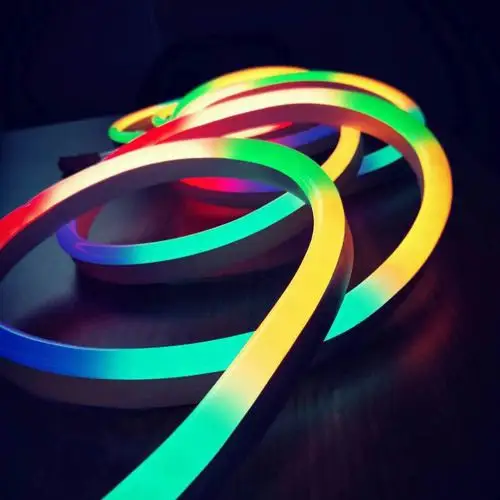
In high-end commercial lighting projects, we often see teams fixate on one specification: Ultra High CRI. They believe this single number guarantees success. But I have watched countless projects meet every technical parameter yet still fail to deliver the expected spatial experience.
Ultra High CRI LED Strip Lights provide superior color accuracy (CRI ≥95), but relying solely on this metric creates a dangerous blind spot. High CRI solves color fidelity, not spatial atmosphere, material interaction, or visual hierarchy—the elements that actually define a space's perceived quality.

The real challenge is not whether the lights perform well in a laboratory. The challenge is that everyone assumes CRI solves problems it was never designed to address.
What Makes Teams Believe CRI Is the Ultimate Quality Standard?
I see this pattern repeat in almost every commercial lighting project. The purchasing department, lighting designers, contractors, and brand teams reach consensus around one idea: if CRI exceeds 95, the space will automatically achieve a premium, natural, unified effect.
CRI (Color Rendering Index) measures how accurately a light source reproduces colors compared to natural daylight. However, CRI above 95 does not guarantee spatial quality, visual comfort, or atmospheric depth—it only ensures color fidelity within a controlled testing environment.
This belief creates a deceptively simple decision-making chain. Teams simplify it like this: Higher CRI equals more realistic colors. More realistic colors equal premium space. Premium space equals project success. The logic appears flawless in meeting rooms. But this is exactly where the trap opens.
The fundamental error is using a single optical parameter as a substitute for comprehensive spatial lighting design. A space's final visual effect depends on at least six interconnected systems working together.
| System Component | Impact on Spatial Quality |
|---|---|
| CRI (Color Rendering) | Determines color accuracy |
| Spectral Distribution | Affects material appearance |
| Luminance Hierarchy | Creates visual depth |
| Environmental Reflection | Influences light behavior |
| Surface Materials | Modifies perceived brightness |
| Spatial Structure | Defines light propagation |
CRI addresses only one small part of this system. When teams treat it as the complete solution, they ignore the other five critical factors. I have reviewed failed projects where every lamp met specification, yet the brand team rejected the entire installation. The disconnect was not in the products. The disconnect was in the assumption that CRI could replace spatial thinking.
This creates five predictable failure patterns. First, the lighting effect appears "technically correct but visually flat." Design drawings are perfect, parameters are verified, but the space lacks dimension. High CRI does not address light layering. Second, colors are "accurate but unattractive." Food, skin, fabrics all appear realistic, yet the space feels lifeless. Accuracy is not beauty. Third, design proposals require complete revision mid-project. Designers build their entire lighting logic around CRI, then discover on-site that atmosphere cannot be achieved. Fourth, acceptance criteria become meaningless. Engineers verify CRI values while brand teams evaluate emotional response—two completely incompatible standards. Fifth, cross-departmental communication collapses. Lighting contractors say "parameters meet specification." Design teams say "effect is wrong." Brand managers say "feeling is wrong." Nobody can quantify what actually failed.
How Does a Premium Retail Flagship Store Project Collapse Despite Perfect CRI Scores?
Let me walk you through a real project. An international luxury retail brand commissioned a flagship store upgrade. The positioning was clear: high realism combined with premium spatial experience. The core lighting specification was straightforward: Ultra High CRI ≥95.
A flagship store project specified CRI ≥95 for all LED strip lights, passed laboratory testing, yet failed on-site because the design team validated samples in controlled environments that did not replicate the store's actual conditions: glass facade reflections, mixed natural light, diverse materials, and dynamic customer flow.
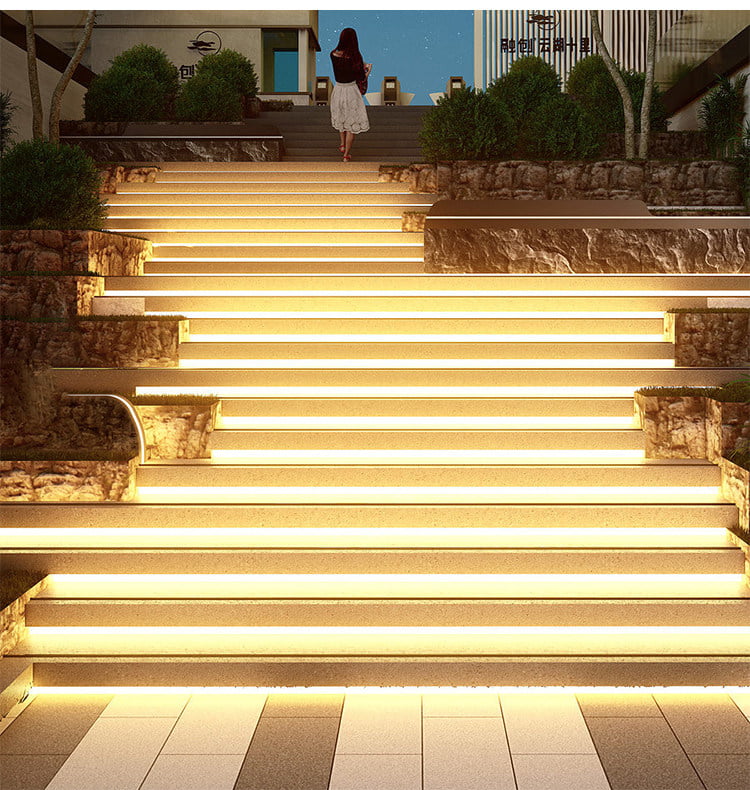
The design phase proceeded smoothly. The lighting team established their entire logic around high CRI strips: emphasize authentic product colors, eliminate color shift, enhance material texture. Everyone agreed. The project moved into construction.
Sample validation occurred in a standard showroom environment. White walls, controlled lighting, fixed viewing distance. The effect looked excellent. The brand team confirmed: "This is very close to what we want." Everyone felt confident.
Then installation began in the actual store. Problems emerged immediately. The real environment included glass curtain walls creating complex reflections, natural daylight mixing with artificial sources, varied materials (stone, metal, wood veneer), and constantly shifting customer movement patterns. The same high CRI strips that performed beautifully in the showroom now produced completely different visual effects across different zones.
The brand team's feedback revealed the core problem. Products appeared "realistic but without focal points." The space felt "clean but lacking depth." The atmosphere was "uniform but not premium." The design team was confused—CRI met specification. The contractors were confused—installation followed drawings exactly. The purchasing department was confused—product parameters all tested correctly.
The logical error occurred in the design phase assumption: the team believed CRI could determine spatial texture. They ignored that spatial texture results from the combined interaction of light, materials, structure, and environment. Nobody caught this because all validation happened in ideal showroom conditions. The team never simulated natural light interference, material reflection variations, multi-source light layering, or dynamic human flow impact.
The consequences were predictable. Multiple zones required lighting redesign. Partial reconstruction became necessary. Opening date delayed. Costs increased significantly. Yet critically, no single technical parameter was judged incorrect. The error occurred at the design assumption layer—a level where standard quality control processes do not reach.
What Critical Information Do Ultra High CRI LED Strip Specification Sheets Always Omit?
I review specification documents from dozens of manufacturers. They all contain the same structural blind spots. Understanding these hidden traps is essential before any procurement decision.
Specification sheets list CRI values but omit R9 (red rendering ability), spectral continuity, and color distribution structure—parameters that determine whether "theoretical accuracy" translates to "visual realism" in actual spaces with mixed lighting and complex material interactions.
The first trap is assuming high CRI equals spatial realism. Datasheets state "CRI ≥95" but never define R9 values, which specifically measure red color rendering capability—critical for food, skin tones, and warm materials. They omit spectral continuity data, which determines whether color transitions appear smooth or broken. They exclude color distribution structure, which affects how different materials respond under the same light. The result is a gap between "theoretical realism" and "visual realism."
The second trap involves testing conditions. CRI testing occurs in standardized light boxes with controlled reflectance and single light sources. Real spaces contain mixed light sources, complex reflection environments, and diverse materials. Laboratory CRI values cannot be directly mapped to installed performance. I have seen strips test at CRI 97 in the lab yet appear inconsistent across a single room due to environmental factors the test never considered.
The third trap is color temperature consistency. Even when color temperature remains uniform across all fixtures, different materials reflect differently and viewing angles change perception. The space still appears inconsistent despite matching specifications. The fourth trap relates to atmosphere. Datasheets never mention that increasing CRI typically reduces contrast ratio—yet contrast is one of the primary factors creating spatial atmosphere. You can achieve perfect color accuracy while simultaneously destroying the emotional impact of the space.
| Specification Trap | Listed Parameter | Missing Critical Data | Real Impact |
|---|---|---|---|
| CRI Definition | CRI ≥95 | R9 value, spectral continuity | Color accuracy varies by material type |
| Testing Environment | Lab conditions | Multi-source interaction, material reflectance | Performance differs in real installation |
| Color Uniformity | CCT tolerance | Viewing angle variation, material response | Perceived inconsistency despite matching specs |
| Atmospheric Impact | High CRI value | Contrast ratio reduction | Accurate but emotionally flat lighting |
| Sample Validation | Single fixture test | System-level integration | Component success, system failure |
| Experience Metrics | Optical parameters | Dynamic human perception | Technical correctness, experiential failure |
The fifth trap is sample approval. Sample testing typically evaluates single fixtures in isolated segments under standard conditions. Projects involve system-level light environments. A sample that performs perfectly alone may fail when integrated with dozens of other fixtures, architectural elements, and human activity. The sixth trap is the complete absence of human perception data. Specification sheets provide optical measurements but exclude how the human eye perceives light in dynamic spaces—the exact dimension where most projects actually fail.
How Do You Actually Control Risk in Ultra High CRI Projects?
Risk control in Ultra High CRI projects does not happen at the product selection stage. It happens in the definition stage—before any specifications are written.
Effective risk control requires shifting from "CRI specification compliance" to "spatial outcome definition." This means establishing what emotional response the space must create, what hierarchy products must communicate, and how people will perceive light along movement paths—then using CRI as one parameter among many to achieve those goals.

The first control point is reconstructing requirement definitions. Move from "CRI specification" to "spatial objectives." The project team must clearly define what emotional response the space should communicate, what hierarchy products need to project, and how people will perceive light as they move through the space. CRI becomes a resulting parameter, not the starting objective.
The second control point establishes spatial light environment simulation. Prohibit sample-only testing. Require simulation of actual building materials, natural light mixing patterns, nighttime environment changes, and human flow dynamics before finalizing any design decisions.
The third control point creates multi-layer acceptance standards. Do not accept CRI-only verification. Add spatial contrast measurement, material rendering capability assessment, and visual focal point clarity evaluation. These parameters better predict whether the installed system will actually satisfy stakeholder expectations.
The fourth control point elevates light design from "fixture logic" to "spatial logic." Design documentation must include light-material relationship diagrams, light-circulation path relationship diagrams, and light-viewing distance relationship diagrams. This forces the design team to think systemically rather than parametrically.
The fifth control point implements first-store validation mechanisms for chain projects. Before authorizing mass replication, execute complete 1:1 full-store validation including all architectural finishes, operational lighting schedules, and actual customer flow patterns. This single step prevents expensive multiplication of design errors.
The sixth control point binds lighting parameters to specific zones and conditions. Different areas have different natural light exposure, different material reflectance properties, and different functional requirements. Establish differentiated design parameters rather than applying universal specifications. The seventh control point creates cross-disciplinary joint review mechanisms. Design teams, MEP teams, brand teams, and construction teams must participate simultaneously in key decision gates to prevent single-perspective blindness.
The eighth control point establishes freeze points at critical phases: lighting concept stage, sample confirmation stage, first-store pre-construction, and before mass replication authorization. These gates prevent downstream propagation of upstream errors.
Conclusion
Ultra High CRI LED Strip Lights' greatest value was never about making colors more realistic. The real value is recognizing that CRI solves one specific problem within a complex system—and that treating it as the complete answer is precisely what leads projects into uncontrolled territory.