
Most project managers think LED strip lights are just lighting products. They compare watts, lumens, and IP ratings. Then they choose the cheapest option. Six months later, they face color shifts, water ingress, or complete system failures. The real cost wasn't the purchase price—it was the reinstallation, downtime, and brand damage.
Flexible LED strip lights aren't just lighting products—they're electromechanical systems that must survive 5-10 years of environmental stress. Before buying, verify four critical factors: material compatibility across all components, thermal expansion management in the mounting structure, long-term sealing performance beyond IP ratings, and color consistency through LED binning control. Projects fail not from poor specifications, but from overlooking how these systems behave under real-world conditions.
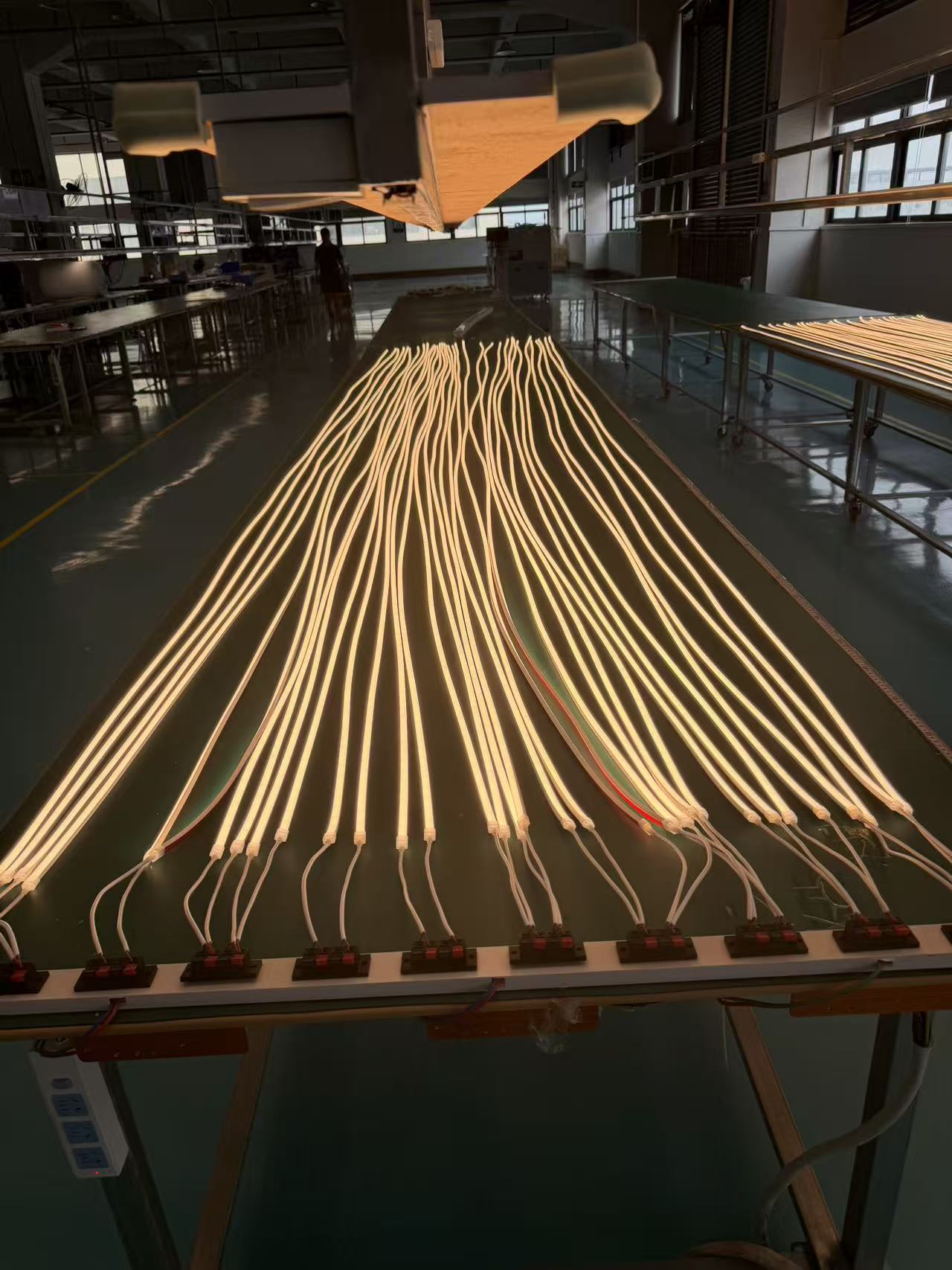
If you're responsible for a large-scale architectural project, this is how we approach procurement at Shenzhen Alister Technology. I'll walk you through the four factors that separate successful installations from expensive failures.
Does Your Material System Have Hidden Incompatibilities?
Most engineers focus on LED performance. They overlook the biggest failure point in flexible LED strip lights: material incompatibility. The strip isn't a single component—it's a multi-material composite system where each layer must coexist for years.
Material incompatibility causes more project failures than LED degradation. A typical flexible LED strip combines LED encapsulation gel, PCB substrate, copper traces, silicone or PVC housing, mounting adhesive, sealing compounds, aluminum channels, and power cable jackets. These materials can pass lab tests but fail catastrophically in real environments when low-molecular additives migrate between layers, causing irreversible contamination and performance loss.
I've seen this destroy entire projects. A national retail chain installed silicone LED strips in their storefront signage. They used a third-party mounting adhesive to save costs. The samples looked perfect. Six months later, yellowing appeared. Twelve months in, we found an oily residue on the silicone surface. Eighteen months later, light transmission dropped by 30%.
The silicone wasn't failing. The mounting adhesive was. Its plasticizers were migrating into the silicone matrix. This created permanent material degradation. The entire installation needed replacement.
Here's what that really cost:
| Cost Category | Impact |
|---|---|
| Strip replacement | Initial purchase price × 1.2 |
| High-altitude removal | 3-4× material cost |
| Store downtime | Lost revenue per location |
| Brand reputation damage | Immeasurable |
| Emergency labor costs | 5-6× normal installation rate |
The material cost was the smallest expense. We've learned to verify these factors before any large order:
- Adhesive compatibility testing: Cross-contamination checks between all contact materials
- Accelerated thermal aging: 1000+ hours at 85°C to simulate years of roof-level heat
- UV compound exposure: Combined UV and temperature cycling that matches outdoor conditions
- Migration analysis: Chromatography testing for low-molecular-weight additive movement
A specification sheet tells you what the product is. These tests tell you what it will become.
Have You Designed for Thermal Expansion Stress?
LED strips don't die from heat alone. They die from the mechanical stress that heat creates. I see this constantly in facade lighting projects. The LED performs perfectly. The structure around it creates the failure.
Thermal expansion stress causes failure at solder joints, corner sections, and mounting points—not in the LED itself. Silicone expands 8-12 times more than aluminum during temperature cycling. When installers rigidly fix LED strips without expansion allowance, daily temperature swings from -20°C to 75°C create cumulative fatigue stress that leads to circuit breaks, especially in facade installations exceeding 100 meters.
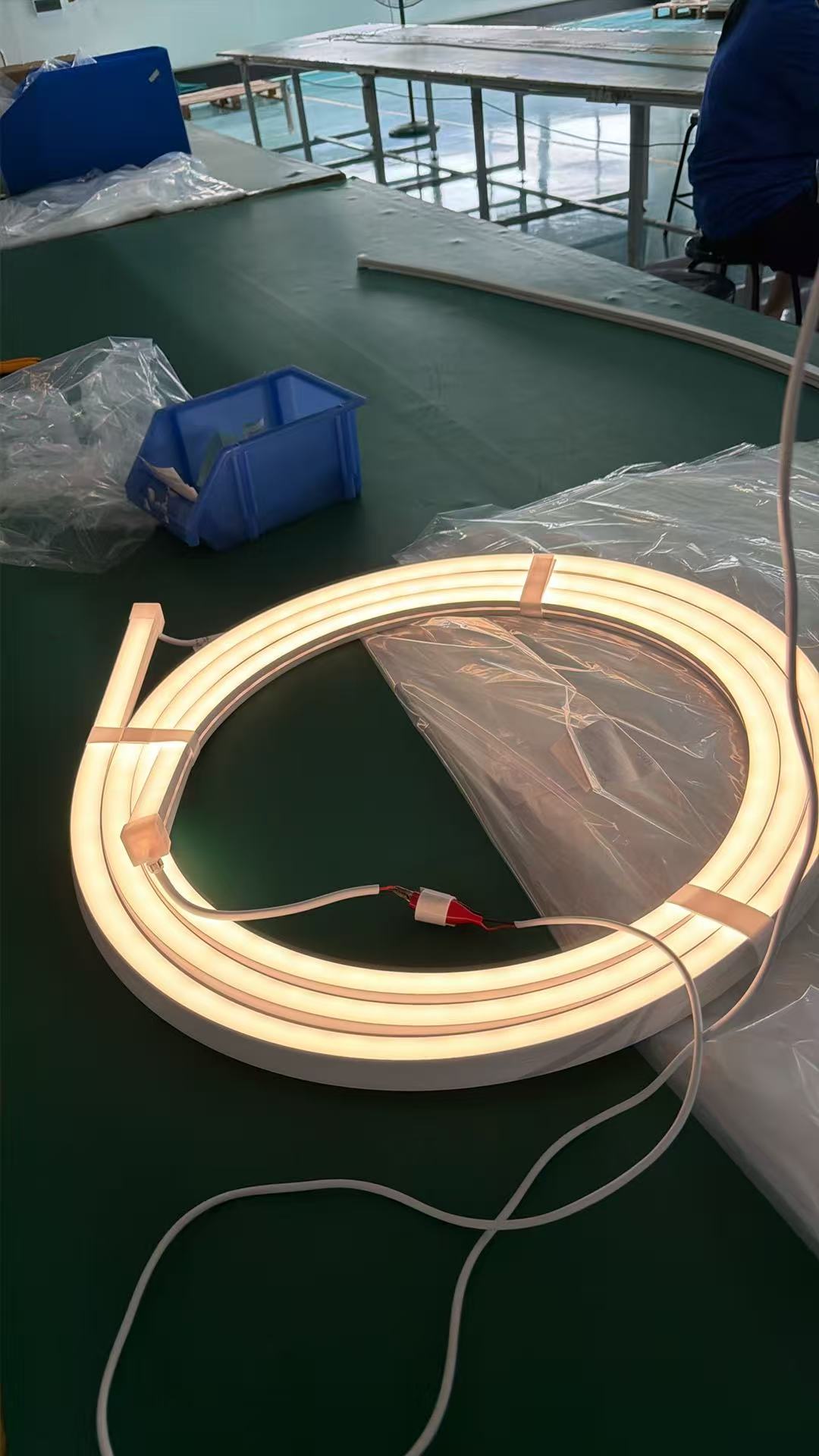
We worked on a commercial complex with 800 meters of facade lighting. The installation team wanted perfectly straight lines. They used continuous channel mounting with fixing points every 30cm. Winter operation was flawless. Summer arrived. Surface temperatures hit 75°C. Then we started seeing:
- Dark spots at corners
- Intermittent flickering at solder points
- Complete circuit failures in long runs
The LED strip tested perfectly. The problem was structural. We measured the thermal expansion:
| Material | Expansion Coefficient | 50°C Temperature Rise | Expansion per Meter |
|---|---|---|---|
| Silicone housing | 300-350 ppm/°C | -20°C to 75°C | 1.5-1.75mm |
| Aluminum channel | 23 ppm/°C | Same range | 0.12mm |
| Rigid mounting | 0 (locked) | Same range | Stress accumulation |
The strip needed to expand by 1.5mm per meter. The mounting allowed zero movement. All that stress concentrated at the weakest points: solder joints and corner bends. After 200-300 thermal cycles, fatigue failures became widespread.
Laboratory testing never catches this. Labs don't replicate:
- Four-season temperature variation
- Day-night cycling (15-20 cycles per month)
- Wind load vibration
- Combined UV and thermal stress
Reliable structural design requires:
- Expansion allowance: Minimum 2mm per meter of run length
- Flexible mounting intervals: Maximum 50cm spacing with soft rubber isolation
- Corner stress relief: Curved transitions instead of 90° bends, minimum 50mm radius
- Partial floating installation: Fixed points alternating with free-sliding sections
Most reinstallations happen because of installation design, not product quality. We now provide detailed mounting specifications with every large order. The installation matters as much as the product.
Why IP Ratings Don't Guarantee Long-Term Waterproofing
The biggest misconception in outdoor lighting is this: IP68 means permanent water resistance. It doesn't. IP ratings verify performance at a single moment in time. Projects need performance after five years of exposure. There's a massive difference.
IP ratings test initial sealing performance, not long-term durability. Most outdoor LED strip failures occur at cable entry points, end caps, connectors, and potting zones—not the main body. Environmental factors like salt spray, UV exposure, and thermal cycling degrade sealing interfaces over time. An IP68 rating confirms water resistance on day one but doesn't predict performance after 50,000 hours of operation and 1,500 thermal cycles.
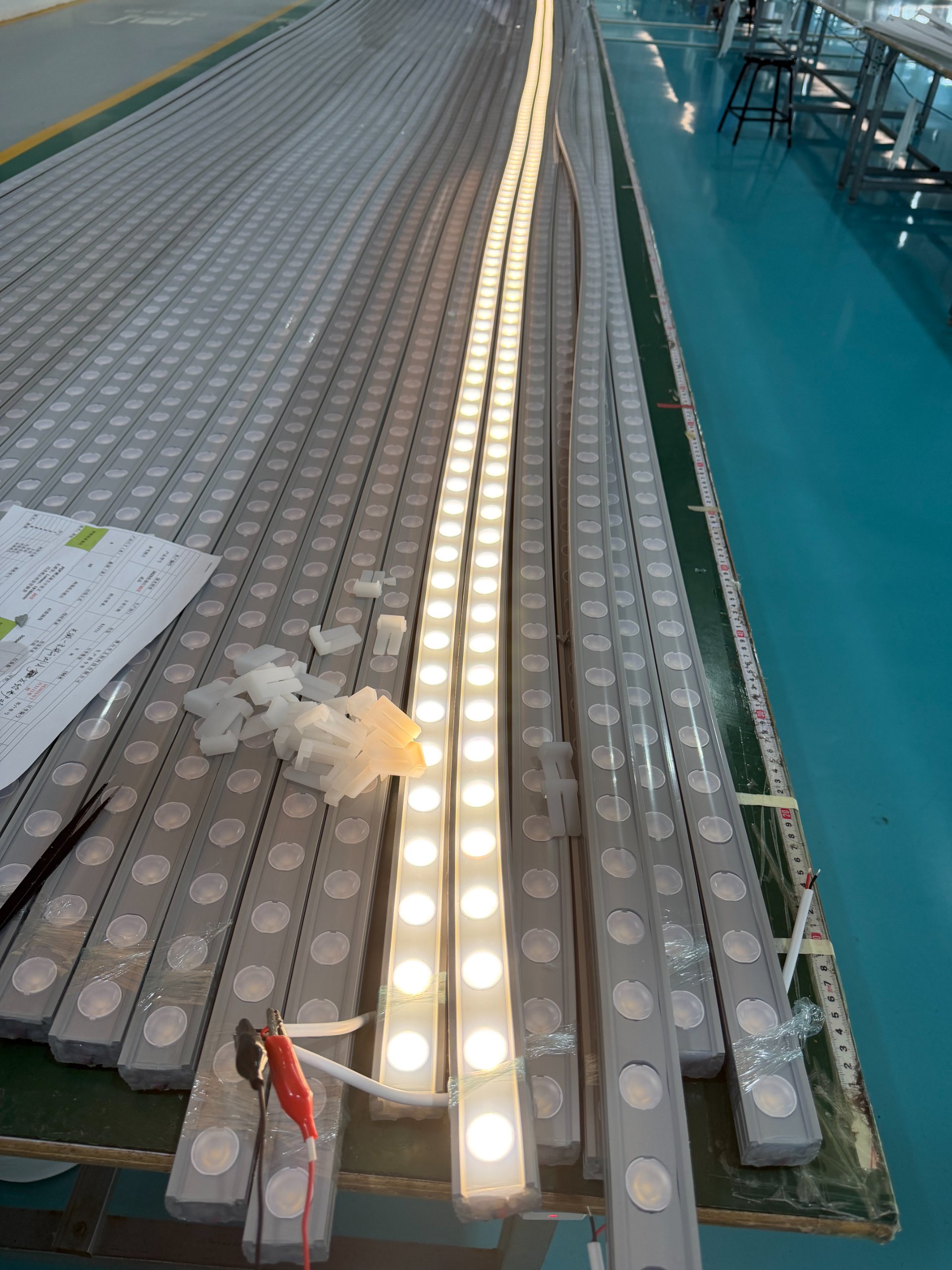
I'll give you a specific case. A coastal landscape project used IP68-rated strips. Every sample passed laboratory testing. Eight months after installation, during the rainy season, flickering began. Within a year, widespread water ingress occurred.
The teardown revealed the problem. The IP rating was still valid. The seal between the end cap and cable had degraded. Here's what happened:
| Timeline | Environmental Factor | Degradation Mechanism | Observable Effect |
|---|---|---|---|
| Months 1-3 | Salt spray exposure | Surface polymer layer stress | None visible |
| Months 4-6 | UV + thermal cycling | Micro-crack formation at interface | None visible |
| Months 7-9 | Moisture penetration | Water vapor enters through cracks | Intermittent flicker |
| Months 10-12 | Wet-dry cycling | Corrosion begins at PCB level | Consistent failure |
The IP68 rating never failed a retest. The problem was material lifespan under environmental stress. This is what we verify now:
- Post-UV sealing performance: 1000 hours UV exposure, then re-test IP rating
- Post-salt spray integrity: 500 hours salt fog, then water immersion test
- Thermal cycle endurance: -40°C to +85°C for 200 cycles, then seal verification
- Cable flex life: 10,000 bend cycles at the entry point
- End cap fatigue testing: Thermal cycling with mechanical stress
We test the weakest link, not the strongest component. The main silicone body is almost never the failure point. The transitions, connections, and penetrations are.
For large projects, we now provide:
- Lifecycle sealing reports: Not just IP68 certification, but performance curves over time
- Failure mode analysis: Documented weak points and mitigation strategies
- Regional environmental matching: Different sealing solutions for coastal, desert, and urban environments
- Maintenance access design: Replaceable end caps and service loops for long-term serviceability
IP ratings tell you if water gets in today. We need to know if it stays out for the next decade.
Is Color Consistency Controlled at the LED Bin Level?
Projects rarely fail because LEDs stop working. They fail because the building looks wrong. Color inconsistency is the most common complaint in architectural facade lighting. You can't see it during the day. At night, it becomes impossible to ignore.
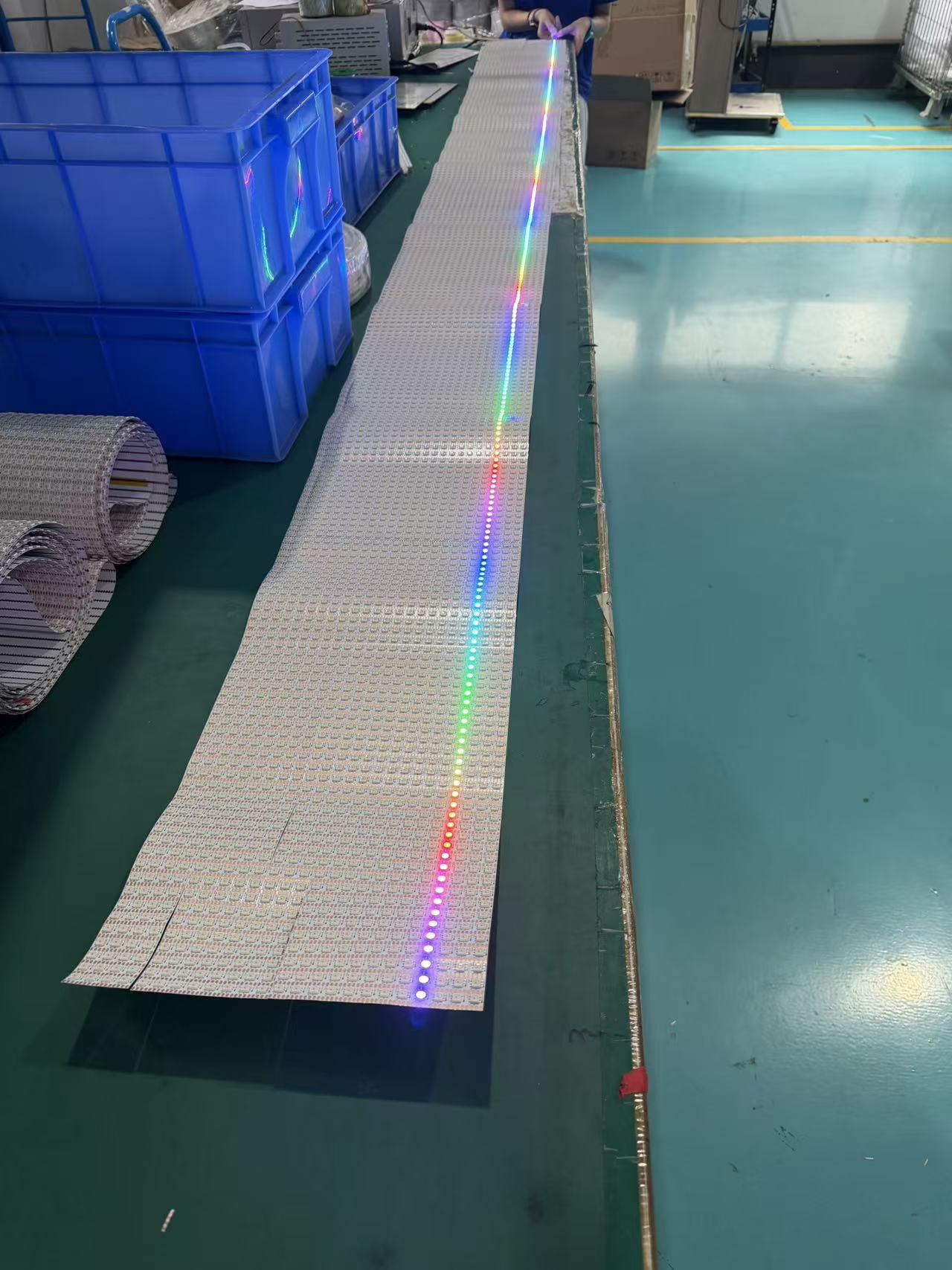
Color consistency depends on LED binning, not just CCT specification. A "3000K" label can represent LEDs ranging from 2870K to 3220K under ANSI standards. When suppliers change LED bins between production batches to optimize inventory, visible color banding appears across large installations. Architectural projects over 200 meters require bin-locked procurement, batch traceability, and replacement stock reservation to maintain visual uniformity throughout the project lifecycle.
I've seen this destroy the aesthetics of entire buildings. A hotel exterior used 1,200 meters of LED strips. All specified as 3000K. During installation, some sections appeared noticeably warmer. Others looked cooler. Under daylight, the difference was subtle. At night, distinct color bands were obvious across the facade.
The LEDs weren't defective. They were all within the 3000K specification. But they came from different bins:
| Bin Code | CCT Range | Visual Perception | Project Impact |
|---|---|---|---|
| Bin A | 2870K - 3000K | Warm amber | Used in first shipment |
| Bin B | 3000K - 3145K | Neutral warm | Used in second shipment |
| Bin C | 3145K - 3220K | Cool warm | Used in supplementary order |
| Mixed installation | 2870K - 3220K | Visible banding | Customer rejection |
All three bins are technically "3000K" according to ANSI C78.377. But the 350K difference between bins is highly visible on a large facade. The problem got worse during the supplementary order six months later. The supplier had rotated to a completely different LED batch.
Here's what most buyers don't understand about LED production:
- LED manufacturers sort chips into bins during production
- Each bin represents a narrow range within the broader CCT specification
- Suppliers change bins based on inventory availability
- A single production run might use 3-4 different bins
- Supplementary orders months later will use completely different bins
This creates an impossible situation for large projects. You can't eliminate color differences by replacing failed strips. The replacement will likely be from a different bin. The new section will match itself but not the existing installation.
We've implemented bin-locking protocols for all architectural projects:
- Project bin reservation: We reserve sufficient LEDs from a single bin to cover the entire project plus 20% spares
- Batch documentation: Every shipment includes bin codes, production dates, and spectral data
- Replacement stock holding: We maintain project-specific inventory for 24 months after installation
- Traceability system: Each reel is marked with bin information and matched to installation zones
This costs more upfront. It prevents catastrophic color inconsistency. Because in architectural lighting:
- Replacing a failed strip takes 30 minutes
- Eliminating color banding across a building facade can require complete reinstallation
- Visual uniformity is often more important than absolute light output
The most expensive LED strip isn't the one with the highest initial cost. It's the one that forces you to redo the entire installation because of color inconsistency.
Conclusion
Flexible LED strip lights fail not from poor specifications, but from overlooked system interactions. Verify material compatibility, design for thermal stress, test long-term sealing performance, and control color consistency through bin locking. The real cost appears after installation, not at purchase.