

You think color temperature selection just sets the mood? Then you probably haven't experienced a real engineering-level rework yet.
The biggest risk in large LED strip projects isn't choosing between 3000K or 4000K—it's whether your chosen color temperature system can maintain consistency over the next 5 years.
Many projects look perfect during acceptance. But the real problems emerge during the second batch of restocking, the first repair, after three summers, or after the first partial replacement.
Why Does Color Temperature Matter More Than You Think?
Color temperature isn't just a number on a spec sheet—it's a promise of long-term visual consistency.
Color temperature represents a complex stability system involving LED chips, phosphor systems, packaging processes, drive currents, thermal management, optical material aging, and production batch control.
Anyone who has worked on large architectural facades or chain brand projects knows this truth: the most expensive failure isn't dead LEDs—it's color shift.
Dead LEDs can be replaced. Color inconsistency is often unsolvable.
The Real-World Disaster That Keeps Project Managers Awake
I witnessed a major hotel chain's facade project using 3000K LED strips across 1.2 kilometers of installation. The first phase looked stunning. Six months later, when they added the second phase area, procurement assumed matching 3000K would suffice.
After installation, the entire building displayed visible color banding at night. The first batch appeared warmer, while the second batch looked whiter. From a distance, it was extremely obvious.
Testing revealed both batches were labeled 3000K. But they came from different BIN ranges. The first batch measured closer to 2800K visually, while the second approached 3300K. Lab tests showed full compliance. Spec sheets were identical. Yet the building had become two different colors.
The issue wasn't product quality—it was that procurement didn't lock the color temperature BIN.
| Problem Area | Visible Impact | Root Cause |
|---|---|---|
| Hotel Facades | Color Banding | Different BIN Ranges |
| Commercial Complexes | Patchy Appearance | Batch Inconsistency |
| Chain Stores | Brand Color Shift | Unsynchronized Sourcing |
| Bridge Lighting | Gradient Errors | Mixed Suppliers |
This problem most commonly affects hotel facades, commercial complexes, flagship brand stores, urban landscape lighting, bridge contour lighting, and chain store systems. The human eye is extremely sensitive to color differences in continuous light strips. Even when ΔSDCM appears compliant, hundreds of meters of continuous installation will expose the inconsistency.
Many procurement teams only ask about 3000K, 4000K, or 6500K. Professional teams ask whether future restocking can maintain the same color coordinate. These are two completely different questions.
What Is the Hidden Risk Behind Color Temperature Selection?
Thermal drift represents the biggest invisible threat to your project's visual consistency.
LED color temperature doesn't stay fixed. It drifts with LED junction temperature changes, drive current variations, phosphor aging, optical material yellowing, UV exposure, and long-term high-temperature operation.
Outdoor projects face particularly severe risks.
The Middle East Commercial Complex Case Study
A commercial complex used 4000K contour lighting in a Middle Eastern high-temperature region. Summer surface temperatures regularly exceeded 80°C. After one year, the sunny side appeared noticeably warmer while the shaded side remained normal.
Final testing found no LED defects. The problem came from the encapsulation system. High temperatures caused inconsistent phosphor degradation rates. The silicone transparent layer aged simultaneously, ultimately causing color temperature drift.
This looked fine during daytime but created uneven building colors at night. Replacing individual strips couldn't solve this because the entire system had developed aging differentials.
| Environmental Factor | Effect on Color Temperature | Time to Visible Change |
|---|---|---|
| UV Exposure | +200K~+500K Shift | 12-18 Months |
| High Temperature (>80°C) | Phosphor Degradation | 6-12 Months |
| Thermal Cycling | Inconsistent Aging | 18-24 Months |
| Moisture Penetration | Silicone Yellowing | 24-36 Months |
Professional installations in extreme environments must account for accelerated aging curves. We typically recommend pre-aging tests that simulate 3-5 years of operation before large-scale deployment. This reveals which color temperature systems maintain stability under stress.
Why Do Many "3000K" Products End Up Not Being 3000K?
This represents the industry's most overlooked problem.
During procurement, you see specifications stating "3000K ± 100K" and assume everything is normal. But what actually impacts visual consistency in real projects isn't CCT (Correlated Color Temperature)—it's the MacAdam Ellipse (SDCM - Standard Deviation of Color Matching).
Many supply chains compress costs by purchasing different LED batches and uniformly labeling them 3000K. The result? Same 3000K label, completely different visual effects.
What Professional Projects Should Actually Monitor
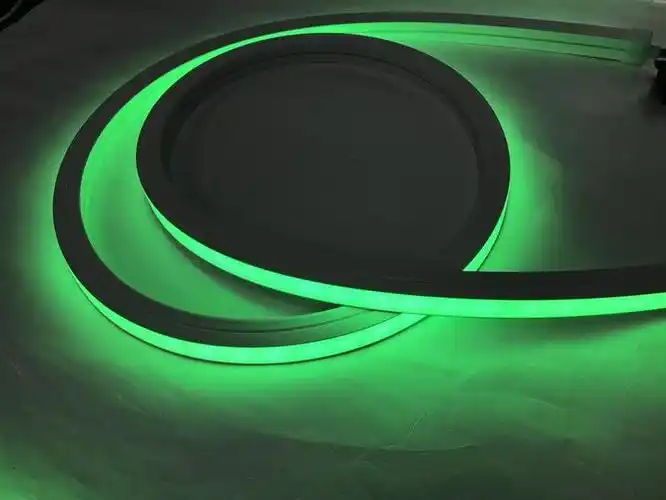
Building projects should focus on 3 SDCM, 2 SDCM, or project-locked BINs—not just color temperature numbers. Otherwise, you get identical spec sheets but inconsistent site effects. This is the most typical engineering trap.
We manufacture with strict BIN control protocols. Each production run undergoes color coordinate mapping. For large projects, we reserve inventory from the same production batch to ensure future replacements match perfectly. This isn't just quality control—it's project lifecycle management.
| SDCM Level | Visual Consistency | Recommended Application |
|---|---|---|
| 7 SDCM | Noticeable Differences | General Lighting Only |
| 5 SDCM | Slight Variations | Standard Commercial |
| 3 SDCM | Excellent Consistency | Premium Installations |
| 2 SDCM | Superior Match | Luxury/Brand Critical |
When you specify color temperature in your RFQ, always include SDCM requirements. A "3000K" specification without SDCM control is essentially meaningless for architectural installations.
How Do You Choose the Right Color Temperature for Engineering Projects?
Start with application context, not color temperature numbers.
Many projects immediately ask whether to use 3000K or 4000K. This sequence is wrong.
The correct order should be: Space attributes → Viewing distance → Surface materials → Color temperature.
Hotels, Luxury Brands, and Commercial Spaces
Priority recommendation: 2700K~3000K
The reason isn't atmosphere—it's that warm color temperatures have higher tolerance for material aging and color shift exposure. They're also friendlier to stone, wood finishes, and metal curtain walls.
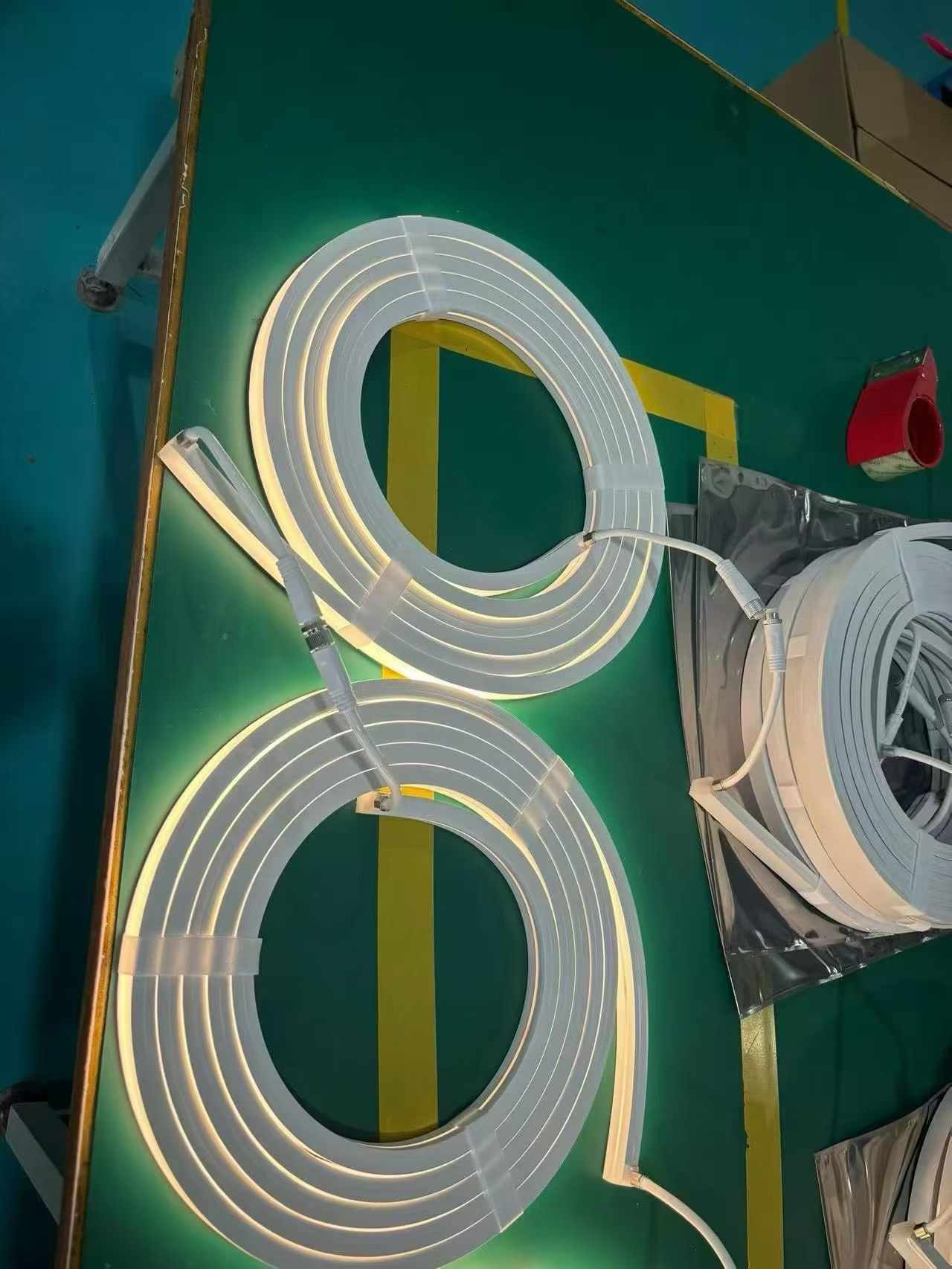
From our manufacturing perspective, warm white LEDs using high-quality phosphor systems show superior long-term stability. The amber-tinted silicone extrusion we use for these applications maintains transparency better than neutral or cool white variants.
Commercial Complexes and Office Buildings
Priority recommendation: 3500K~4000K
This provides more neutral vision with higher brand recognition while balancing functionality and commercial display.
Mid-range color temperatures offer the best compromise between visual comfort and material compatibility. Our 4000K side-view silicone neon flex performs exceptionally well in retail environments where color rendering matters but warmth isn't critical.
Urban Landmarks and Modern Architecture
Priority recommendation: 5000K and above
But you must strictly control color temperature consistency, optical diffusion uniformity, and long-term yellowing. High color temperatures are extremely sensitive to white shift. Any aging gets amplified.
| Application Type | Recommended CCT | Critical Control Factor |
|---|---|---|
| Hospitality/Luxury | 2700K-3000K | Material Compatibility |
| Retail/Commercial | 3500K-4000K | Brand Color Accuracy |
| Office/Public | 4000K-4500K | Visual Comfort |
| Architectural/Landmark | 5000K+ | Aging Stability |
Cool white installations demand superior material quality. We use anti-UV silicone compounds with enhanced stabilizers to minimize yellowing in 5000K+ products. Standard silicone will yellow within 18 months under UV exposure, shifting perceived color temperature by 300-500K.
What Four Things Do Professional Teams Verify Beyond Color Temperature?
Locking specifications isn't enough—you need system-level validation.
1. Lock BIN Range, Not Just Color Temperature
3000K doesn't matter. Same BIN matters.
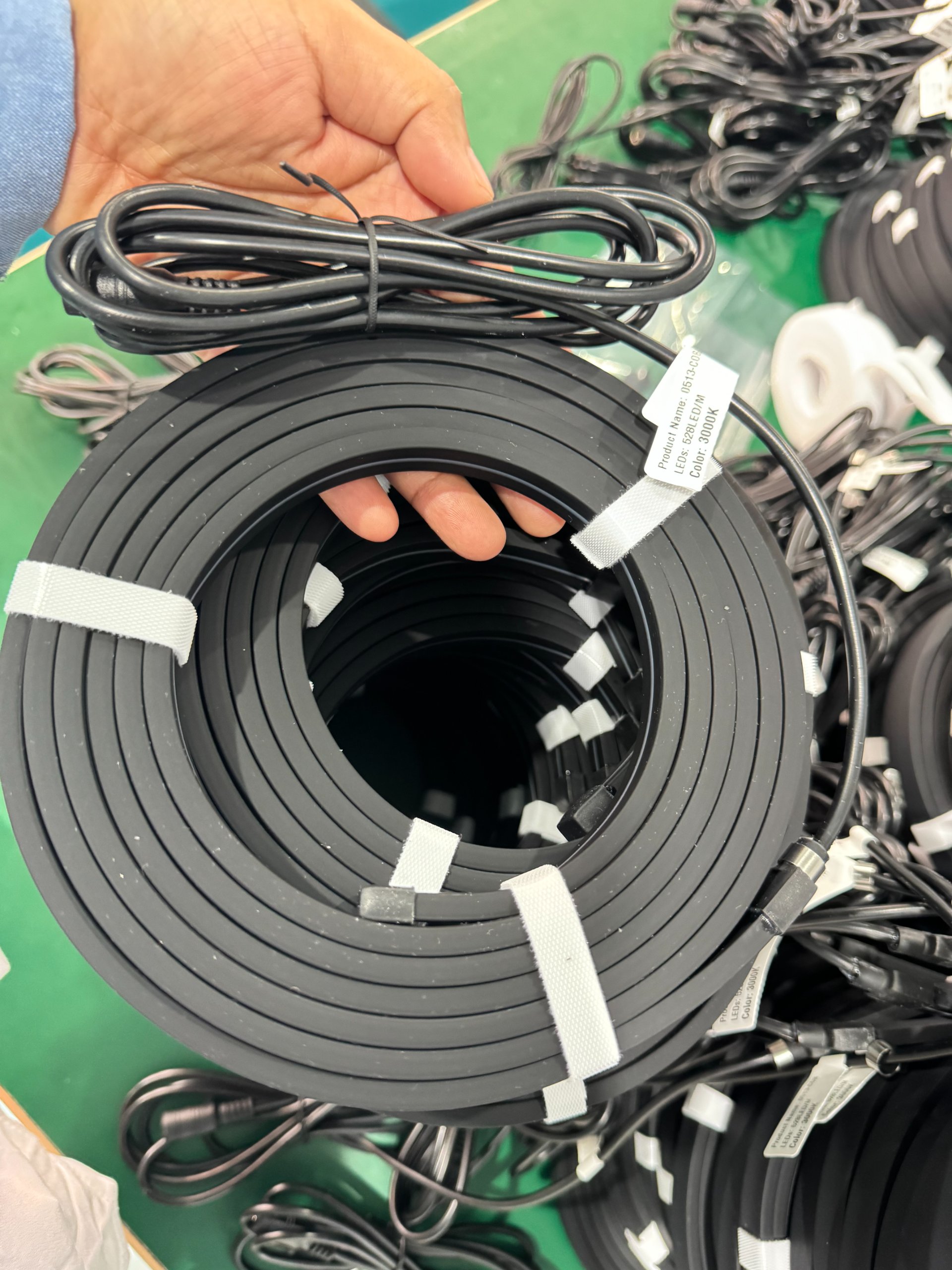
Every LED production run generates multiple BIN categories even within the same nominal color temperature. We provide BIN-locked inventory for architectural projects. Your first installation and your fifth-year replacement come from identical color coordinates.
2. Verify Thermal Drift Curves
Don't just check factory color temperature. Verify color coordinates after 1000 hours, 3000 hours, and 6000 hours of operation.
We conduct accelerated aging tests at elevated temperatures and currents. This reveals which phosphor systems maintain stability and which drift. Cheap LEDs might test perfectly at hour zero but shift 500K by hour 3000.
| Test Duration | Temperature | Expected Drift (Quality Product) | Acceptable Threshold |
|---|---|---|---|
| 1000 Hours | 85°C | <50K | <100K |
| 3000 Hours | 85°C | <100K | <200K |
| 6000 Hours | 85°C | <150K | <300K |
3. Verify Color Shift After Material Yellowing
Many silicone materials appear transparent at factory but yellow after two years. This ultimately changes spectral output directly.
This is the root cause of color temperature drift in numerous outdoor projects. We use food-grade, high-molecular-weight silicone with UV stabilizers specifically formulated to resist yellowing. Standard PVC or low-grade silicone will fail this test.
4. Establish Project-Specific Batch Management
Large projects must achieve same project-same BIN, same project-same batch, reserved inventory for future restocking, and traceable color coordinates.
Otherwise, future maintenance will definitely produce color differences. It's just a matter of time.
We maintain production records with spectral data for every major project. When you need replacement strips three years later, we can reference the original batch specifications and match them precisely—or inform you if matching is no longer possible so you can plan accordingly.
Conclusion
When someone asks "What LED strip light color temperature should I choose?" professionals don't think about 3000K versus 4000K—they think about whether that color temperature system will maintain the same color after high temperatures, UV exposure, moisture, material aging, maintenance restocking, and tens of thousands of operating hours.f