
Specifying IPX8 on a large LED lighting project feels like a complete answer — but it rarely is. Procurement teams, project managers, and specification writers often treat IPX8 as a blanket guarantee that nothing will get wet. When the rainy season arrives and water appears inside a LED neon flex installation, the blame game begins. Understanding exactly what IPX8 does — and does not — cover is the only way to prevent that outcome.
IPX8 is a waterproof rating that describes a specific product tested under specific laboratory conditions. It does not automatically mean the entire installed lighting system is waterproof. Cut ends, connectors, cable entries, and field-spliced joints are separate risk points that IPX8 alone does not cover. For large LED neon flex projects, IPX8 must be treated as a starting point, not a final answer.

The distinction between a product's rated protection and a system's actual field performance is where large projects fail. The sections below break down the real risks, two project case studies, and a practical framework for specifying and verifying waterproofing correctly.
What Does IPX8 Actually Mean?
Many procurement documents list "IPX8" as if it settles every waterproofing question. But the rating itself only tells part of the story.
IPX8 is a protection class within the IEC 60529 standard. The "X" means solid-particle ingress is not rated. The "8" means the product was tested for continuous submersion beyond 1 metre — but the exact depth, duration, and conditions are declared by the manufacturer, not fixed by the standard alone.
What the Standard Actually Requires
The IEC 60529 standard defines IPX8 as continuous immersion in water under conditions agreed between manufacturer and user. That phrase — agreed between manufacturer and user — is critical.
It means two IPX8 products from two different suppliers may have been tested under very different conditions:
| Parameter | Possible Range |
|---|---|
| Test depth | 1 metre to 3 metres or more |
| Test duration | 30 minutes to several hours |
| Test sample | Sealed finished product only, or with cables/connectors |
| Sample length | Short laboratory sample vs. full production length |
| End cap treatment | Factory-sealed vs. field-prepared |
Without knowing these declared conditions, comparing two "IPX8" products on a specification sheet is comparing apples to unspecified fruit.
What IPX8 Does Not Automatically Cover
Even for a product that genuinely passes IPX8 under rigorous declared conditions, the rating says nothing about:
- Cut ends after field trimming
- Field-installed connectors and splice joints
- Cable entry points where wiring exits the product
- In-line connectors used to extend or link runs
- Installed orientation — horizontal, vertical, curved, or upward-facing
- Long-term mechanical stress from thermal cycling, UV, or installation hardware
This is the core issue for LED neon flex projects. The product that arrives on site in a reel has a defined protection rating. The product as installed — cut, spliced, end-capped, and wired — is a different object. That installed system has no automatic protection rating unless it has been separately validated.
Why Does IPX8 Get Misread in Large Projects?
The misreading follows a predictable chain. Understanding where it starts helps procurement and technical teams intercept it early.
IPX8 sounds more capable than IP67 or IP65 because the number is higher. That perception makes it easy to close the waterproofing conversation at the specification stage — with one short phrase.

The Chain of Assumptions
When a tender document states "LED Neon Flex — IPX8 waterproof," every stakeholder downstream reads it differently:
- The procurement officer sees: certification exists, requirement met.
- The designer sees: waterproofing is solved, move on.
- The contractor sees: install normally, product is rated.
- The supplier sees: deliver product with IPX8 documentation.
Nobody is lying. But nobody is asking the necessary follow-up questions:
- IPX8 under what test conditions?
- IPX8 tested on what specific product state?
- Does the test sample include connectors and end caps?
- What happens to the protection rating after field cutting?
- What does the installation method do to the original protection?
The Specification Gap That Causes Field Failures
The specification gap is not about product quality. It is about scope definition. A tender document that specifies only a product-level IP rating has defined the component, not the system.
A complete waterproofing specification for a large LED neon flex project needs to answer:
| Scope Area | Specification Needed |
|---|---|
| Product body | IP rating, test standard, declared conditions |
| Cut end treatment | Required sealing method and materials |
| End cap system | IP rating of end cap assembly |
| Connector/splice | IP rating with connectors installed |
| Cable entry point | Sealing method for cable exit |
| Installed assembly | Mock-up test requirement |
| Verification | Acceptance inspection method |
If any row in that table is blank, the project has an uncontrolled risk point.
Case Study: When IPX8 Did Not Prevent Field Water Ingress
I have reviewed projects where IPX8 products failed in the field — not because the products were substandard, but because the protection scope was never properly defined.
One large cultural and tourism complex specified LED neon flex across approximately 4.5 kilometres of installation. The scope included building facades, water feature surrounds, exterior staircases, roofline outlines, and permanently damp zones.
The tender document specified: LED Neon Flex, IPX8 waterproof.
What the Project Team Verified
Before award, the technical team inspected supplier samples. The product body passed the supplier's declared IPX8 test conditions. The team concluded: waterproofing requirement satisfied.
What the team did not verify:
- Whether the test sample was a sealed continuous product or a cut-and-terminated assembly
- Whether the end caps supplied were tested as part of the assembly
- Whether field cutting would invalidate the protection
- Whether the connector system carried any independent IP rating
- Whether the cable exit points had a defined sealing method
What Happened on Site
Field installation required cutting, splicing, end-capping, and cable termination at hundreds of individual nodes across the full installation length.
After the first rainfall, the continuous runs performed without issue. The project team reinforced their confidence: IPX8 is working.
Several weeks later, isolated failures began appearing. Inspection showed water ingress not through the product body, but at:
- Field-cut ends
- Cable entry locations
- Splice connectors
- End cap joints
The product had passed its test. The installed node had never been tested.
How the Problem Escalated
The initial response was to replace individual failing nodes. The underlying cause — unvalidated field termination methods — was not addressed. As the rainy season continued, similar failures multiplied across the installation.
The project entered a cycle of:
Install → Rain → Inspect → Remove → Re-seal → Re-install → Retest
The result was schedule delay, additional labour, material waste, and a delayed handover for the overall nightscape system.
The Responsibility Dispute
At the acceptance stage, the client asked: "We specified IPX8 — why is there water ingress?"
- The supplier pointed to the product test certificate.
- The contractor pointed to standard installation practice.
- The main contractor pointed to the supplier's scope.
Each party was technically correct within their own scope. The problem was that no party owned the system-level waterproofing responsibility. That gap originated in the original specification — which defined a product rating but not a system requirement.
Case Study: How One Project Avoided the Same Failure
A comparable building facade project faced identical specification pressure. The technical lead took a different approach.
Rather than accepting "IPX8" as a closed answer, he asked: "IPX8 covers which part of what we are actually installing?"
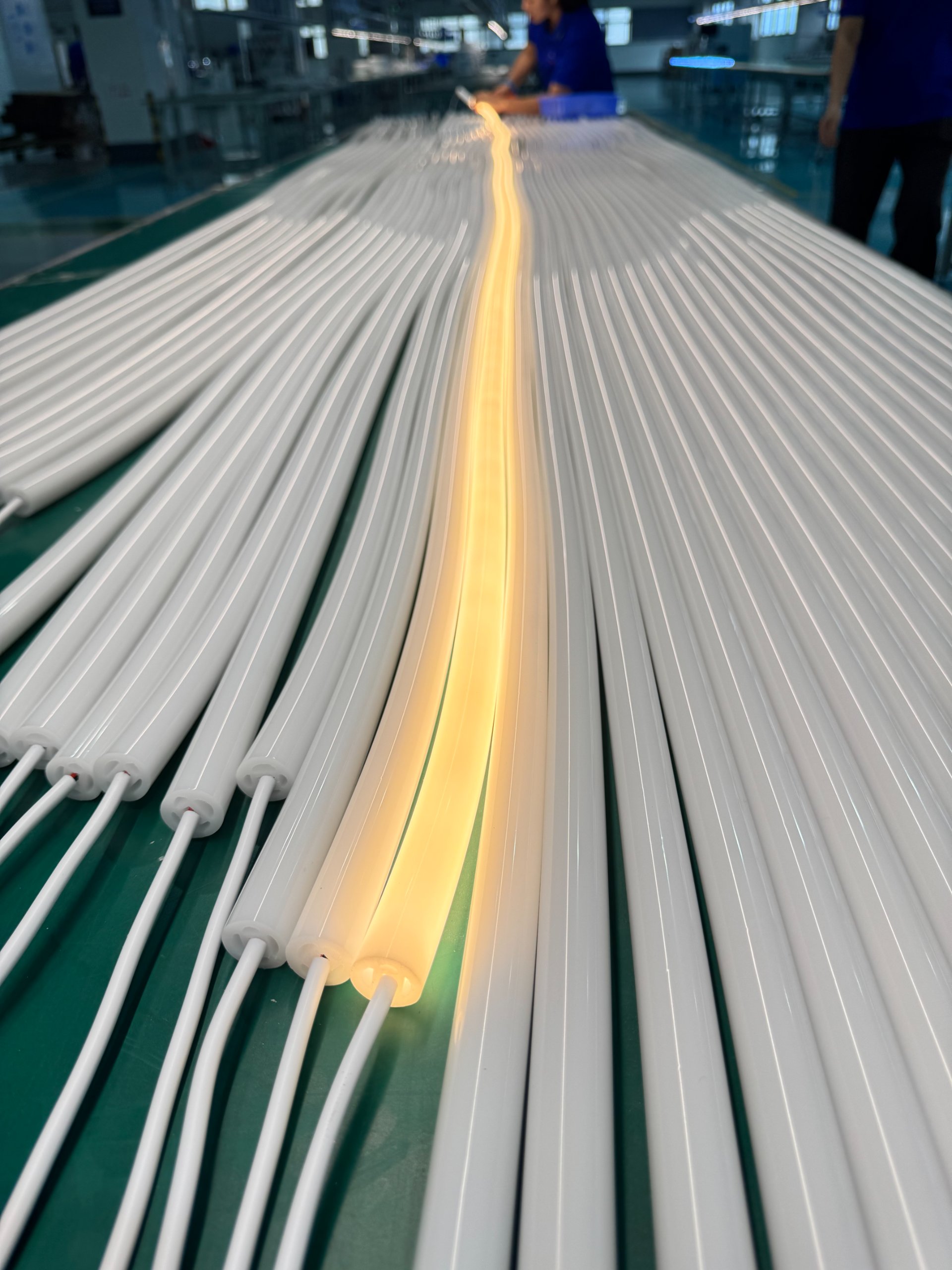
Step 1 — Redefine the Waterproofing Scope
The project decomposed the waterproofing requirement into five distinct objects:
| Object | Requirement |
|---|---|
| Product body | Confirm IP rating and declared test conditions |
| Cut end | Define required sealing method |
| Connector/splice | Define IP rating with connector installed |
| Cable entry | Define sealing structure |
| Installed node | Validate via mock-up test |
This immediately identified that the original specification had only addressed the first row.
Step 2 — Build a Representative Mock-Up
Rather than testing a sealed factory sample, the project team constructed a mock-up using:
- Actual specified product cut to a representative field length
- Actual end caps to be used on site
- Actual cable with actual cable exit method
- Actual connectors with actual field termination technique
- Actual mounting hardware and installation orientation
The mock-up was then subjected to a waterproofing test representative of the project's service environment.
This step answered the correct question: "Does our planned installation method maintain the required protection level?" — not just: "Does the factory product have a certificate?"
Step 3 — Lock the Installation Method
The approved mock-up assembly method was documented as a controlled construction detail. Field personnel could not modify:
- Cutting method
- End cap specification or installation technique
- Connector type
- Cable exit and sealing approach
Any deviation required a formal technical review before proceeding.
Step 4 — Include Installation Nodes in Acceptance
The final inspection checklist covered not only product continuity but:
- End cap installation quality
- Connector condition and sealing
- Cable exit integrity
- Compliance with approved mock-up detail at every node type
The project completed without field waterproofing failures.
Six Common Specification Gaps That Create IPX8 Risk
Based on the pattern above, these are the most frequent errors I see in tender documents and procurement specifications for LED neon flex projects.
Gap 1 — No Test Conditions Stated
"IPX8" without declared test depth, duration, and sample state is an incomplete specification. Two products can both carry IPX8 documentation with very different underlying test conditions.
Gap 2 — No Test Object Defined
The specification must state whether the required rating applies to:
- The product body only
- The product body with end caps installed
- The complete assembly including connectors and cable
Gap 3 — Sample Does Not Represent Installation State
Laboratory samples are often sealed continuous lengths. Field product is cut, terminated, and connected. These are not the same test object. Sample approval does not validate field node performance.
Gap 4 — Installation Orientation Not Specified
Protection performance can vary with orientation. A product rated in one orientation may perform differently when installed facing upward, curved, or under mechanical tension.
Gap 5 — Connector and End Cap System Not Defined
For LED neon flex, the connector system is often the highest-risk element. The specification must define whether connectors are covered by the product's IP rating or require separate definition.
Gap 6 — No Acceptance Test Defined
If the final acceptance inspection only asks "do the lights work?", the waterproofing system has never been formally accepted. Acceptance criteria must include verification of installation node compliance.
Eight Questions to Ask Your Supplier Before Committing to IPX8
If a project requires IPX8 protection for LED neon flex, I do not stop at "do you have IPX8?" I ask these eight questions before making any commitment.
-
What standard and declared conditions apply to your IPX8 rating? Require specific documentation, not a general certificate number.
-
What is the exact test object? Confirm whether the certificate covers a sealed body, an end-capped assembly, or a complete assembly with connectors.
-
Does the tested state match our project's installation state? If the project requires field cutting and termination, the test must reflect that.
-
Are end caps included in the protection rating declaration? Do not assume — require written confirmation.
-
Are connectors included in the test scope? If not, what is the IP rating of the connector system as a separate assembly?
-
How is the cable exit point waterproofed? Require a defined method — material specification, installation instruction, and expected performance.
-
How is protection restored after field cutting? This is the most critical question for neon flex projects. Require a documented and validated procedure.
-
Is your IPX8 claim a product-level statement or a system-level statement? The answer to this question defines the boundary of supplier responsibility.
Frequently Asked Questions
Does an IPX8-rated LED strip light stay waterproof after cutting?
Not automatically. Cutting removes the factory-sealed end and creates an unprotected cross-section. Protection can only be restored with an appropriate end cap or sealing method that has been tested and validated for the specific product. Buyers should confirm the supplier's recommended field-sealing procedure before installation.
Is IPX8 better than IP68 for LED lighting?
IPX8 and IP68 both indicate continuous submersion protection. The difference is that IP68 includes a solid-particle ingress rating (the first digit), while IPX8 does not specify solid-particle protection. For outdoor LED lighting subject to dust or debris, IP68 provides a more complete definition. Buyers should verify the declared test conditions for either rating.
Can I use an IPX8 LED neon flex product in a submerged water feature?
An IPX8 product may be suitable, but the application requires verification beyond the product rating alone. Buyers should confirm the declared submersion depth and duration match the project conditions, and ensure all termination points — end caps, connectors, and cable exits — are rated and installed for continuous submersion. A qualified review of the full assembly is recommended for submerged applications.
Who is responsible if an IPX8 product fails waterproofing after installation?
Responsibility depends on what was contractually defined. If the specification only defined a product IP rating and did not specify installation methods, termination details, or system-level acceptance criteria, responsibility is difficult to assign clearly. Projects should define waterproofing responsibility by installation zone and node type in the contract before work begins.
How do I verify a supplier's IPX8 certification is genuine and applicable?
Request the full test report, not just a certificate. The report should identify the specific product model, the test standard reference, the declared conditions (depth and duration), and the exact test object. Cross-check the product model on the report against the product being supplied. For significant projects, third-party verification or independent sample testing is a reasonable procurement step.
Conclusion
IPX8 is a meaningful and important protection rating — but for large LED neon flex projects, it is a starting point, not a complete answer. The most dangerous assumption in project procurement is that a product-level IPX8 rating automatically covers every cut end, connector, cable entry, and installation node in the field. It does not.
The projects that avoid waterproofing failures share one common habit: they define the waterproofing scope as a system requirement, not a product parameter. They specify test conditions, validate field installation methods through representative mock-ups, and include node-level compliance in their acceptance criteria.
If your current specification reads only "LED Neon Flex — IPX8", the waterproofing requirement is not yet fully defined.
If you are evaluating LED neon flex products for a large commercial, architectural, or landscape project and need clear documentation on protection ratings, test conditions, end cap systems, and field installation methods, contact our technical team for product-specific information and application support.