
LED material questions seem straightforward — until a large-scale project goes wrong. When procurement teams, contractors, and suppliers all use the word "silicone" but mean something completely different, a simple material question quietly becomes a specification dispute, a delivery failure, and a site verification nightmare. Understanding LED materials properly can prevent all of that.
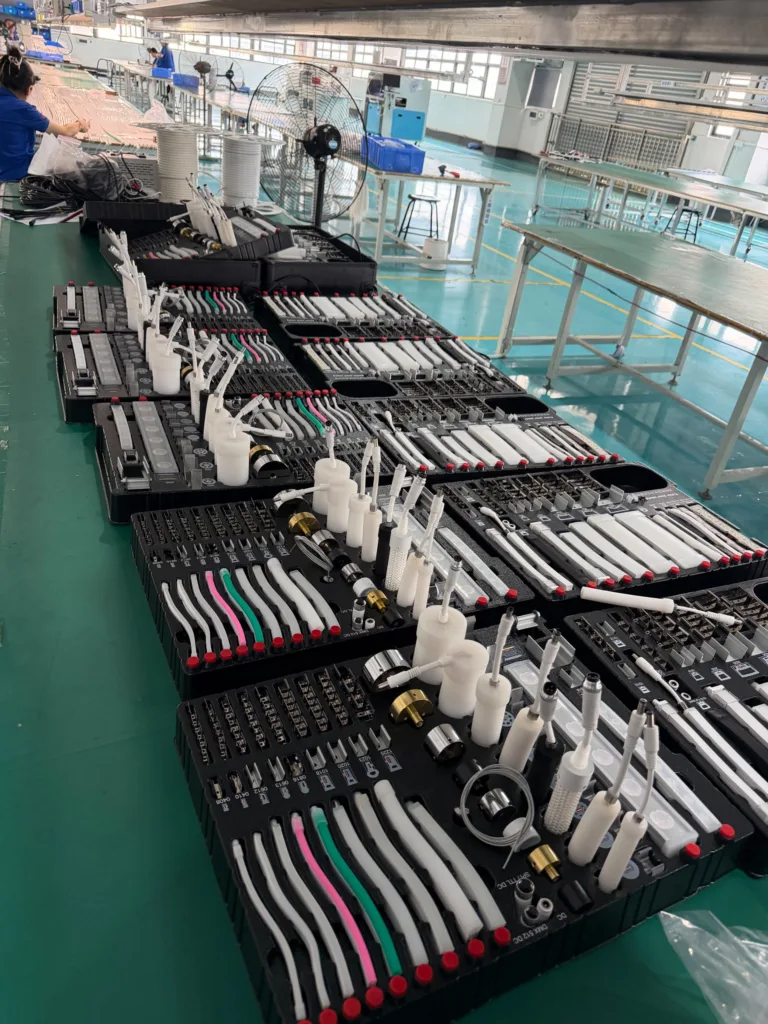
LEDs are built from multiple distinct material layers, not a single material. The semiconductor chip (typically gallium nitride-based compounds), the encapsulant, the PCB substrate, the conductive traces, and the outer housing or sleeve each use different materials with different functions. For LED Neon Flex specifically, the outer silicone sleeve is only one part of a multi-layer material system. Naming "silicone" as the product material does not define the full material specification.

That answer covers the textbook definition. But if you are sourcing LED Neon Flex for a large architectural or commercial lighting project, the textbook answer is where the real problems begin — not where they end.
Why Does the "What Material Is Used for LEDs?" Question Create Project Risk?
Most procurement professionals know that asking vague questions leads to vague answers. Yet material specification for LED products consistently attracts exactly this problem on large projects.
The core issue is that "LED material" bundles together at least five distinct material categories under one label. When a specification document, a supplier quotation, and a site verification checklist all use the same word — "silicone" — but none of them define which component, which grade, or which performance requirement, the project has no enforceable material standard at all.
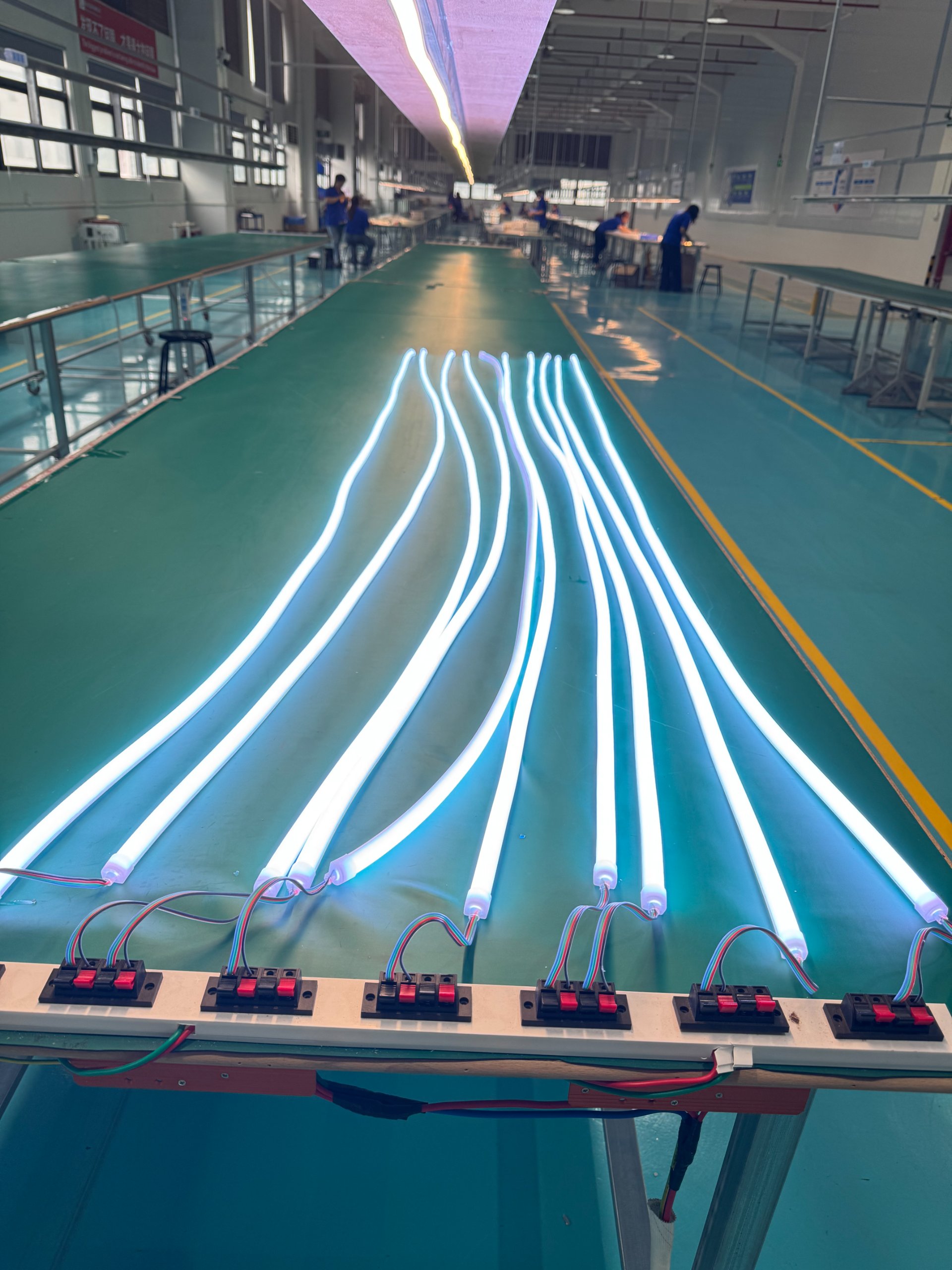
Every material layer in an LED Neon Flex product carries a specific engineering function. Collapsing them into one word creates a gap between what the design team believes was specified and what the supplier actually delivers.
The Five Material Layers in LED Neon Flex
Understanding these layers is the foundation of any credible material specification:
| Material Layer | Typical Materials | Primary Function |
|---|---|---|
| LED chip | GaN-based compound semiconductors | Light generation |
| Encapsulant / phosphor | Epoxy or silicone gel, phosphor powder | Optical output, color, protection |
| PCB substrate | FR4, aluminum-backed, flexible FPC | Electrical circuit, heat dissipation |
| Conductive traces | Copper | Current delivery |
| Outer sleeve / housing | Silicone rubber or PVC | Environmental protection, optical diffusion, mechanical flexibility |
| End caps and connectors | Various polymers, rubber, metals | IP sealing, electrical connection |
Each layer can vary by grade, formulation, supplier, and production process. When a specification only names "silicone," it typically refers to the outer sleeve — and even then, it says nothing about silicone type, Shore hardness, UV resistance, temperature rating, or extrusion consistency.
What Happens When "Silicone" Is the Entire Specification
This is not a theoretical risk. I have reviewed projects where the following sequence occurred exactly as described:
- Design document states: Silicone LED Neon Flex.
- Procurement asks suppliers: "Is this silicone?"
- Every supplier answers: "Yes, silicone material."
- Procurement selects the lowest price on the assumption that material quality is equivalent.
- Sample approval passes on visual inspection.
- Mass production begins.
- Delivered batches show visible differences in surface texture, flexibility, and color uniformity.
- Site team raises concerns.
- All parties dispute whether the product matches the approved specification.
- Project enters verification, re-inspection, and accountability proceedings.
The root cause is not supplier dishonesty. The root cause is that the project never defined what "silicone" meant in engineering terms.
What Does LED Semiconductor Material Actually Mean?
Buyers who source finished LED products rarely need to specify semiconductor compounds directly. But understanding the semiconductor layer removes confusion when suppliers mention chip materials in product data.
The semiconductor material in LED chips is a compound of group III and group V elements — most commonly gallium nitride (GaN) and its related compounds. The specific compound determines the emission wavelength, and therefore the light color. For white LEDs, a blue GaN chip combined with a yellow phosphor produces white light. This layer is encapsulated and is not accessible or modifiable by the buyer.
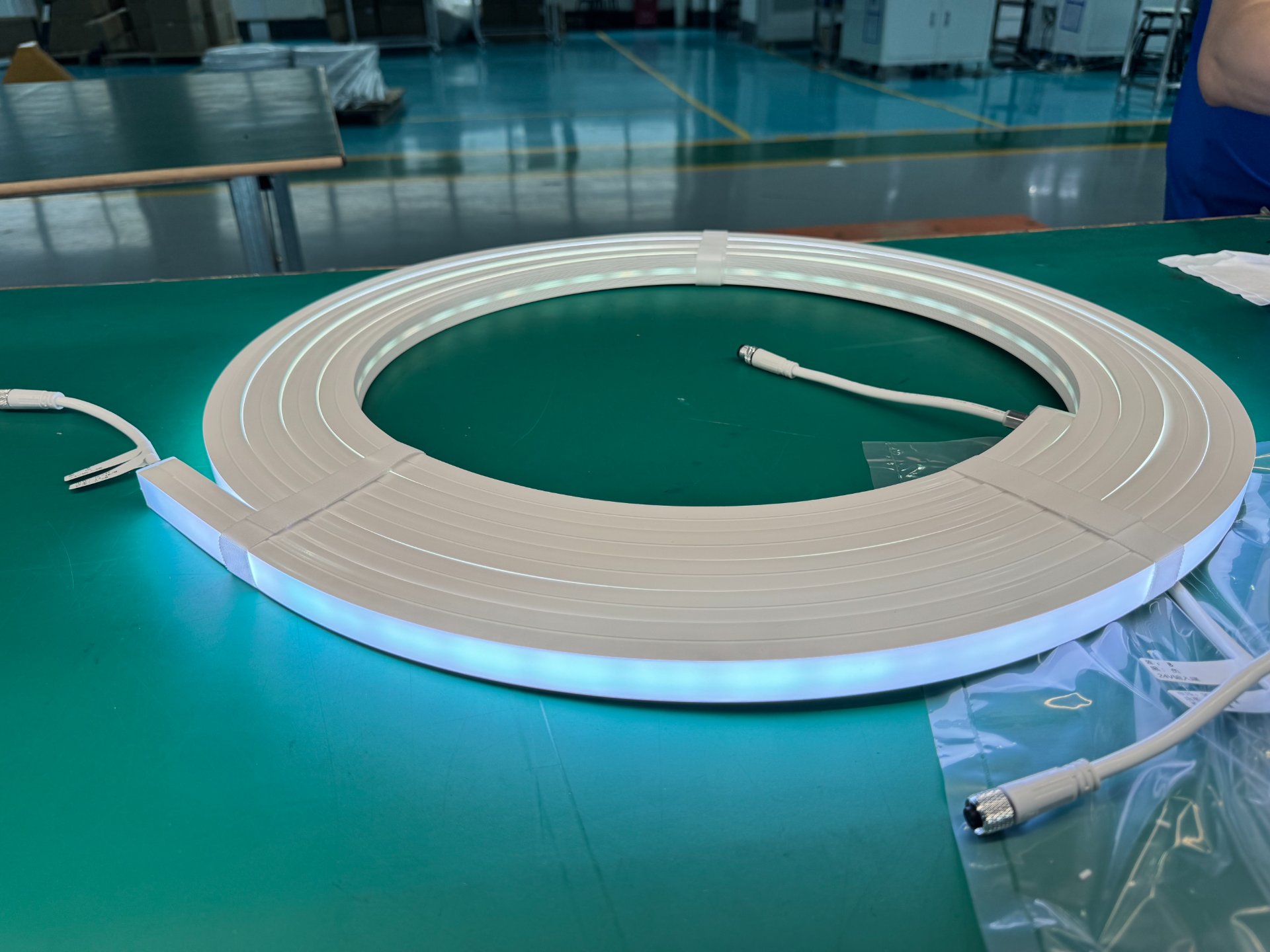
For procurement purposes, the semiconductor material layer matters in the following ways:
Chip Source and Binning
- LED chips from established manufacturers are sorted into bins by forward voltage and light output consistency.
- Tighter binning means more consistent color and brightness across a large-scale installation.
- Buyers sourcing LED Neon Flex for large architectural projects should ask suppliers to confirm chip brand, bin range, and color consistency controls.
Phosphor Encapsulant
- White LEDs use a phosphor layer mixed into the encapsulant material.
- The CCT (correlated color temperature) and CRI (color rendering index) of the finished product are determined by the phosphor formulation.
- Phosphor quality and consistency directly affect long-term color maintenance over the product's lifespan.
Why Buyers Cannot Verify Chip Material Visually
The semiconductor and phosphor layers are sealed inside the LED package. Visual inspection of the finished strip does not reveal chip material, bin grade, or phosphor quality. Buyers must rely on:
- Supplier technical documentation
- Third-party test reports
- Photometric measurement (lux, CCT, CRI testing)
- Sample testing before mass production approval
Certificates and test reports should be treated as documents requiring verification, not as automatic proof of compliance. Qualified technical review is recommended for projects with strict photometric or color consistency requirements.
How Should LED Neon Flex Material Be Specified for Large Projects?
Naming a material is not the same as specifying a material. For large-scale LED Neon Flex projects — facades, commercial interiors, landscape installations — material specification must define the component, the performance requirement, the environmental conditions, and the verification method.
Effective LED Neon Flex material specification requires defining at minimum: which component uses which material, what performance that material must deliver under the project's environmental conditions, how the sample will be used to lock in the mass production standard, and what change control process applies if the supplier needs to alter any material component during production.
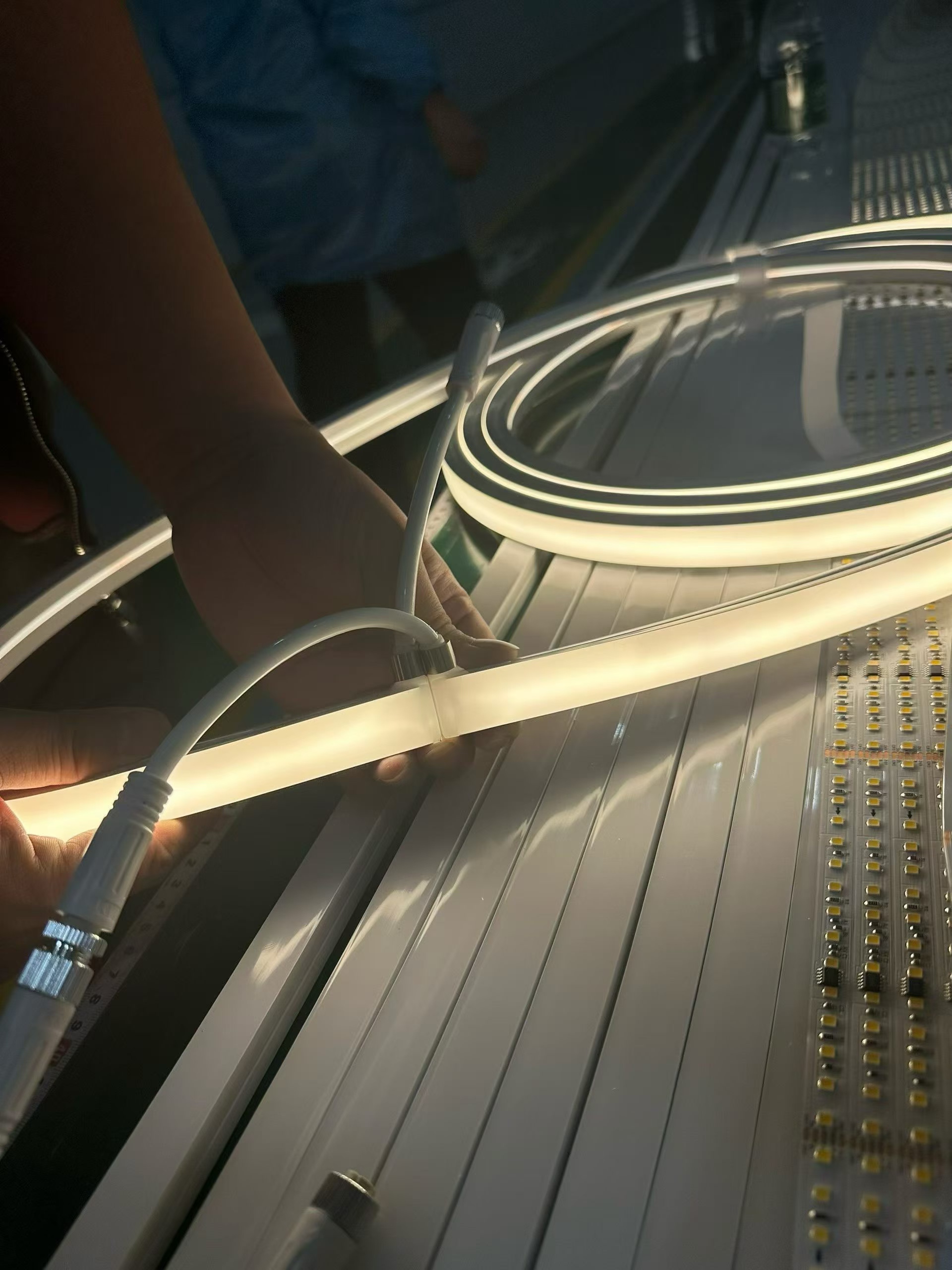
Step 1 — Identify the Critical Material Layers
Before writing a specification, map the product structure:
- Outer sleeve: What material? What performance is required? Indoor, outdoor, UV-exposed, wet location?
- PCB: Flexible or rigid? What substrate?
- Chip and encapsulant: Chip source, bin range, CCT, CRI?
- End caps and connectors: Sealing method and IP rating?
Each of these can be a failure point if left undefined.
Step 2 — Tie Material Requirements to Site Conditions
A material requirement that is not connected to a real installation condition is not a useful requirement. For example:
"Outer sleeve must be UV-stable silicone."
This is more useful than:
"Silicone housing."
But even more useful is:
"Outer sleeve must maintain optical and mechanical performance under continuous outdoor exposure conditions. Supplier must provide relevant test documentation or third-party test report for buyer review."
This language gives the procurement team something to verify, and gives the supplier a clear standard to meet.
Step 3 — Lock the Mass Production State Against the Approved Sample
One of the most common failure points I see is that project teams approve a sample and then assume the mass production will match it automatically. It will not, unless the contract says so explicitly.
Effective contracts for large LED projects should include:
- A requirement that mass production uses the same material system as the approved sample
- A defined change control process requiring re-approval for any material substitution
- Batch documentation requirements so incoming deliveries can be traced back to the approved specification
Step 4 — Build Traceability Into Acceptance
Final site acceptance should not simply ask: "Is this silicone?"
It should verify:
Approved specification → Approved sample → Production documentation → Delivered batch → Site product
This five-step traceability chain is the only reliable way to confirm that what arrives on site is what was approved during procurement.
What Are the Most Common Material Specification Mistakes in LED Procurement?
These errors appear repeatedly in both small and large LED projects. Recognizing them before procurement begins is far less costly than correcting them after delivery.
The most common LED material specification mistakes are: using a single material name to represent the entire product, treating material names as equivalent to material grades, failing to define sample-to-mass-production consistency requirements, omitting change control provisions, and writing acceptance criteria that can only verify external appearance rather than the approved material system.

Mistake 1 — "Silicone" as a Complete Specification
As discussed throughout this article, this is the most frequent error. It leaves the following undefined:
- Which component is silicone
- What silicone type or formulation
- What performance is expected from that silicone
- How compliance will be verified
Mistake 2 — Treating Material Names as Material Grades
Suppliers can use the same material name for products with very different material grades, formulations, and performance levels. "Silicone" describes a broad chemical family. It does not define a grade, a temperature range, a UV resistance level, or a Shore hardness.
Mistake 3 — "Equivalent Material Acceptable" Without a Definition of Equivalence
Procurement documents sometimes include a clause allowing equivalent materials. If "equivalent" is not defined, suppliers will define it themselves. This reintroduces the same ambiguity the specification was supposed to eliminate.
Mistake 4 — No Change Control for Material Substitution
Suppliers sometimes change raw material sources during a long production run — due to supply chain issues, cost pressures, or vendor changes. Without a contractual requirement to notify the buyer and seek re-approval, these changes can go undetected until site acceptance.
Mistake 5 — Acceptance Based on Visual Appearance Only
Checking that a product "looks like silicone" or "bends like the sample" is not a material verification. It is an appearance check. Material compliance requires documentation traceability, not just visual similarity.
Frequently Asked Questions
What semiconductor material is used in LED chips?
Most modern LEDs use gallium nitride (GaN) and related compound semiconductors. The specific compound determines the emission color. For white LEDs, a blue GaN chip is combined with a yellow phosphor in the encapsulant. Buyers of finished LED strip products typically cannot specify or verify this layer visually — chip source and test documentation should be requested from the supplier.
Is silicone always better than PVC for LED Neon Flex?
Not automatically. Silicone generally offers better UV resistance, wider temperature tolerance, and greater long-term flexibility compared to standard PVC. However, the performance of any material depends on its specific grade and formulation, not just its material category. For outdoor or high-UV-exposure installations, silicone is typically the more suitable choice, but the decision should be based on verified material performance documentation rather than material name alone.
How do I verify that mass production LED Neon Flex matches the approved sample?
Request production documentation with each batch, including supplier batch records and any material certificates. Compare incoming product against the approved sample under controlled conditions. Establish a contractual requirement that material changes require buyer approval before production proceeds. For large projects, consider incoming quality inspection at the factory or upon delivery.
What certifications should I look for when sourcing LED Neon Flex?
For the European market, CE marking and RoHS compliance are standard requirements. For the US market, UL certification is relevant for many applications. For Australian and Saudi Arabian markets, SAA and SASO apply respectively. Treat certifications as documents that should be verified — request current, valid certificates and confirm they apply to the specific product being purchased, not a different model or configuration.
Why do different suppliers quote different prices for "the same" silicone LED Neon Flex?
Because "silicone LED Neon Flex" is not a single product standard. Price differences between suppliers often reflect differences in chip quality and binning, silicone grade and formulation, PCB quality, extrusion consistency, production process controls, and quality management systems. Comparing prices without comparing specifications is not a meaningful price comparison. The lower-priced product may be genuinely comparable, or it may differ in ways that only become visible after installation.
Conclusion
The question what material is commonly used for LEDs has a straightforward educational answer: LEDs involve semiconductor chip materials, encapsulants, PCB substrates, conductive traces, and outer housing materials — each performing a distinct function. For LED Neon Flex, the silicone outer sleeve is one part of a layered material system, not the whole story.
For large-scale lighting projects, the real risk is not ignorance of what LED materials are. The real risk is treating a material name as a complete specification. "Silicone" is a starting point. A verifiable material specification — tied to specific components, environmental conditions, sample states, and change control requirements — is what actually protects a project from supplier substitution, batch inconsistency, and acceptance disputes.
If you are evaluating LED Neon Flex for a commercial or architectural project and want to understand how our products are built and what documentation we can provide, contact our technical team for a detailed product discussion.